
Three-Seed Decoction,*Treatise on Warm Diseases* (Vol. 1).,Indicated for the early stage of damp-heat syndrome, where the pathogenic factor is in the Qi level, dampness and heat are intertwined, and linger in the Three Jiao; as well as for the early stage of summer-dampness syndrome, presenting with headache, aversion to cold, heaviness and pain in the body, a pale-yellow complexion, chest tightness, lack of appetite, fever in the afternoon, and no thirst or a desire to drink despite thirst—in cases where dampness predominates over heat.It is currently used for patients with acute jaundice-type hepatitis, acute nephritis, pyelonephritis, as well as typhoid and paratyphoid fever cases characterized by damp-heat. Symptoms include headache, aversion to cold, heaviness and body aches, a white tongue coating without thirst, a string-like, fine, and soft pulse, a pale-yellow complexion, chest tightness and lack of appetite, and afternoon fever—presenting as if due to yin deficiency, with the disease slow to resolve—which is termed “damp-heat epidemic.”The pathogenic factor of damp-heat is located in the middle jiao but also affects the upper and lower jiao. In the early stages of damp-heat, dampness and heat are intertwined, with dampness predominating over heat. In the early stages of damp-heat, the pathogenic factor remains in the qi level and has not yet transformed into dryness; dampness prevails while heat is slight, as well as in cases of summer-heat accompanied by dampness.
Three-Seed Decoction
Formulas Name : Three-Seed Decoction
Chinese Name : 三仁汤
Drug Formulation
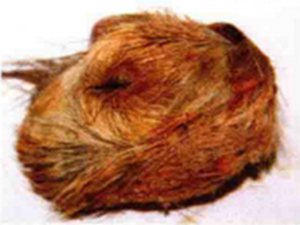
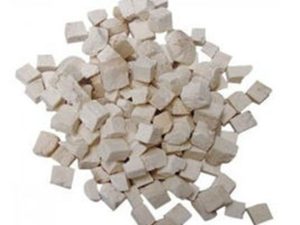
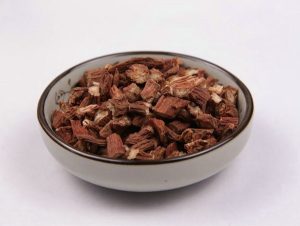
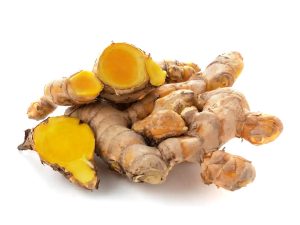
5 qian of apricot kernels, 6 qian of calcined talc, 2 qian of white akebia, 2 qian of white cardamom seeds, 2 qian of bamboo leaves, 2 qian of magnolia bark, 6 qian of raw coix seeds, and 5 qian of pinellia.
Source
*Treatise on Warm Diseases* (Vol. 1).
Benefits
Indicated for the early stage of damp-heat syndrome, where the pathogenic factor is in the Qi level, dampness and heat are intertwined, and linger in the Three Jiao; as well as for the early stage of summer-dampness syndrome, presenting with headache, aversion to cold, heaviness and pain in the body, a pale-yellow complexion, chest tightness, lack of appetite, fever in the afternoon, and no thirst or a desire to drink despite thirst—in cases where dampness predominates over heat.It is currently used for patients with acute jaundice-type hepatitis, acute nephritis, pyelonephritis, as well as typhoid and paratyphoid fever cases characterized by damp-heat. Symptoms include headache, aversion to cold, heaviness and body aches, a white tongue coating without thirst, a string-like, fine, and soft pulse, a pale-yellow complexion, chest tightness and lack of appetite, and afternoon fever—presenting as if due to yin deficiency, with the disease slow to resolve—which is termed “damp-heat epidemic.”The pathogenic factor of damp-heat is located in the middle jiao but also affects the upper and lower jiao. In the early stages of damp-heat, dampness and heat are intertwined, with dampness predominating over heat. In the early stages of damp-heat, the pathogenic factor remains in the qi level and has not yet transformed into dryness; dampness prevails while heat is slight, as well as in cases of summer-heat accompanied by dampness.
Instructions for Use
Boil 8 bowls of Ganlan water down to 3 bowls; take 1 bowl per dose, three times a day.
Note
This formula should not be used if the dampness has already transformed into dryness.
Three-Seed Decoction,Indicated for the early stage of damp-heat syndrome, where the pathogenic factor is in the Qi level, dampness and heat are intertwined, and linger in the Three Jiao; as well as for the early stage of summer-dampness syndrome, presenting with headache, aversion to cold, heaviness and pain in the body, a pale-yellow complexion, chest tightness, lack of appetite, fever in the afternoon, and no thirst or a desire to drink despite thirst—in cases where dampness predominates over heat.It is currently used for patients with acute jaundice-type hepatitis, acute nephritis, pyelonephritis, as well as typhoid and paratyphoid fever cases characterized by damp-heat. Symptoms include headache, aversion to cold, heaviness and body aches, a white tongue coating without thirst, a string-like, fine, and soft pulse, a pale-yellow complexion, chest tightness and lack of appetite, and afternoon fever—presenting as if due to yin deficiency, with the disease slow to resolve—which is termed “damp-heat epidemic.”The pathogenic factor of damp-heat is located in the middle jiao but also affects the upper and lower jiao. In the early stages of damp-heat, dampness and heat are intertwined, with dampness predominating over heat. In the early stages of damp-heat, the pathogenic factor remains in the qi level and has not yet transformed into dryness; dampness prevails while heat is slight, as well as in cases of summer-heat accompanied by dampness.