
According to records in herbal texts, the authentic production areas of Gastrodia elata historically shifted from north to south and from the Yellow River basin to the Yangtze River basin, a process that can be roughly divided into four periods.
Before the Tang Dynasty
The main production areas were Mount Tai in Shandong and Mount Song in Henan, both located in the Yellow River basin.
Shennong Bencao Jing: “Red Arrow” grows in river valleys.
Wu Pu’s Materia Medica: “Grows on Mount Tai or Mount Shaoshi.”
Supplement to the Records of Famous Physicians: “Grows in Chencang, Yongzhou, as well as Mount Tai and Mount Shaoshi.”
Before the Qing Dynasty
Production areas expanded to regions in the Yangtze River Basin, such as Hunan and Sichuan.
Kaibao Materia Medica: “Grows on the mountains of Yanzhou, Lizhou, Mount Tai, and Mount Lao; today, the variety from Yanzhou is generally considered the best.”
Illustrated Compendium of Materia Medica: Gastrodia elata grows in Yanzhou, Lizhou, Mount Tai, Mount Lao, and various other mountains; today, it is also found in the prefectures and counties east and west of the capital, as well as in Hunan and Huainan.
Supplementary Discussions on Materia Medica: Among the roots and shoots of Red Arrow, those originating from Yanzhou in the State of Qi are considered the finest.
Essentials of Materia Medica Classification: [Authentic Origins] Those from Shaozhou and Yanzhou are superior.
Ben Cao Meng Quan: It is found in the valleys of both Yanzhou and Lizhou (both in Shandong).
Late Qing Dynasty and Republic of China Period
The production areas of Gastrodia elata shifted southward, with Sichuan, Yunnan, and Shaanxi becoming the primary regions for high-quality Gastrodia elata.
In the 50th year of the Qianlong reign of the Qing Dynasty (1785), the Prefect of Yibin, Sichuan, dispatched a special envoy to Xiaocaoba in Yiliang to procure Gastrodia elata as a tribute to celebrate Emperor Qianlong’s birthday.
Republic of China Discussion on the Origin of Medicinal Materials: “Those produced in Sichuan, Yunnan, and Hanzhong, Shaanxi, are all of excellent quality.”
From Field Observations on Medicinal Herbs and Drugs (Republic of China era): “Genuine Gastrodia elata is mostly sourced from Sichuan; it is also one of the province’s major export medicinal materials. From the 20th to the 22nd years of the Republic of China, annual sales reached 10,000 jin.”
Present Day
With wild Gastrodia elata resources depleted, artificial cultivation has developed rapidly, giving rise to four major production areas.
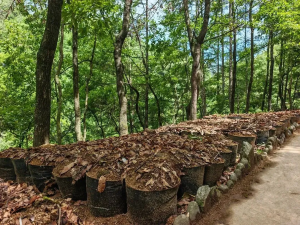
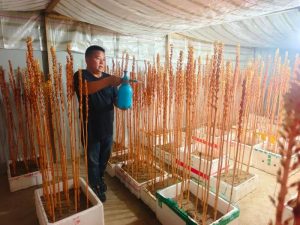
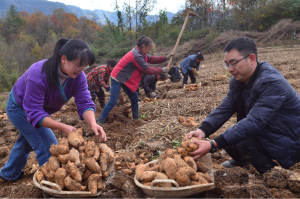
As wild Gastrodia elata resources dwindled, research into its artificial cultivation began in the 1950s and 1960s. Experimental cultivation projects were successively launched in the Xiaocaoba area of Yiliang, Yunnan, as well as in Hubei, Shaanxi, and other regions. In the 1970s and 1980s, artificial cultivation techniques were successfully developed and began to be widely promoted.
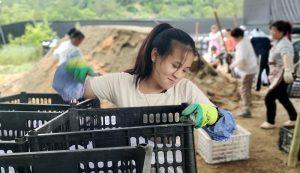
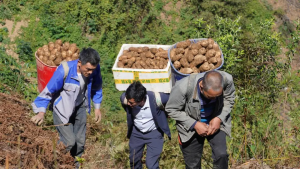
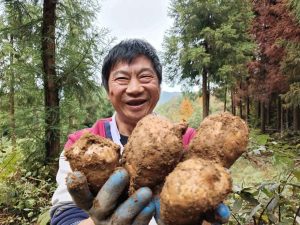
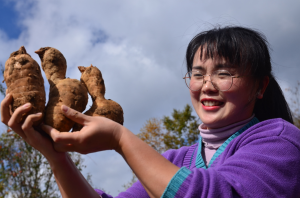
After more than 50 years of development, Gastrodia elata is now cultivated in over 13 provinces across China, with four major production areas having emerged: Zhaotong in Yunnan, Hanzhong in Shaanxi, Yiling in Hubei, and the Dabie Mountains in Anhui. Yiliang in Yunnan is recognized as the authentic place of origin, while Hubei, Shaanxi, and Anhui account for significant portions of the total output.
Interesting how traditional medicine texts can track environmental and cultural shifts over centuries! The move from the Yellow River to the Yangtze basin makes me wonder if climate change or farming practices drove the migration. Would be fascinating to see how these historical zones compare to modern cultivation efforts. Thanks for shedding light on this overlooked aspect of herbal history.
مقال رائع! من المثير فعلاً كيف تغيّرت مناطق إنتاج