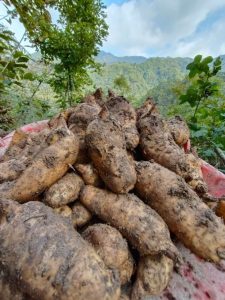
Gastrodia elata is a traditional Chinese medicinal herb used to calm the liver and subdue wind. It is the dried tuber of Gastrodia elata Bl., a plant in the genus Gastrodia of the Orchidaceae family. It has the effects of subduing wind and relieving spasms, calming liver yang, and dispelling wind to unblock the meridians.It is primarily used to treat infantile convulsions, epileptic seizures, tetanus, headaches and dizziness, paralysis of the hands and feet, numbness of the limbs, and rheumatic arthralgia.

Gastrodia elata
Tianma is a traditional Chinese medicinal herb used to calm the liver and subdue wind. It is the dried tuber of Gastrodia elata Bl., a plant in the genus Gastrodia of the Orchidaceae family. It has the effects of subduing wind and relieving spasms, calming liver yang, and dispelling wind to unblock the meridians.It is primarily used to treat infantile convulsions, epileptic seizures, tetanus, headaches and dizziness, paralysis of the hands and feet, numbness of the limbs, and rheumatic arthralgia.
Chinese Name : 天麻
Latin Name : Gastrodiae Rhizoma
Aliases : Tianma,Red Arrow, Li Mu, Ghost Inspector, Divine Herb, Duyuozhi, Red Arrow Resin, Wind-Calming Herb, Union-Separation Herb, Duyu, Self-Moving Herb, Water Potato
Authentic Producing Area : Mainly produced in Sichuan, Yunnan, Guizhou, Hubei, Shaanxi, Anhui, and Jilin
Nature, Flavor & Meridian Tropism : Sweet in taste, neutral in nature; enters the Liver meridian
Benefits & Efficacy
Benefits
Gastrodia elata has the effects of calming wind and relieving spasms, subduing Liver Yang, and dispelling wind to unblock the meridians.
Indications
It is primarily used to treat infantile convulsions, epileptic seizures, tetanus, headaches and dizziness, paralysis of the hands and feet, numbness of the limbs, and rheumatic arthralgia.
Usage and Dosage
Decoct and take 3–10 g.
Precautions
1. It has a slightly warm nature and is particularly effective for patients with liver wind complicated by phlegm-dampness. It should not be used as a single herb by patients whose liver wind is triggered by yin deficiency with excessive fire, blood deficiency with blood dryness, or intense internal heat, or by those with hyperactive liver yang. It should also not be used as a single herb by patients with both qi and blood deficiency.2. It has a pronounced inhibitory effect on the central nervous system; therefore, the elderly and infants and young children should not take it in large doses over a long period.3. It can slow the heart rate and lower blood pressure. Patients with bradycardia or hypotension should not take it in large doses over a long period to avoid exacerbating their condition.4. It enhances immune function; therefore, individuals with allergic diseases should not take it in large doses over a long period.5. Pregnant women should not take this single herb in large doses over a long period.
Chemical Constituents
This product contains gastrodin, gastrodin aglycone, β-sitosterol, carotene, citric acid, monomethyl ester, palmitic acid, succinic acid, and sucrose, among others;It also contains Gastrodia polysaccharides, vitamin A, various amino acids, trace alkaloids, and various trace elements, such as chromium, manganese, iron, cobalt, nickel, copper, and zinc.
Pharmacological Actions
This product possesses pharmacological effects including anticonvulsant, antiepileptic, antidepressant, sedative, analgesic, antihypertensive, anti-aging, brain-nourishing and cognitive-enhancing, and anti-vascular dementia properties.
Relevant Discussions
1. *Shennong Bencao Jing*: “Long-term use enhances vitality, strengthens the yang, promotes robust health, lightens the body, and prolongs life.”
2. *Kaibao Bencao*: “Treats various rheumatic arthralgias, stiffness and spasms of the limbs, childhood convulsions, startle reactions, relieves discomfort in the lower back and knees, and strengthens the tendons and muscles.”
3. *Bencao Huiyan*: “It treats headaches, dizziness with a sensation of spinning, epilepsy and convulsions, stiffness and spasms of the limbs, slurred speech, all types of stroke, and wind-phlegm.”
Applications
Clinical Applications
1. Used for vertigo and headaches. Tianma is a commonly used Chinese herbal medicine for treating vertigo and headaches.
(1) For vertigo caused by excessive liver yang rising upward, it is often used in combination with Gou Teng, Shi Jue Ming, Huang Qin, and Niu Xi to calm the liver, subdue yang, and quell wind, as in the Tianma Gou Teng Decoction from *New Insights into the Diagnosis and Treatment of Miscellaneous Diseases*;For vertigo caused by wind-phlegm disturbing the upper body, it is often combined with Pinellia, Poria, and Atractylodes to transform phlegm and subdue wind, as in the Pinellia-Atractylodes-Tianma Decoction from *Insights into Medicine*.
(2) For unilateral or frontal headaches caused by ascending wind-pathogen, it is often combined with Chuanxiong, Schizonepeta, Pinellia, and Wood Fragrance to dispel wind, invigorate blood circulation, and relieve pain;if caused by deficiency of liver blood, it is often combined with Danggui and Baishao.
2. Used for acute and chronic infantile convulsions, stroke-induced facial paralysis, limb numbness, and tetanus.
(1) To treat infantile convulsions, it is often combined with Gouteng, Jiangcan, and Quanshe—medicines that subdue wind and relieve spasms;If the condition involves wind-phlegm complicated by heat, it is combined with Bile-processed Pinellia, Curcuma zedoaria, and Pinellia tuber to resolve phlegm, clear heat, subdue wind, and calm convulsions; for chronic infantile convulsions, it may be used with Ginseng, Atractylodes macrocephala, and Whole Scorpion to strengthen the spleen, resolve phlegm, subdue wind, and relieve spasms.
(2) For stroke-induced facial paralysis and deviation of the mouth and eyes, as well as limb stiffness and numbness, it is often combined with Gou Teng, Bai Shao, Di Long, and Niu Xi to calm the liver, subdue wind, and unblock the meridians.
(3) To treat convulsions and spasms caused by tetanus, including opisthotonos, it is often combined with Tian Nan Xing, Fang Feng, Bai Zhi,Qianghuo, and Bai Fuzi to dispel wind and relieve spasms, as in the Yuzhen Powder from *Authentic Treatise on Surgery*.
3. For rheumatic arthralgia and joint stiffness, it may be combined with Bai Zhu, Fu Zi, Gan Jiang, and Quan Xie to eliminate arthralgia, unblock the meridians, and relieve pain, as in the Tianma Wine from *Ten Convenient Effective Formulas*.
4. Tianma can also be used for red eyes with corneal opacities and blurred vision. It can be combined with Danggui, Shu Di, Chan Yi, Mu Zhai, and Chrysanthemum, as in the Tianma Tuiyi Powder from *Yin Hai Jing Wei*.
Related Compatibility
1. Gastrodia combined with Ginseng: Gastrodia calms wind and relieves spasms; it has a sweet taste, a moist nature, and a mild medicinal property. Ginseng tonifies spleen qi. When combined, these two herbs are used to treat chronic convulsions in children caused by spleen deficiency. An example of such a formula is the “Spleen-Awaking Powder” (Xingpi San).
2. Gastrodia combined with Chuanxiong: Gastrodia is sweet, neutral, and moist, entering specifically the Liver Meridian; its sweet nature soothes Liver agitation, making it a key herb for subduing wind, and it is particularly effective for treating dizziness and headaches caused by wind arising from Liver deficiency. Chuanxiong is pungent and warm, with a penetrating action that moves rather than stagnates; as a Qi-regulating herb for the blood, it excels at dispelling wind and relieving pain.When combined, these two herbs effectively calm the Liver, subdue wind, treat dizziness, and relieve pain. They are frequently used for conditions caused by deficient wind disturbing the upper body, such as sudden, severe headaches, migraines, and dizziness with a sensation of fainting. An example of such a formula is Tianma Pills.
3. Gastrodia elata combined with Fangfeng: Tianma subdues wind and calms convulsions, treating numbness in the limbs, headaches, wind-arthralgia, and hemiplegia;Fangfeng is pungent and warm, entering the Bladder, Lung, and Spleen meridians; it disperses wind from the exterior, overcomes dampness, and relieves pain, serving as a general remedy for wind-related conditions. When used together, one herb calms wind and alleviates convulsions, causing the wind pathogen to dissipate from within; the other, with its pungent and warm nature, disperses wind from the exterior, driving the wind pathogen out through the body’s surface. Combined, they work synergistically to dispel wind, eliminate dampness, unblock the meridians, and relieve pain, effectively treating limb numbness and rheumatic arthralgia.
4. Tianma combined with Banxia: Tianma calms the liver and subdues wind, serving as a key herb for treating headaches and dizziness caused by internal liver wind; Banxia, pungent and warm, dries dampness, transforms phlegm, descends rebellious qi, and stops vomiting. When used together, these two herbs work synergistically to descend rebellious qi, transform phlegm, subdue wind, and relieve spasms, treating conditions such as dizziness and headaches caused by the upward rebellion of phlegm and fluid retention.
5. Gastrodia combined with Whole Scorpion and Stiff Silkworm: Whole Scorpion enters the Liver Meridian to dispel wind, unblock the collaterals, and relieve pain; Stiff Silkworm enters the Liver Meridian to dispel wind and relieve pain. When combined with Gastrodia, they work together to calm the liver, subdue wind, and relieve pain. These three herbs have similar effects and synergize to produce anticonvulsant, wind-dispelling, collateral-unblocking, and pain-relieving actions, making them particularly effective for treating infantile convulsions and spasms.
Medicinal Identification
Uncaria, Antelope Horn, and Gastrodia: All possess the ability to calm the liver, subdue wind, and restrain liver yang; they are all effective for treating conditions of internal liver wind and hyperactive liver yang.However, Gou Teng is cool in nature, light, clear, and penetrating; it excels at clearing heat and subduing wind, making it suitable for treating mild cases of febrile convulsions in children caused by high fever. Ling Yang Jiao is cold in nature and has a strong heat-clearing effect; in addition to treating conditions where extreme heat generates wind, it can also clear the heart and eliminate toxins, and is often used for high fever with mental confusion and heat-toxin rashes.Tianma is sweet, neutral, and moist in nature; while its ability to clear heat is not as potent as that of Gou Teng or Ling Yang Jiao, it can be combined to treat conditions of internal liver wind and convulsive epilepsy regardless of whether the pattern is cold, heat, deficiency, or excess, and it is also effective in dispelling wind and relieving pain.
Related Medicines
1. Gastrodia Injection: Composed of Gastrodia, Tween-80, and water for injection. It functions to calm the liver and subdue wind, unblock the meridians, and relieve pain. It is used for limb numbness, infantile convulsions, epilepsy, hypertension, otogenic vertigo, and migraines.Intramuscular injection: 2–4 mL once daily; twice daily. Acupoint injection: 1 mL once daily, or as directed by a physician.
2. Gastrodia Pill: Composed of Gastrodia, Notopterygium, Angelica pubescens, Eucommia (salt-fried), Achyranthes, Smilax glabra, Aconite (processed), Angelica sinensis, Rehmannia, and Scrophularia.Functions: Dispels wind and dampness, relaxes tendons and unblocks meridians, promotes blood circulation, and relieves pain. Used for limb stiffness, numbness in the hands and feet, and aching in the lower back and legs. Oral administration: 1 pill (9 g per pill) 2–3 times daily.
3. Gastrodia elata Extract Capsules: Hard capsules made from Tianma extract, each containing 0.3 g of Tianma extract.Functions: Calms the liver and subdues wind; dispels wind and alleviates convulsions. Indicated for neurasthenia and neurasthenia syndrome. Take orally, 1–2 capsules at a time, once daily before bedtime.
4. Gastrodia Tablets: Composed of Gastrodia, Notopterygium, Angelica pubescens, Eucommia (salt-fried), Achyranthes, Smilax glabra, Aconite (processed), Angelica sinensis, Rehmannia, and Scrophularia.Functions: Dispels wind and dampness, relaxes tendons and unblocks meridians, promotes blood circulation, and relieves pain. Indicated for limb stiffness, numbness in the hands and feet, and soreness in the lower back and legs. Take orally: 6 tablets at a time, 2–3 times daily. (Manufactured by Xi’an Afang Palace Pharmaceutical Co., Ltd.)
Related Prescriptions
1. *New Interpretations on the Diagnosis and Treatment of Miscellaneous Diseases*: Gastrodia and Uncaria Decoction: Gastrodia 9 g, Uncaria 15 g, Oyster Shell 24 g, Gardenia and Scutellaria each 9 g, Eucommia, Huai Achyranthes, and Motherwort each 12 g, Mulberry Parasite 24 g, Poria Sclerotium 15 g, Polygonum Multiflorum 30 g. Functions: Calms the liver and subdues wind; clears heat and calms the mind.Indicated for headaches, dizziness, tinnitus, blurred vision, tremors, and insomnia caused by hyperactive liver yang and internal liver wind, presenting with a red tongue and a taut, rapid pulse. Used for patients with hypertension, hypertensive encephalopathy, cerebral thrombosis, and atherosclerosis exhibiting the above symptoms. Decoct twice, mix the decoctions thoroughly, and take in three divided doses on an empty stomach; one dose per day.This formula has now been reformulated as Tianma Gou Teng Granules, with each packet containing 5 g and each box containing 24 packets. Take orally: one packet three times daily, dissolved in warm water.
2. “Remarkably Effective Formulas”: Zishou Jieyu Decoction: Tianma, Zao Ren, Fangfeng, and Fuzi—5 g each; Lingyangjiao, Qianghuo, and Guangui—3 g each; Gan Cao—2 g.Add bamboo sap. This formula calms the liver and subdues wind, dispels wind, and unblocks the meridians. It is primarily used to treat stiffness of the tongue, slurred speech, generalized numbness, and hemiplegia caused by stroke. It is also used for aphasia and limb movement disorders resulting from cerebrovascular accidents. Decoct in water; take one dose daily, divided into three administrations, with one spoonful of bamboo sap added.
3. “Medical Insights” Pinellia, Gastrodia, and Atractylodes Decoction: Pinellia (Banxia) and Atractylodes (Baizhu) 10 g each; Gastrodia (Tianma), Tangerine Peel (Juhong), Licorice (Gancao), Ginger (Shengjiang), and Jujube (Dazao) 6 g each; Poria (Fuling) 12 g.Functions to strengthen the spleen, dry dampness, transform phlegm, and subdue wind. Treats vertigo caused by wind-phlegm, headache, chest tightness, vomiting with copious phlegm, a white and greasy tongue coating, and a string-like and slippery pulse. Primarily indicated for otogenic vertigo, vertigo due to cerebral arteriosclerosis, and neurasthenia presenting with the aforementioned symptoms. Decoct in water; take one dose daily, divided into three administrations.
Medicinal Diet Therapy
1. Gastrodia elata Fish Head
(1) Ingredients: 10 grams of sliced Tianma, 1 silver carp head, and seasonings to taste.
(2) Preparation: Moisten the Tianma and slice it thinly. Simmer it with the fish head until the broth turns white, then add seasonings to taste before serving.
(3) Benefits: Regulates the liver and nourishes the brain. Suitable for pre-pregnancy and postpartum conditions characterized by liver yin deficiency, such as irritability, short temper, weakness, dizziness, or insomnia.
2. Gastrodia elata Duck
(1) Ingredients: 30 grams of Tianma slices, 1 old female duck.
(2) Preparation: Slaughter the duck, remove the innards, and wash it thoroughly. Place the Tianma slices inside the duck’s cavity, drizzle with a small amount of Shaoxing wine, and tie the duck securely with white thread by wrapping it around the body several times. Steam over water for 3–4 hours until the duck meat is tender and falling apart. Consume twice daily, one bowl each time, before meals. Eat the Tianma in several portions along with the duck meat; do not exceed the recommended amount.
(3) Benefits: Used to treat symptoms such as dizziness, vertigo, tinnitus, and a bitter taste in the mouth caused by liver yang hyperactivity.
3. Stewed Pork Brain with Gastrodia
(1) Ingredients: 10 grams of sliced Gastrodia, 1 pork brain (washed).
(2) Preparation: Add an appropriate amount of water, place in a steaming bowl, and steam until cooked through.
(3) Benefits: Treats dizziness, blurred vision, headaches, and hypertension and atherosclerosis caused by liver deficiency in the elderly; also has some therapeutic effects on neurasthenia and stroke.
Notes
Patients requiring treatment with Chinese herbal medicine should first consult a licensed Traditional Chinese Medicine (TCM) hospital to receive a prescription following a professional TCM differential diagnosis.
Processing & Preparation
Harvesting & Processing
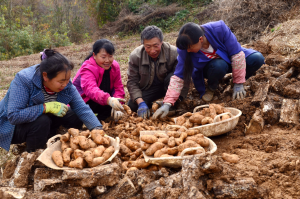
Harvest from the start of Winter (Lidong) until just before Qingming the following year. Those harvested in winter when the stems are withered are called “Winter Ma” and are of superior quality; those harvested in spring when new shoots emerge are called “Spring Ma” and are of inferior quality. After harvesting, wash immediately, steam thoroughly, split open, and dry at a low temperature. Before use, moisten thoroughly or steam until soft, then slice.
Processing Methods
Take the raw herb, remove impurities, wash thoroughly, moisten thoroughly or steam until soft, slice thinly, and dry.
Storage Methods
Store in a dry, airtight container in a well-ventilated, dry place to prevent insect infestation.
Crude Drug Identification
Identification
1. Cross-section of this product: Residual epidermis is present; the hypodermis consists of 2–3 rows of tangentially elongated suberized cells. The cortex comprises about 10 rows of polygonal cells, some of which contain bundles of calcium oxalate needle crystals. At the junction between the cortex and hypodermis of older tubers, there are 2–3 rows of elliptical, thick-walled cells that are lignified and have distinct pits.The pericycle occupies the vast majority of the cross-section and contains scattered small circumferential vascular bundles; parenchyma cells also contain bundles of calcium oxalate needle crystals.
The powder is yellowish-white to yellowish-brown. The thick-walled cells are elliptical or polygonal, 70–180 μm in diameter, with walls 3–8 μm thick; they are lignified and have distinct pits. Calcium oxalate needle crystals occur in bundles or are scattered, measuring 25–75 (93) μm in length.When mounted in glycerol acetate solution and examined under a microscope, parenchyma cells containing gelatinized polysaccharides appear colorless; some cells contain long-ovate, long-elliptical, or nearly circular granules that turn brown or pale brownish-purple upon contact with iodine solution. Spiral, reticulate, and annular vessels have diameters of 8–30 μm.
2. Take 0.5 g of the powdered sample, add 5 mL of 70% methanol, sonicate for 30 minutes, filter, and use the filtrate as the test solution. Separately, take 0.5 g of Gastrodia elata reference material and prepare a reference material solution using the same method. Take Gastrodin reference standard, dissolve in methanol to prepare a solution containing 1 mg per mL, and use this as the reference standard solution.Perform the test according to the Thin-Layer Chromatography method (General Chapter 0502). Pipette 10 μL of the test solution and 5 μL each of the reference herbal material solution and the reference standard solution, and apply them separately onto the same silica gel G thin-layer plate. Develop the plate using a mobile phase of ethyl acetate–methanol–water (9:1:0.2), remove the plate, allow it to air-dry,spray with a 10% ethanol solution of phosphomolybdic acid, and heat at 105°C until the spots become clearly visible. In the test sample chromatogram, spots of the same color appear at positions corresponding to those in the reference herbal material chromatogram and the reference standard chromatogram.
3. Take the p-hydroxybenzyl alcohol reference standard, dissolve it in ethanol to prepare a solution containing 1 mg per mL, and use this as the reference standard solution.Test by thin-layer chromatography (General Chapter 0502). Pipette 10 μL of the test solution from [Identification] (2), 5 μL each of the reference herbal material solution and the above reference standard solution, and apply them separately onto the same silica gel G plate. Develop with a mobile phase of petroleum ether (60–90°C)-ethyl acetate (1:1) as the developing agent, remove the plate, allow it to air-dry, spray with a 10% ethanol solution of phosphomolybdic acid, and heat at 105°C until the spots become clearly visible. In the test sample chromatogram, spots of the same color appear at positions corresponding to those in the reference herbal material chromatogram and the reference standard chromatogram.
Properties of Crude Drugs
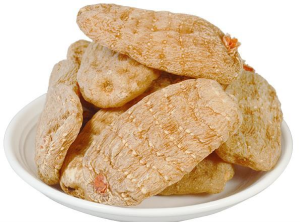
This product is elliptical or oblong in shape, slightly flattened, shriveled, and slightly curved, measuring 3–15 cm in length, 1.5–6 cm in width, and 0.5–2 cm in thickness. The surface is yellowish-white to yellowish-brown, with longitudinal wrinkles and multiple transverse ring patterns formed by rows of latent buds; brownish-black fungal hyphae are sometimes visible.The apex bears a reddish-brown to dark brown, parrot-beak-shaped bud or a residual stem base; the opposite end has a round, umbilical scar. The texture is hard and difficult to break; the fracture surface is relatively flat, yellowish-white to pale brown, and horn-like. It has a faint odor and a sweet taste.
Properties of Processed Slices
This product consists of irregular thin slices. The outer surface is pale yellow to yellowish-brown; transverse ring patterns formed by rows of dots are sometimes visible. The cross-section is yellowish-white to pale brown, horn-like, and translucent. It has a faint odor and a sweet taste.
Botanical Information
Botanical Classification
Tianma (Gastrodia elata), a plant of the genus Gastrodia in the family Orchidaceae.
Morphological Characteristics
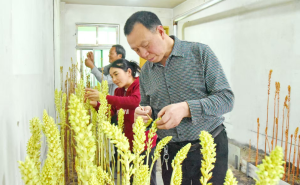
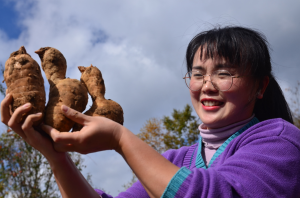
A perennial parasitic herb, 60–100 cm tall. The entire plant lacks chlorophyll. The tuber is thick, fleshy, and oblong, approximately 10 cm long and 3–4.5 cm in diameter, with indistinct annulations. The stem is cylindrical and yellowish-red.Leaves are scale-like, membranous, 1–2 cm long, with fine veins; the lower part is short, sheathing, and clasping the stem. The raceme is terminal, 10–30 cm long, with yellowish-red flowers; flower stalks are short, 2–3 mm long; bracts are membranous, narrowly lanceolate or linear-oblong, about 1 cm long;the perianth tube is ob-urceolate, with an oblique mouth; the lower side of the base is slightly swollen, and the apex is 5-lobed, with small, triangular lobes; the labellum extends beyond 2/3 of the perianth tube and has 3 lobes, with the central lobe being larger and its base forming a short stalk within the perianth tube;The gynostemium is 5–6 mm long, with two small appendages at the apex; the ovary is obovate, with a twisted ovary stalk. The capsule is oblong to oblong-obovate, approximately 15 mm long, with a short stalk. The seeds are numerous and minute, appearing powdery. Flowering occurs from June to July, and fruiting from July to August.
Distribution Area
It is distributed in Hebei, Liaoning, Jilin, Anhui, Henan, Hubei, Sichuan, Guizhou, Yunnan, Tibet, Shaanxi, Gansu, and other regions.
Growth Habits
It prefers cool, moist environments and is sensitive to frost, drought, high temperatures, and waterlogging.Gastrodia elata has no roots or green leaves. Throughout its two-year life cycle from seed to seed, it spends only about 70 days above ground during the sexual reproductive phase; the rest of the time, the tuber remains buried underground. It has a unique mode of nutrition, deriving all nutrients exclusively from the mycelium of the fungus Armillaria mellea that has invaded its body to support its growth and development. It is best cultivated in sandy loam soil rich in humus, loose and fertile, with a soil pH of 5.5–6.0 and good drainage.
Propagation Methods
Propagation is carried out alternately through asexual and sexual reproduction.
Cultivation Techniques
First, the Armillaria mycelium substrate or culture bed must be properly prepared. Generally, broadleaf trees can be used as substrate for cultivating Armillaria, but species such as Chinese hackberry, oak, chestnut, and cork oak are best suited.Gastrodia is propagated using tubers, primarily using smaller varieties such as “White Gastrodia” and “Rice Gastrodia” that lack distinct apical buds as seed tubers. The optimal planting period is from November to March of the following year, though winter planting in November is preferred. The methods used include co-planting with mycelium-inoculated logs or cultivation on mycelium beds. Cultivation can be carried out indoors, outdoors, or in air-raid shelters.Sexual reproduction. Gastrodia seeds are extremely small, consisting of an embryo and seed coat, with no endosperm or other nutrient reserves, making germination very difficult. During the seed germination stage, a symbiotic nutritional relationship must be established with a symbiotic germination fungus, such as the small purple mushroom (Coprinus purpureus), for the seed to germinate. Sowing can be done using the leaf-based substrate method or the co-sowing method with the symbiotic fungus.
Pest and Disease Control
Tuber rot is caused by various factors; therefore, it is essential to select well-drained sandy loam soil for cultivation. When cultivating mycelium branches or inoculum, ensure the inoculum is pure; increase the inoculum dosage to suppress the growth of contaminating fungi.