Massage
Massage Knowledge
Massage Technique
stroking manipulation
push massage
Prone massage
Seated Massage

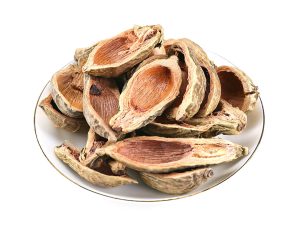
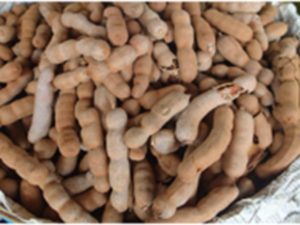
Tamarind

Tamarind is a name used in traditional Chinese medicine. It refers to the fruit of Tamarindus indica L., a plant in the genus Tamarindus of the Fabaceae family, which is used medicinally. It is distributed in Fujian, Taiwan, Guangxi, Guangdong, Sichuan, Yunnan, and other provinces and regions. It has the effects of clearing heat, relieving summer heat, aiding digestion, and resolving food stagnation. It is primarily used to treat heatstroke, loss of appetite, childhood malnutrition, morning sickness, and constipation.

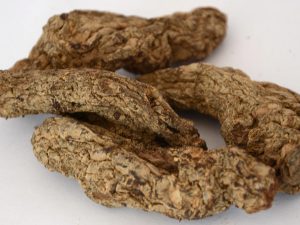
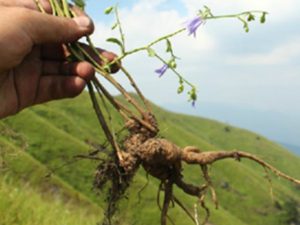
Rehmannia

Rehmannia, a name in traditional Chinese medicine, refers to the fresh or dried tuberous roots of Rehmannia glutinosa Libosch., a plant in the Scrophulariaceae family. It is primarily produced in Henan. It is harvested in the fall; the crown, fibrous roots, and soil are removed for fresh use, or the tuberous roots are slowly dried until about 80% dry. The former is commonly known as “fresh Rehmannia,” and the latter as “raw Rehmannia.”Fresh Rehmannia has the effects of clearing heat, generating body fluids, cooling the blood, and stopping bleeding. It is primarily used to treat heat-related yin deficiency, a crimson tongue with restlessness and thirst, rashes caused by warm toxins, hemoptysis and epistaxis, and swelling and pain in the throat;Raw Rehmannia has the effects of clearing heat, cooling the blood, nourishing yin, and promoting fluid production. It is primarily used to treat heat invading the营血 (ying-blood), rashes caused by warm toxins, hemoptysis and epistaxis, yin depletion due to febrile diseases, a crimson tongue with intense thirst, constipation due to fluid depletion, fever due to yin deficiency, bone-consumptive fever, and internal heat-induced diabetes.

Sha Shen

Sasheng is the name of a traditional Chinese medicine. It refers to the roots of the following plants in the Campanulaceae family: Sasheng (Adenophora stricta Miq.), Apricot-leaf Sasheng (Adenophora hunanensis Nannf.), Wheel-leaf Sasheng (Adenophora tetraphylla (Thunb.) Fisch.),Yunnan Sashen (Adenophora khasiana (Hook.f. et Thoms.) Coll. et Hemsl.), Pao Sashen (Adenophora potaninii Korsh.), and several other species within the same genus. It has the effects of nourishing yin and clearing heat, moistening the lungs and resolving phlegm, and benefiting the stomach and promoting fluid production.It is commonly used for chronic cough due to yin deficiency, consumptive cough with blood-tinged sputum, dry cough with scant sputum, throat obstruction due to deficiency-heat, and thirst caused by fluid depletion.

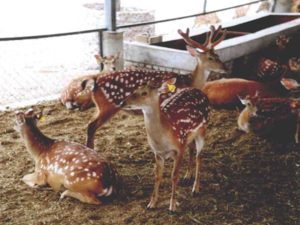
Deer Blood

Deer Blood, a name for a traditional Chinese medicinal material. It is the blood of the sika deer (Cervus nippon Temminck) or the elk (Cervus elaphus Linnaeus) of the Cervidae family. It has the effects of nourishing blood and essence, stopping bleeding, and alleviating leukorrhea. It is primarily used to treat deficiency of essence and blood, low back pain, impotence and nocturnal emission, palpitations and insomnia due to blood deficiency, pulmonary atrophy with hemoptysis, epistaxis, metrorrhagia, metrorrhagia with leukorrhea, and abscesses, swellings, and fractures.

The Medical Foundation of TCM Cosmetic Tuina

A. Skin Classification and Care Human skin can be broadly categorized into five types: normal, dry, oily, combination, and sensitive skin. Each skin type requires different care and maintenance approaches. By observing the specific characteristics that appear, one can identify the skin type in order to better apply targeted treatments. 1. Normal Skin This describes … Read more

Fundamentals of Cosmetic Tuina (Basic Cosmetic Massage)

A. Principles of Facial Tuina 1. Apply an ample amount of massage cream (oil) to lubricate the skin and prevent friction burns. Occasionally, various nutrient creams suitable for one’s skin type may also be used to promote skin absorption of nutrients or achieve other skincare benefits. 2. The choice of massage medium should be based … Read more

Cross Double-Palm Separating Pushing (Shuang Zhang Jiao Cha Fen Tui Fa)

Key Points Cross both palms and place them on the upper and lower parts of the lumbodorsal region. Push and press apart upward and downward respectively, while shifting positions during the movement. Operating Procedures Cross your arms and apply force with both palms on the upper and lower lumbodorsal area of the patient. Push and … Read more

Splay-shaped Separating Pushing (Ba Zi Fen Tui Fa)

Key Points Form both hands into splay palms, place them on either side of the spine. Push obliquely outward in a splay pattern while moving hands downward continuously. Operating Procedures Make splay palms with both hands and place them on both sides of the patient’s dorsal spine. Push obliquely outward along the intercostal spaces in … Read more

Double-Fist Reverse Pushing (Shuang Quan Ni Tui Fa)

Key Points Clench both fists, place them on either side of the lumbodorsal spine, and push upward repeatedly. Operating Procedures Clench both fists. Apply force with the dorsal sides of the middle phalanges and palm roots, press against both sides of the patient’s lumbodorsal spine, and perform repeated upward pushing. This technique is known as … Read more

Double-Fist Forward Pushing (Shuang Quan Shun Tui Fa)

Key Points Clench both fists, place them on either side of the lumbodorsal spine, and push downward from top to bottom. Operating Procedures Clench both fists. Apply force with the dorsal sides of the middle finger segments and palm roots, press against both sides of the patient’s lumbodorsal spine, and push repeatedly downwards all the … Read more

Lumbodorsal Forward Pushing (Yao Bei Shun Tui Fa)

Key Points Place both palms on either side of the spine and push steadily from top to bottom. Operating Procedures Use both palms or palm roots to apply pressure along both sides of the patient’s lumbodorsal spine, and push repeatedly downwards until reaching the sacrum. This technique is known as Lumbodorsal Forward Pushing (Yao Bei … Read more

Thenar Pushing (Zhang Gen Tui Fa)

Key Points Apply force with the palm root, press on the treatment area or acupoint and push forward. Operating Procedures Place the palm root on the patient’s treatment areas or acupoints and push forward firmly. This manipulation is called Thenar Pushing (Zhang Gen Tui Fa). Pushing from the proximal end to the distal end of … Read more

Flat-Palm Pushing (Ping Zhang Tui Fa)

Key Points Use the entire palm to apply pressure on the treatment area and push forward with force. Operating Procedures Place your flat palm on the patient’s treatment areas or acupoints, then push toward the fingertips. This manipulation is known as Flat-Palm Pushing (Ping Zhang Tui Fa). Pushing from the proximal end to the distal … Read more