Search for Herbal Teas Recipes by Symptom:

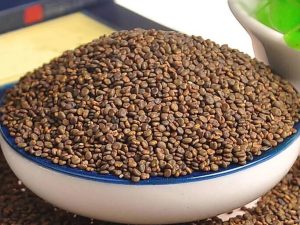
Wood Butterfly

Wood Butterfly is the name of a traditional Chinese medicine. It consists of the dried, mature seeds of Oroxylum indicum (L.) Vent., a plant belonging to the genus Oroxylum in the family Bignoniaceae. It commonly grows on slopes, along streams, in valleys, or in shrubbery at altitudes below 1,000 meters and is distributed in Fujian, Taiwan, Guangdong, Hainan, Guangxi, Sichuan, Guizhou, and Yunnan. It has a bitter and sweet taste and a cool nature.It has the effects of clearing lung heat, relieving throat discomfort, regulating liver qi, and harmonizing the stomach. It is commonly used to treat coughs caused by lung heat, sore throat, hoarseness, and liver-stomach qi pain.

Chinese Lantern

Lantern Grass is a name used in traditional Chinese medicine. It refers to the whole plant of Physalis peruviana L. (Chinese lantern), a member of the Solanaceae family. It has the efficacy of clearing heat and detoxifying, and is primarily used to treat colds, sore throats, coughs, mumps, and pemphigus.

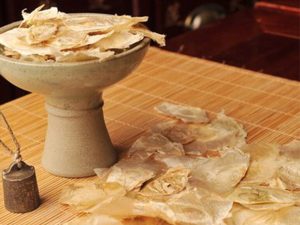
Raw Oysters

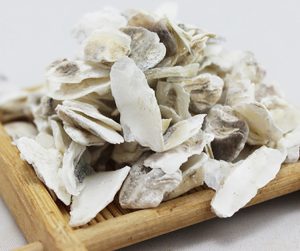
Raw Oyster, a name in traditional Chinese medicine, refers to the shells of the species Ostrea gigas Thunberg, Ostrea talienwhanensis Crosse, or Ostrea rivularis Gould, all belonging to the genus Ostrea in the family Ostreidae.It has the effects of calming the mind and stabilizing the spirit, subduing yang and replenishing yin, and softening hard masses and dispersing nodules. It is primarily used to treat palpitations and insomnia, dizziness and tinnitus, scrofula and phlegm nodules, as well as masses and abdominal masses.

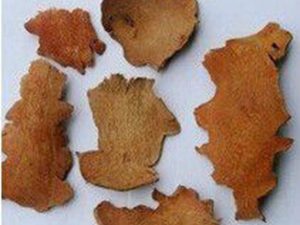
Wuling Shen

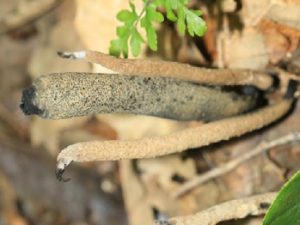
Wuling Shen is the name of a traditional Chinese medicine. It is the sclerotium of *Anthracodermus nigrocaulis*, a fungus belonging to the genus *Anthracoderma* in the family Anthracodermae. This herb has a sweet taste and neutral nature; it enters the Heart and Liver meridians. It has the effects of calming the mind, stopping bleeding, and lowering blood pressure. It is primarily used to treat insomnia, palpitations, hemoptysis, epistaxis, hypertension, and burns.

Shoulder Grasping Manipulation

Manipulation Essentials:Use the palmar side of the thumb and the palmar sides of the other four fingers of one hand to apply force in a pinching manner, holding onto the supports area or acupoint on the shoulder. Operational Procedures:The practitioner uses the palmar side of the thumb and the palmar sides of the other four … Read more
Neck grasping manipulation

Technique Essentials: Use the palmar side of the thumb and the palmar sides of the remaining four fingers to apply force relatively, grasp the supports areas on both sides of the neck, and move downward while lifting and releasing. Operational Steps: The practitioner uses the palmar side of the thumb of one hand and the … Read more

Na Fa (Grasping Manipulation)

Na Fa (Grasping Manipulation) refers to a technique where the practitioner uses one or both hands, applying force with the palmar surface of the thumb opposing the palmar surfaces of the remaining four fingers, to grasp and secure the patient’s limb, muscle, or tendon firmly, resembling the act of holding an object. This is termed … Read more

Cross Double-Palm Separating Pushing (Shuang Zhang Jiao Cha Fen Tui Fa)

Key Points Cross both palms and place them on the upper and lower parts of the lumbodorsal region. Push and press apart upward and downward respectively, while shifting positions during the movement. Operating Procedures Cross your arms and apply force with both palms on the upper and lower lumbodorsal area of the patient. Push and … Read more

Splay-shaped Separating Pushing (Ba Zi Fen Tui Fa)

Key Points Form both hands into splay palms, place them on either side of the spine. Push obliquely outward in a splay pattern while moving hands downward continuously. Operating Procedures Make splay palms with both hands and place them on both sides of the patient’s dorsal spine. Push obliquely outward along the intercostal spaces in … Read more

Double-Fist Reverse Pushing (Shuang Quan Ni Tui Fa)

Key Points Clench both fists, place them on either side of the lumbodorsal spine, and push upward repeatedly. Operating Procedures Clench both fists. Apply force with the dorsal sides of the middle phalanges and palm roots, press against both sides of the patient’s lumbodorsal spine, and perform repeated upward pushing. This technique is known as … Read more

Double-Fist Forward Pushing (Shuang Quan Shun Tui Fa)

Key Points Clench both fists, place them on either side of the lumbodorsal spine, and push downward from top to bottom. Operating Procedures Clench both fists. Apply force with the dorsal sides of the middle finger segments and palm roots, press against both sides of the patient’s lumbodorsal spine, and push repeatedly downwards all the … Read more

Lumbodorsal Forward Pushing (Yao Bei Shun Tui Fa)

Key Points Place both palms on either side of the spine and push steadily from top to bottom. Operating Procedures Use both palms or palm roots to apply pressure along both sides of the patient’s lumbodorsal spine, and push repeatedly downwards until reaching the sacrum. This technique is known as Lumbodorsal Forward Pushing (Yao Bei … Read more

Thenar Pushing (Zhang Gen Tui Fa)

Key Points Apply force with the palm root, press on the treatment area or acupoint and push forward. Operating Procedures Place the palm root on the patient’s treatment areas or acupoints and push forward firmly. This manipulation is called Thenar Pushing (Zhang Gen Tui Fa). Pushing from the proximal end to the distal end of … Read more