
[Technique Essentials] Use the thumb in opposition to the other four fingers to apply force, grasping the muscles and tendons at the supports site, and repeatedly perform left-right rotational swaying movements.
[Operational Steps] The practitioner uses the thumb(s) of one or both hands in opposition to the remaining fingers, applying coordinated force to grasp the supports area or acupoint(s) on the patient’s limb. This is followed by repeated left-and-right rotational swaying motions, known as “Rotational Grasping Manipulation (Zhuanzhuan Na Fa).” When performed with a single hand, it is termed “Single-Hand Rotational Grasping Manipulation.” For abdominal applications using bilateral rotational swaying, it is called “Bilateral Rotational Grasping Manipulation.
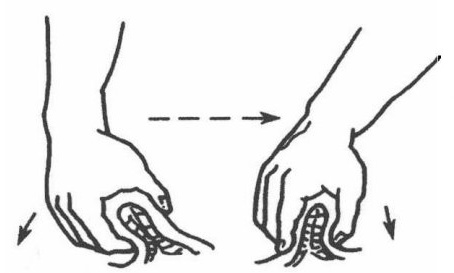
Zhuanzhuan Na Fa
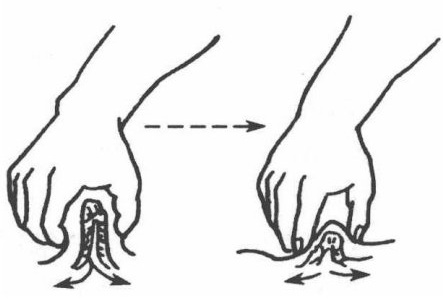
[Applicable Areas] Generally commonly used on muscle-rich areas such as the abdomen, lower back, and lower limbs.
[Pressure Sensitivity] Moderate to heavy pressure can produce a relatively strong sensation of soreness, numbness, and fullness.
[Indications for Use] supports comfortable movement of tendons and meridians, relaxes muscles, helps with occasional muscle spasms, releases fascial adhesions, promotes healthy Qi and blood circulation, and helps with occasional discomfort while calming the mind.
This sounds like a great technique for releasing tension in tight muscles! I love how it emphasizes the thumb-opposition grip for control. Have you tried this on forearms or shoulders? The rotational swaying seems perfect for breaking up adhesions without overstretching.
Interesting technique! I’ve used a similar approach for releasing tight forearms. The thumb opposition plus rotational swaying really helps get into those stubborn knots. Thanks for breaking down the steps so clearly—definitely going to try this on my next client.
مقال رائع! التقنية المذكورة سهلة التطبيق وتريح العضلات بشكل كبير. جربتها بنفسي على الكتفين، فرق ملحوظ في تخفيف التوتر بعد يوم طويل. شكرًا على الشرح الواضح.
Interesting technique! I can see how the opposition of the thumb against the other fingers would give a strong, controlled grip. The rotational swaying motion sounds like a great way to release tension in the muscles. Have you tried this on certain areas like the shoulders or forearms? Would love to hear about practical results!