
Great Chest-Relieving Decoction,*Treatise on Cold Damage*.,Syndrome of Chest Constriction. Hardness and fullness extending from the epigastrium to the lower abdomen, with pain so severe that the area cannot be touched; constipation; afternoon tidal fever; or shortness of breath, restlessness, and irritability; dry tongue with thirst; and a deep, tight, and forceful pulse. Currently used for conditions such as intestinal obstruction, biliary tract infections, cholelithiasis, and acute pancreatitis presenting with the aforementioned symptoms.In Taiyang syndrome, with a floating, throbbing, and rapid pulse, headache, fever, slight night sweats, and subsequent aversion to cold—when the exterior syndrome has not yet resolved but the physician erroneously administers a purgative—the pulse changes from throbbing and rapid to slow; there is a rejecting pain within the diaphragm; the stomach is empty; pathogenic qi agitates the diaphragm; shortness of breath and restlessness occur; there is a sense of distress in the chest; yang qi sinks inward; and the epigastrium becomes hard—this constitutes Jiexiong syndrome;In the 6th–7th day of shanghan, if the Jiexiong presents with intense fever, a deep and tight pulse, pain beneath the heart, and the area feels as hard as stone upon palpation; or if there is no severe fever, fluid is retained in the chest and flanks, and only a slight sweat appears on the head; or in Taiyang syndrome, after heavy sweating followed by purgation, the patient has not had a bowel movement for 5–6 days, the tongue is dry, and there is thirst, with slight tidal fever in the late afternoon, and the area from beneath the heart to the lower abdomen is hard, distended, and so painful that it cannot be touched.Intestinal paralysis and intestinal obstruction resulting from various types of abdominal inflammation that have progressed to a severe stage; infections of the biliary tract and cholelithiasis; acute hemorrhage and necrotizing pancreatitis complicated by paralytic intestinal obstruction. Simple intestinal obstruction with significant fluid accumulation in the intestinal lumen; pyloric obstruction and acute gastric distension. Acute pancreatitis with a robust and full internal condition.
Great Chest-Relieving Decoction
Formulas Name : Great Chest-Relieving Decoction
Chinese Name : 大陷胸汤
Drug Formulation
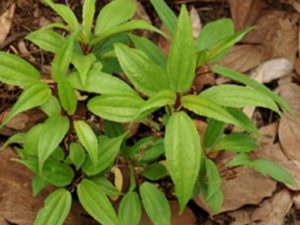
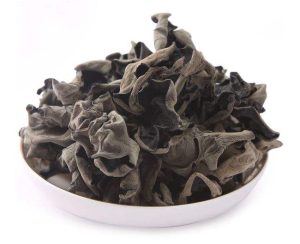
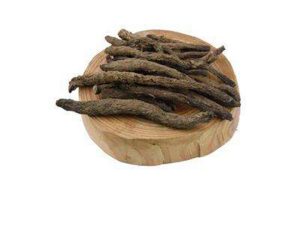
Rhubarb 6 liang (peeled), sodium silicate 1 sheng, Euphorbia 1 qian bi.
Source
*Treatise on Cold Damage*.
Benefits
Syndrome of Chest Constriction. Hardness and fullness extending from the epigastrium to the lower abdomen, with pain so severe that the area cannot be touched; constipation; afternoon tidal fever; or shortness of breath, restlessness, and irritability; dry tongue with thirst; and a deep, tight, and forceful pulse. Currently used for conditions such as intestinal obstruction, biliary tract infections, cholelithiasis, and acute pancreatitis presenting with the aforementioned symptoms.In Taiyang syndrome, with a floating, throbbing, and rapid pulse, headache, fever, slight night sweats, and subsequent aversion to cold—when the exterior syndrome has not yet resolved but the physician erroneously administers a purgative—the pulse changes from throbbing and rapid to slow; there is a rejecting pain within the diaphragm; the stomach is empty; pathogenic qi agitates the diaphragm; shortness of breath and restlessness occur; there is a sense of distress in the chest; yang qi sinks inward; and the epigastrium becomes hard—this constitutes Jiexiong syndrome;In the 6th–7th day of shanghan, if the Jiexiong presents with intense fever, a deep and tight pulse, pain beneath the heart, and the area feels as hard as stone upon palpation; or if there is no severe fever, fluid is retained in the chest and flanks, and only a slight sweat appears on the head; or in Taiyang syndrome, after heavy sweating followed by purgation, the patient has not had a bowel movement for 5–6 days, the tongue is dry, and there is thirst, with slight tidal fever in the late afternoon, and the area from beneath the heart to the lower abdomen is hard, distended, and so painful that it cannot be touched.Intestinal paralysis and intestinal obstruction resulting from various types of abdominal inflammation that have progressed to a severe stage; infections of the biliary tract and cholelithiasis; acute hemorrhage and necrotizing pancreatitis complicated by paralytic intestinal obstruction. Simple intestinal obstruction with significant fluid accumulation in the intestinal lumen; pyloric obstruction and acute gastric distension. Acute pancreatitis with a robust and full internal condition.
Instructions for Use
Take 6 sheng of water; first boil rhubarb, reduce to 2 sheng, and strain out the residue; add sodium carbonate, boil for 1–2 boils; add Gan Sui powder, and administer 1 sheng while warm. Once a smooth bowel movement is achieved, discontinue further doses.
Note
For those who are generally weak or unable to tolerate aggressive treatment following an illness, one must be mindful of the dangers of treating deficiency with deficiency; all three ingredients are potent purgatives and must not be used unless external pathogens have been completely eliminated and there is an internal accumulation of fluid and heat.
Great Chest-Relieving Decoction,Syndrome of Chest Constriction. Hardness and fullness extending from the epigastrium to the lower abdomen, with pain so severe that the area cannot be touched; constipation; afternoon tidal fever; or shortness of breath, restlessness, and irritability; dry tongue with thirst; and a deep, tight, and forceful pulse. Currently used for conditions such as intestinal obstruction, biliary tract infections, cholelithiasis, and acute pancreatitis presenting with the aforementioned symptoms.In Taiyang syndrome, with a floating, throbbing, and rapid pulse, headache, fever, slight night sweats, and subsequent aversion to cold—when the exterior syndrome has not yet resolved but the physician erroneously administers a purgative—the pulse changes from throbbing and rapid to slow; there is a rejecting pain within the diaphragm; the stomach is empty; pathogenic qi agitates the diaphragm; shortness of breath and restlessness occur; there is a sense of distress in the chest; yang qi sinks inward; and the epigastrium becomes hard—this constitutes Jiexiong syndrome;In the 6th–7th day of shanghan, if the Jiexiong presents with intense fever, a deep and tight pulse, pain beneath the heart, and the area feels as hard as stone upon palpation; or if there is no severe fever, fluid is retained in the chest and flanks, and only a slight sweat appears on the head; or in Taiyang syndrome, after heavy sweating followed by purgation, the patient has not had a bowel movement for 5–6 days, the tongue is dry, and there is thirst, with slight tidal fever in the late afternoon, and the area from beneath the heart to the lower abdomen is hard, distended, and so painful that it cannot be touched.Intestinal paralysis and intestinal obstruction resulting from various types of abdominal inflammation that have progressed to a severe stage; infections of the biliary tract and cholelithiasis; acute hemorrhage and necrotizing pancreatitis complicated by paralytic intestinal obstruction. Simple intestinal obstruction with significant fluid accumulation in the intestinal lumen; pyloric obstruction and acute gastric distension. Acute pancreatitis with a robust and full internal condition.