
Technique Essentials: Use the palmar side of the thumb and the palmar sides of the remaining four fingers to apply force relatively, grasp the supports areas on both sides of the neck, and move downward while lifting and releasing.
Operational Steps: The practitioner uses the palmar side of the thumb of one hand and the palmar sides of the remaining four fingers to apply opposing pressure, grasping the supports areas or acupoints on both sides of the patient’s neck. While grasping, releasing, and shifting positions, the practitioner induces corresponding sensations. This technique is called “neck grasping method” or, in short, “neck grasping technique.
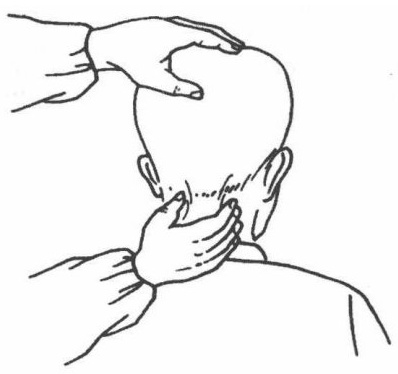
neck grasping method
If, while grasping the neck, the fingers are simultaneously rotated and kneaded, with the position being shifted continuously during the process of grasping and kneading, this technique is called “neck grasping-kneading method”.
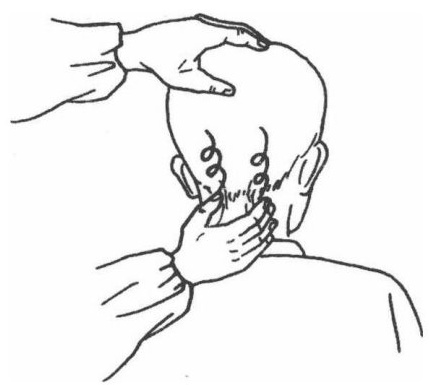
neck grasping-kneading method
Pressure Sensitivity:Apply moderate pressure to induce sensations of soreness, numbness, and distension. Heavy or sustained pressure may produce radiating or conducting sensations.
Primary Functions:supports comfortable movement of meridians, relaxes muscles, harmonizes Qi and supports healthy blood circulation, helps with occasional muscle spasms, and helps with occasional discomfort by calming spasms. Primarily indicated for cervical spondylosis, stiff neck, cervical sprain/strain, cervical subluxation, and atlantoaxial subluxation.
Interesting technique! I’ve seen similar moves in massage therapy but never with such specific finger placement. The “lifting while moving downward” part sounds tricky—definitely something that requires practice to avoid discomfort. Would love to try it on tension headaches!
Interesting technique! I’ve had neck tension for years and never thought of this kind of controlled grasping motion. Do you recommend any specific precautions to avoid over-stretching the muscles? Would love to try this with a therapist.
Interesting technique! I’ve tried similar manual therapy for neck tension, but I always worry about applying too much pressure. Any tips for controlling the force during the downward movement?
I’ve been dealing with a stiff neck for years—this technique looks super helpful! Do you have any tips for someone trying it on themselves, or is it best done by a practitioner only? Thanks for sharing these detailed steps!