Search for Herbal Teas Recipes by Symptom:

Henna Leaves

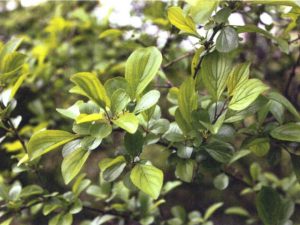
Henna leaves, a name in traditional Chinese medicine. These are the leaves of Lawsonia inermis L., a plant belonging to the genus Lawsonia in the family Lythraceae. Lawsonia inermis is cultivated in gardens throughout Jiangsu, Zhejiang, Fujian, Taiwan, Guangdong, Hainan, and Guangxi in China. It has astringent and hemostatic properties. It is primarily used to treat bleeding from wounds.

Bear Paw

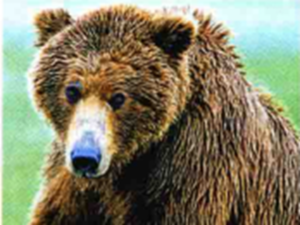
Bear Paw is the name of a traditional Chinese medicinal material. It consists of the paw pads of the black bear (Selenarctos thibetanus G. Cuvier) and the brown bear (Ursus arctos Linnaeus) from the bear family (Ursidae). It is effective in strengthening the spleen and stomach, tonifying qi and blood, and dispelling wind and dampness. It is primarily used to treat spleen and stomach deficiency, various forms of deficiency-related debility, and wind-cold-dampness arthralgia.

Bird’s Nest

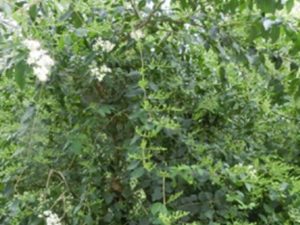
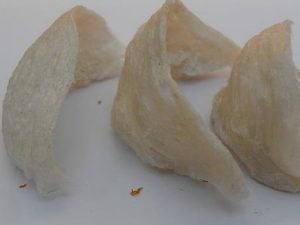
Bird’s nest is a name for a traditional Chinese medicine. It consists of nests built by the edible-nest swiftlet (Collocalia esculenta L.) of the family Apodidae, formed by the coagulation of a mixture of saliva and down feathers.This herb has a sweet taste and neutral nature; it enters the Lung, Stomach, and Kidney meridians. It nourishes yin, moistens dryness, tonifies qi, and strengthens the middle jiao. It is primarily used to treat deficiency syndromes, consumptive diseases, cough with phlegm and wheezing, hemoptysis, hematemesis, chronic dysentery, chronic malaria, dysphagia, and regurgitation.

Ox-Tongue

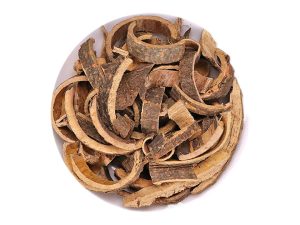
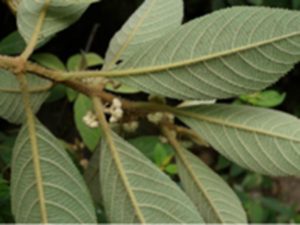
Niushéhuáng is the name of a traditional Chinese medicine. It consists of the roots, stems, or leaves of Callicarpa kochiana Makino [C. loureire Hook. et Arn.; C. longiloba Merr.], a plant in the Verbenaceae family. Niushéhuáng is distributed in Henan, Zhejiang, Jiangxi, Fujian, Taiwan, Hunan, Guangxi, and other regions. It has the effects of dispelling wind and dampness, as well as promoting blood circulation and stopping bleeding.It is commonly used to treat rheumatic pain, wind-cold coughs, headaches, gastric hemorrhage, and bleeding from external injuries.

Sitting Position TCM Acupoint Massage for Weight Loss

1. Grasp the neck muscles with both hands for 3 to 5 times. 2. Use the thumb to press and knead Neilaogong (Inner Laogong, PC8) and Wailaogong (Outer Laogong, EX-UE10) acupoint for approximately 1 minute. Manipulate the neck muscles Precautions: (1) This technique is applied for 40 minutes per session. (2) Once every other day. … Read more
Prone TCM Acupoint Massage for Weight Loss

1. Use the palms of both hands to perform palm-kneading manipulation along Bladder Meridian (BL) lines 1 and 2 to the area beside the 5th lumbar vertebra for 3 to 5 repetitions. Grasp and lift the muscles on both sides of the back for 3 to 5 repetitions. 3. Use the thumb to press and … Read more

Supine Traditional Chinese Acupoint Massage for Weight Loss

1. Perform palm kneading (Rou) along the Stomach Meridian (ST) on the chest for 3 to 5 repetitions. Then grasp and knead both sides of the pectoralis major muscles for 3 repetitions. 2. Lift and knead the abdominal muscles on both sides of the costal margin with both hands for 2 to 3 times. 3. … Read more

Method for Reducing Thigh Fat

After applying massage cream to the legs, spread it evenly. Rub the outer sides of the legs with both hands facing each other (using a rolling (Gun) technique) Perform circular rubbing with the thenar eminences facing each other towards the inguinal region. Leg-tapping technique Thigh-patting technique 1. Gently stroke both palms upward from the knees … Read more

Method for supporting the reduction of hip fat

1. Press the three points on the iliac crest (one cun below each of the left and right points) with the thumb for 10 seconds. 2. Press the three points around JULIAO (GB29) (one cun anterior and posterior to the acupoint) with the thumb for 10 seconds. 3. Press the five points at the center … Read more

Abdominal Weight-Reduction Massage Technique

1. Place both hands on both sides of the waist and perform counterclockwise vibrating rotations. The left hand moves upward while the right hand rotates to the left.Place both hands on the abdomen and rotate them in a clockwise direction. 3. Place both thumbs on the navel, apply an upward force to push the adipose … Read more