Goose-Does-Not-Eat-Grass is a name in traditional Chinese medicine. It refers to the dried whole herb of Centipeda minima (L.) A.Br. et Aschers., a plant in the genus Centipeda of the Asteraceae family. It has the effects of dispelling wind-cold, unblocking the nasal passages, and relieving coughs. It is primarily used to treat wind-cold headaches, coughs with excessive phlegm, nasal congestion, and nasal discharge.
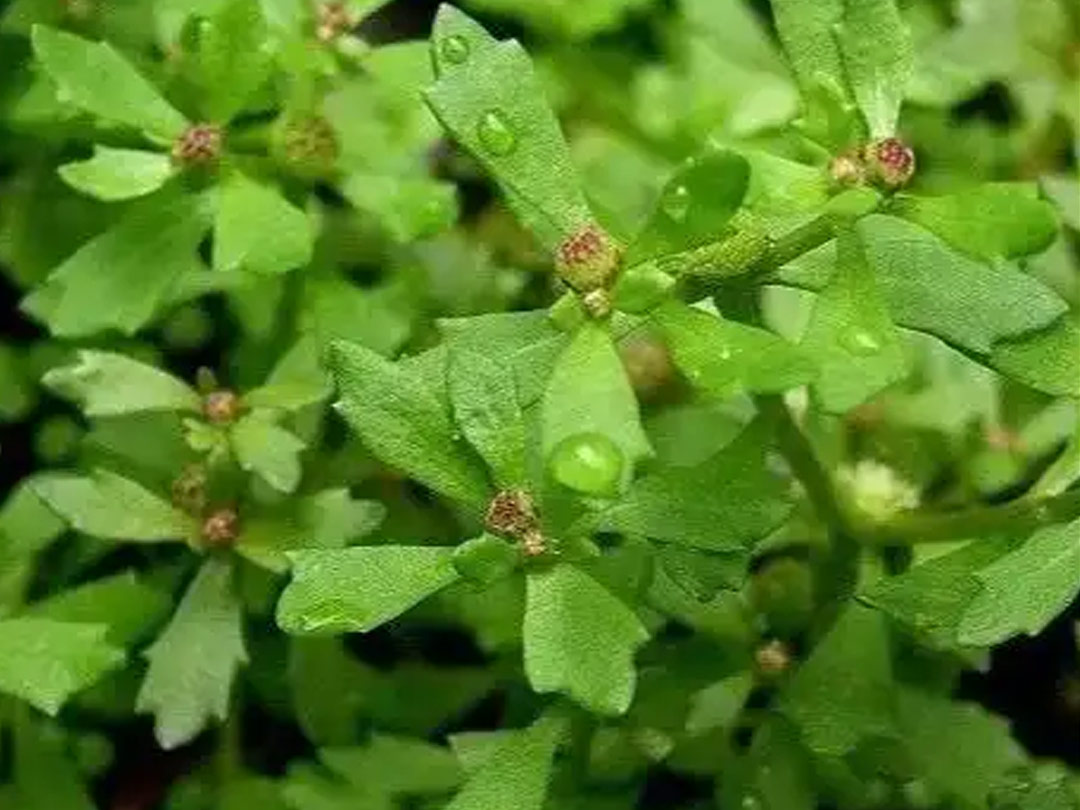
Goose-Does-Not-Eat-Grass
Goose-Does-Not-Eat-Grass is a name in traditional Chinese medicine. It refers to the dried whole herb of Centipeda minima (L.) A.Br. et Aschers., a plant in the genus Centipeda of the Asteraceae family. It has the effects of dispelling wind-cold, unblocking the nasal passages, and relieving coughs. It is primarily used to treat wind-cold headaches, coughs with excessive phlegm, nasal congestion, and nasal discharge.
Chinese Name : 鹅不食草
Latin Name : Centipedae Herba
Aliases : Wild Coriander, Chicken-Intestine Grass, Goose-Refuses, Ground Coriander, Baby’s Breath, Sand-Flying Grass, Ground Pepper, Great Rescue, Three-Joint Sword, Mountain Pepper, Ground Barnyard Grass, Erlang’s Halberd, Little Rescue, Duwang Grass, Pig-Dung Grass, Sand-Medicine Grass, Ground Madder, Pig-Dung Stream, Heaven-Reaching Orifice,Globe Grass, Mist-Water Sand, Cat Sand, Little Fist, Iron Fist, Scattered Star Grass
Authentic Producing Area : Zhejiang, Hubei, Jiangsu, Guangdong
Nature, Flavor & Meridian Tropism : Pungent in taste, warm in nature; enters the Lung Meridian
Benefits & Efficacy
Benefits
Dispels wind-cold, clears nasal passages, and relieves cough.
Indications
Headaches due to wind-cold, cough with excessive phlegm, nasal congestion, and nasal discharge.
Usage and Dosage
1. Internal use: Decoct 5–9 g; or extract the juice. 2. External use: Apply an appropriate amount as a poultice; or pack the crushed herb into the nose; or spray the powder into the nose.
Precautions
1. *De Pei Bencao*: “Contraindicated for those with qi deficiency or a weak stomach.” 2. *Caomu Bianfang*: “Contraindicated for those with blood deficiency, pregnant women, or those with heat in the lungs or stomach.” 3. *Guangxi Compendium of Traditional Chinese Medicine*: “Contraindicated for those with excess yang and intense fire.” 4. *Compendium of Medicinal Plants of Zhejiang*: “Use with caution in patients with gastric disorders.”
Chemical Constituents
It primarily contains sterol compounds, such as taraxasterol, taraxasterol palmitate, rapeseed sterol, and arnicadiol, as well as guaiacolides, triterpenes, flavonoids, and essential oils.
Pharmacological Actions
This product has anti-allergic, anti-inflammatory, anti-pathogenic, hepatoprotective, and antitumor effects.
Relevant Discussions
1. *Sisheng Bencao*: Clears nasal congestion, opens the nine orifices, and expels wind-phlegm.
2. *Compendium of Materia Medica*: Goose-not-eat-grass ascends to the head and brain, treating headaches and eye disorders; it clears nasal congestion and removes nasal polyps.
Applications
Clinical Applications
1. For treating wind-cold colds manifested as nasal congestion, runny nose, and headache, it can be combined with herbs such as Asarum, Angelica dahurica, and Xanthium seeds.
2. For treating nasal congestion caused by wind-cold, combine it with Xanthium seeds, Magnolia flower, Angelica dahurica, and other herbs that dispel wind-cold and clear the nasal passages for oral administration.If the condition is predominantly due to wind-heat, it may be used in combination with herbs such as Bo He, Huang Qin, and Ye Ju Hua.
3. To treat cough with excessive phlegm—particularly when caused by cold phlegm—it may be combined with herbs such as Ma Huang, Xi Xin, and Bai Bu.
4. For treating boils, abscesses, and toxic swellings, the *Binhu Collection of Simple Formulas* recommends pounding this herb with Manis pentadactyla and Angelica sinensis into a paste, adding wine, straining the juice for oral administration, and applying the residue to the affected area. The *Quanzhou Materia Medica* recommends pounding the fresh herb and applying it topically to treat swelling and pain from snake bites.
Related Compatibility
1. Goose-Not-Eat-Grass combined with Xanthium seeds and Magnolia flower: All three herbs disperse wind-cold, clear the lungs, and open the orifices; they are all commonly used to treat chronic nasal discharge. When used in combination, this formula is commonly employed to treat wind-cold nasal congestion and nasal obstruction associated with otolaryngological conditions, and is often used together with Angelica dahurica and Asarum.
2. Goose-Does-Not-Eat-Grass combined with Ephedra and Asarum: Goose-Does-Not-Eat-Grass can disperse wind-cold and also has mild effects in resolving phlegm, relieving cough, and alleviating wheezing; Ephedra excels at inducing sweating to release the exterior and promoting lung function to relieve wheezing; Asarum excels at dispersing wind-cold and warming the lungs to resolve fluid retention. When combined, these three herbs can disperse wind-cold, resolve phlegm, relieve cough, and alleviate wheezing. This combination is commonly used to treat coughs with excessive phlegm caused by cold phlegm.
Related Medicines
Re Ke Ping Injection, Bi Yan Kang Tablets, and Bi Tong Pills.
Notes
Patients requiring treatment with traditional Chinese medicine should first consult a licensed TCM hospital, where a TCM practitioner will conduct a professional pattern differentiation and issue a prescription.
Processing & Preparation
Harvesting & Processing
Harvest during the flowering season in summer and fall, wash off dirt and sand, and sun-dry.
Processing Methods
Take the raw herbal material, remove impurities, rinse thoroughly with running water, cut into medium-sized pieces, dry, and sift out any dust or debris.
Storage Methods
Store in a dry container in a cool, dry place to prevent mold.
Crude Drug Identification
Properties of Crude Drugs
The whole plant is twisted into a bundle. The fibrous roots are slender and pale yellow; the stems are thin, highly branched, brittle, and easily broken, with a yellowish-white cross-section. The leaves are small and nearly sessile; most are shriveled or fragmented, but intact leaves, when flattened, are spoon-shaped, with a gray-green or brownish-gray surface and 3–5 teeth along the margins.The capitula are yellow or yellowish-brown. The odor is faintly fragrant but becomes pungent upon prolonged inhalation; the taste is bitter with a slight pungency. Specimens with a gray-green color and a strong, pungent odor are considered superior.
Properties of Processed Slices
It consists of a mixture of roots, stems, leaves, and flowers, appearing in segmented pieces. The fibrous roots are slender and pale yellow; the stems are thin and highly branched, with a yellow-green surface and a yellowish-white cross-section; they may have a pith in the center or be hollow.The leaves are small, mostly shriveled and fragmented; intact leaflets are spoon-shaped, with a gray-green or brownish-red surface, 3–5 serrations along the margins, and a slight downy texture. The flower heads are yellow or yellowish-brown. The odor is faintly fragrant but becomes pungent upon prolonged inhalation; the taste is bitter with a slight pungency.
Botanical Information
Botanical Classification
Goose-not-eat-grass, a plant of the genus Saussurea in the Asteraceae family.
Morphological Characteristics
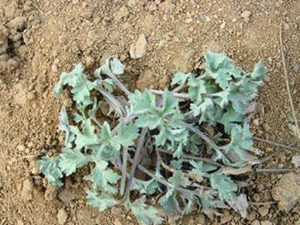
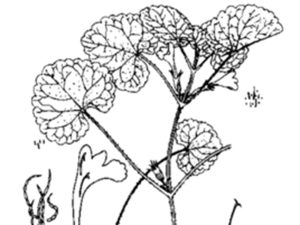
An annual small herb, 5–20 cm tall. The stem is slender, highly branched, and prostrate at the base; it roots easily when it touches the ground and is glabrous or slightly covered with fine cottony hairs. Leaves are alternate; sessile; leaf blades are wedge-shaped to oblanceolate, 7–20 mm long, 3–5 mm wide, with a blunt apex and irregular, sparse teeth along the margins; glabrous or slightly pubescent on the underside.The flower heads are minute, flattened globose, about 3 mm in diameter, solitary in the leaf axils, sessile or nearly sessile; the involucre is hemispherical; the involucral bracts are in two layers, elliptic-lanceolate, green, with membranous margins, the outer layer larger than the inner; the receptacle is flat, without receptacle bracts;Flowers are mixed, pale yellow or yellowish-green, all tubular; the outer ring consists of multiple layers of female flowers with slender corollas bearing indistinct lobes; the central hermaphroditic flowers have corollas that are distinctly 4-lobed. Achenes are elliptical, about 1 mm long, with 4 ridges and long hairs along the margins; no pappus. Flowering period: September–November.
Distribution Area
Distributed in North China, Northeast China, Central China, East China, South China, and Southwest China.
Growth Habits
Prefers warm, humid environments and is best cultivated in sandy loam.
Propagation Methods
Propagate by seed or division.
Cultivation Techniques
Sow seeds in spring by broadcasting or in wide furrows, covering them with 0.3–0.6 cm of soil. Division can be performed in both spring and fall; during the growing season, be sure to weed and water regularly.