Winter melon seeds are a traditional Chinese medicine. They are the dried, mature seeds of Benincasa hispida (Thunb.) Cogn., a plant in the genus Benincasa of the Cucurbitaceae family. They have the effects of clearing heat, resolving phlegm, draining pus, and promoting the elimination of dampness. They are primarily used to treat phlegm-heat coughs, lung abscesses, intestinal abscesses, leukorrhea, dysuria, and edema.
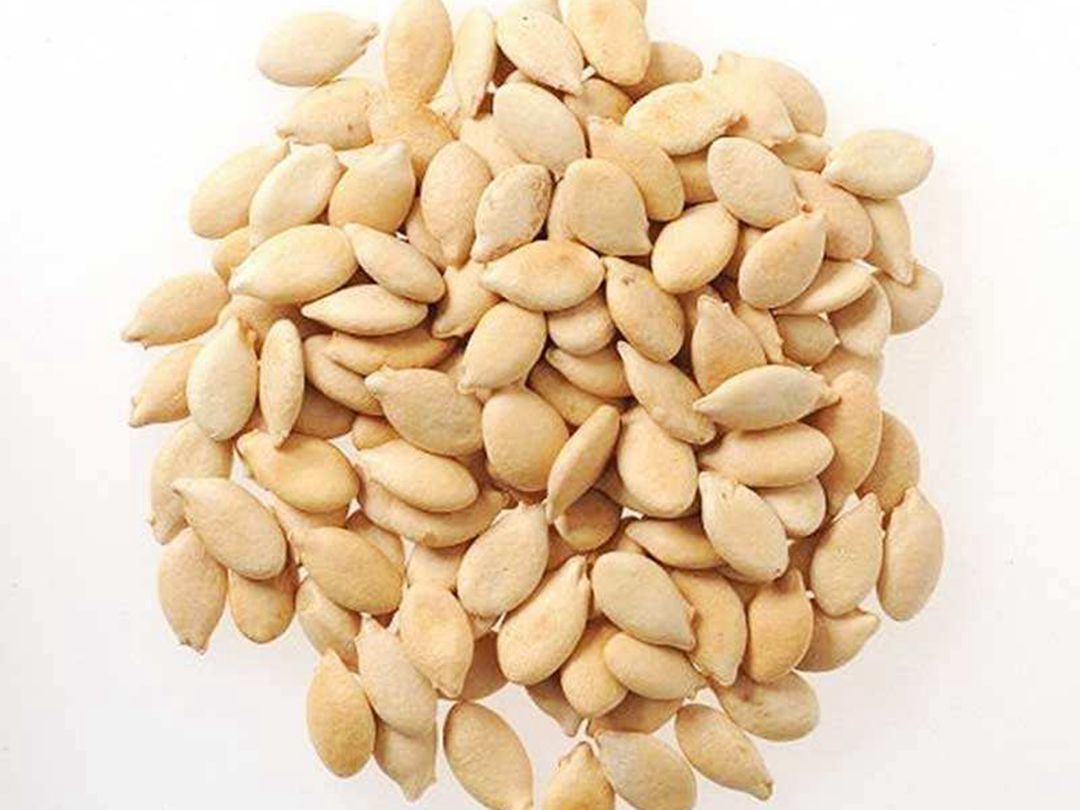
Winter Melon Seeds
Winter melon seeds are a traditional Chinese medicine. They are the dried, mature seeds of Benincasa hispida (Thunb.) Cogn., a plant in the genus Benincasa of the Cucurbitaceae family. They have the effects of clearing heat, resolving phlegm, draining pus, and promoting the elimination of dampness. They are primarily used to treat phlegm-heat coughs, lung abscesses, intestinal abscesses, leukorrhea, dysuria, and edema.
Chinese Name : 冬瓜子
Aliases : White Melon Seeds, Melon Seeds, Melon Segments, Winter Melon Seeds, Melon Horns
Authentic Producing Area : Produced in most regions of China
Nature, Flavor & Meridian Tropism : Sweet in taste, slightly cold in nature; enters the Lung, Spleen, and Small Intestine meridians
Benefits & Efficacy
Benefits
Clears heat, resolves phlegm, drains pus, and promotes diuresis.
Indications
Cough due to phlegm-heat, lung abscess, intestinal abscess, leukorrhea, dysuria, and edema.
Usage and Dosage
1. Internal use: Decoct 10–15 g in water; or grind into powder and take orally. 2. External use: Apply an appropriate amount of the ground paste as a topical ointment.
Precautions
1. Those with spleen and stomach deficiency-cold should use this product with caution. 2. Do not take this product while taking vitamin K.
Chemical Constituents
Winter melon seeds contain 14% oil, of which triglycerides account for 72%–96%. The main fatty acids include linoleic acid, oleic acid, stearic acid, palmitic acid, arachidonic acid, and arachidonic acid;lipids include phosphatidylcholine, phosphatidylethanolamine, phosphatidylserine, phosphatidylinositol, sphingomyelin, and cerebrosides; sterols include β-sitosterol, rapeseed sterol, stigmasterol, 24-ethylcholest-7,25-dienol,24-ethylcholest-7,22,25-trienol, 24-ethylcholest-7-enol,24-ethylcholest-7,22-dienol, 24α-ethyl-5α-cholest-8,22-dienol, 24β-ethyl-5α-cholest-8,22-dienol, 24α-ethyl-5α-cholest-5,25(27)-dienol, 24β-ethyl-5α-cholest-8,22,25(27)-trienol, etc.;Triterpenes include mucromyrenol, simidendrenol, 5,24-cucurbitadienol, cucurbitin B, lupeol, and isomultiflorenol; alkaloids include adenine, fenugreek alkaloid, and 5-methylcytosine.
Pharmacological Actions
This product exhibits antitumor, antioxidant, anti-inflammatory, analgesic, antipyretic, antidiabetic, expectorant, and inhibitory effects on pulmonary fibrosis, benign prostatic hyperplasia, and bacterial growth.
Relevant Discussions
1. *Shennong Bencao Jing*: “It promotes a radiant complexion, enhances vitality, suppresses hunger, and, when taken over a long period, lightens the body and delays aging.”
2. *Mingyi Bielu*: “Cold in nature, non-toxic. It treats restlessness, fullness, and melancholy.”
3. *Dietary Therapy Materia Medica*: “Relieves fullness of qi in the chest and heart, dissipates phlegm, and alleviates restlessness.”
4. Cui Yuxi’s *Dietary Classic*: “Promotes urination and eliminates excess fluid.”
5. *Rihua Zi Materia Medica*: “Relieves wind-related skin conditions, prevents premature darkening of the skin, and moisturizes the skin.”
Applications
Clinical Applications
1. For treating cough accompanied by mild fever, restlessness and fullness, and a sensation of tightness in the chest—indicative of lung abscess: reed stems (sliced; 2 sheng, boiled in 2 dou of water until reduced to 5 sheng, then strained), half a sheng of coix seeds, 30 peach kernels, and half a sheng of melon seeds (currently, winter melon seeds are commonly used).Finely chop the four ingredients, boil them in the reed juice until reduced to two sheng, and take one sheng; this should induce vomiting of pus-like material. (*Qianjin Reed Stem Decoction* from *Essentials of the Golden Cabinet*)
2. For treating intestinal abscess where pus has not yet formed, with swelling and fullness in the lower abdomen that is painful on palpation, symptoms resembling dysuria, normal urination, intermittent fever, spontaneous sweating followed by chills, and a slow, taut pulse: 4 liang of rhubarb, 1 liang of peony bark, 50 peach kernels, half a jin of melon seeds, and 3 he of芒硝.Combine the five ingredients with six sheng of water, boil until reduced to one sheng, strain out the residue, and add the芒硝; bring to a boil again, then take the entire dose at once. If pus is present, it will be expelled; if no pus is present, blood will be expelled. (*Jin Gui Yao Lue*, Da Huang Mu Dan Decoction)
3. For treating leukorrhea in men and vaginal discharge in women: Roast aged winter melon seeds and grind into a powder. Take five qian on an empty stomach with rice water. (*Emergency Remedies*)
4. For treating unrelenting thirst and excessive urination: Dried winter melon seeds, Ophiopogon tuber, and Coptis root, each two liang. Decoct in water and drink the solution. (*Selected Essential Formulas*)
5. For treating the “Five Labors and Seven Injuries” in men and improving eyesight: Place seven sheng of white winter melon seeds in a silk bag, agitate them in boiling water three times, then sun-dry; soak in five sheng of vinegar overnight, then sun-dry again; grind into a fine powder. Take one fangcun bi with wine, three times daily. (*Qianjin Fang*)
Notes
Patients requiring treatment with traditional Chinese medicine should first consult a licensed TCM hospital, where a TCM practitioner will conduct a professional pattern differentiation and issue a prescription.
Processing & Preparation
Harvesting & Processing
When consuming winter melon, collect the mature seeds and sun-dry them.
Processing Methods
1. Winter Melon Seeds: Take the raw material, sift out impurities, soft seeds, and empty shells, wash thoroughly, and optionally chop into small pieces before sun-drying.
2. Winter Melon Kernels: Take the cleaned winter melon seeds, remove the outer shells to extract the kernels, and crush them when needed.
3. Roasted Winter Melon Seeds: Roast the winter melon seeds over low heat until they turn slightly yellow or emit a faint aroma.
Storage Methods
Store in an airtight container in a well-ventilated, dry place to prevent insect infestation and rodent damage.
Crude Drug Identification
Identification
1. Cross-section of the seed: The outer epidermis of the seed coat consists of a single layer of cells, arranged in a lattice-like pattern, with slightly thickened, slightly lignified walls; the hypodermis comprises more than 10 layers of parenchyma cells with slightly lignified walls and pit pores; the inner side consists of 2–3 layers of stone cells; the aerating parenchyma consists of a single layer of cells adjacent to the stone cells, with relatively large intercellular spaces; vascular bundles are present at both ends; and the inner epidermis consists of a single layer of cells.The endosperm epidermis consists of a single layer of cells, covered externally by a cuticle; on the inner side are the remnants of the endosperm and the embryo. In the center are two cotyledons; the cells contain fatty oil and starch grains.
2. Take 1 g of the coarse powder of this sample, add 20 mL of water, boil for 10 minutes, allow to cool, and filter. Transfer the filtrate to a stoppered test tube and shake vigorously to produce persistent foam (to test for saponins).
Properties of Crude Drugs
The seeds are oblong or oval, flattened, 1–1.5 cm long, 0.5–1 cm wide, and approximately 0.2 cm thick. The surface is yellowish-white and slightly rough, with smooth margins (in one-sided winter melon seeds), or with a ring-shaped pattern on the outer edge of each side (in two-sided winter melon seeds).One end is slightly pointed and has two small protrusions; the larger protrusion has a beaded pore, while the smaller one is the seed scar; the other end is rounded and blunt. The seed coat is slightly hard and brittle; upon removal, two cotyledons are visible, which are white, fleshy, and have a short, small radicle. The seeds are light in weight and rich in oil. They are odorless and have a slightly sweet taste. Those with plump grains and a white color are considered the best.
Properties of Processed Slices
1. Winter Melon Seeds: See “Characteristics of Medicinal Materials.”
2. Roasted Winter Melon Seeds: Resemble winter melon seeds in shape, with a slightly yellow surface and a faint aroma.
Botanical Information
Botanical Classification
Winter melon (Cucumis melo), a plant of the genus Cucumis in the family Cucurbitaceae.
Morphological Characteristics
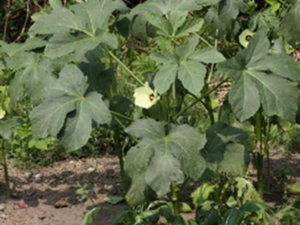
An annual climbing herb. The stem is long, thick, and slightly square in cross-section, densely covered with yellowish-brown spiny hairs, with branched tendrils. Leaves are simple and alternate; they have long petioles; the leaf blades are broadly ovate or nearly reniform, with width and length nearly equal, featuring 5–7 ridges or shallow lobes, serrated margins, and coarse hairs on both surfaces, with reticulate venation.Flowers are unisexual, with male and female flowers on the same plant, and borne singly in the leaf axils; the male flower has a tubular calyx, 5-lobed, with triangular-ovate lobes bearing serrated margins; the corolla is yellow, 5-lobed almost to the base, with spreading petals; there are 5 stamens, fused into 3, of which 2 are broader, with 2-celled anthers, and the remaining one is narrower, with a 1-celled anther;The pistillate flowers have short pedicels; the ovary is inferior, oblong, and densely pubescent; the stigma is 3-lobed and slightly twisted. The fruit is a fleshy gourd, elliptic or oblong-elliptic, sometimes nearly round; the pericarp is pale green, with a layer of white waxy powder on the surface; the flesh is white and thick; the fruit stalk is cylindrical with longitudinal grooves.Seeds are numerous, white or yellowish-white; ovate or oblong-ovate, usually with a single ridge along the margin, though some cultivated varieties have smooth margins. Flowering occurs from May to June, and fruiting from June to August.
Distribution Area
It is cultivated in most regions of the country.
Growth Habits
It prefers warm conditions and is heat-tolerant. It is not particular about soil type and can be grown in sandy loam or dry loam.
Propagation Methods
Propagated by seed.
Cultivation Techniques
The planting period for spring cultivation is from December to March of the following year, while the period for fall cultivation is June–July. After the true leaves have unfolded, transplant the seedlings to the field on a sunny, warm day; for fall planting, seeds can be sown directly into the field after soaking and germination induction. Prepare wide ridges, 2–2.5 m wide (including the furrow) and about 0.5 m high, using the high-ridge, wide-furrow, and water-puddle cultivation method.Single-row planting is recommended, with a plant spacing of 80–100 cm; for fall planting, due to the shorter growing season, earlier fruit set, and slimmer fruit shape, plant spacing should be 60–80 cm. When approximately 70% of the seedlings have emerged, promptly remove the cover material.
Pest and Disease Control
1. Diseases include wilt, late blight, anthracnose, and viral diseases. These can be controlled using a 500–600-fold dilution of 65% zinc mancozeb wettable powder, an 800–1,000-fold dilution of 58% mancozeb-manganese wettable powder, or a 600-fold dilution of 72% Keluc wettable powder.
2. Insect pests include whiteflies, spider mites, and melon fruit flies. Whiteflies can be controlled with a 1,500–2,000-fold dilution of Shigao;use a 1,500-fold dilution of Chujin to control red spider mites; and use a 1,000-fold dilution of 40.7% Lesben, 80% DDVP, or 1,000-fold dilutions of diazinon to control melon fruit flies.