Bird’s nest is a name for a traditional Chinese medicine. It consists of nests built by the edible-nest swiftlet (Collocalia esculenta L.) of the family Apodidae, formed by the coagulation of a mixture of saliva and down feathers.This herb has a sweet taste and neutral nature; it enters the Lung, Stomach, and Kidney meridians. It nourishes yin, moistens dryness, tonifies qi, and strengthens the middle jiao. It is primarily used to treat deficiency syndromes, consumptive diseases, cough with phlegm and wheezing, hemoptysis, hematemesis, chronic dysentery, chronic malaria, dysphagia, and regurgitation.
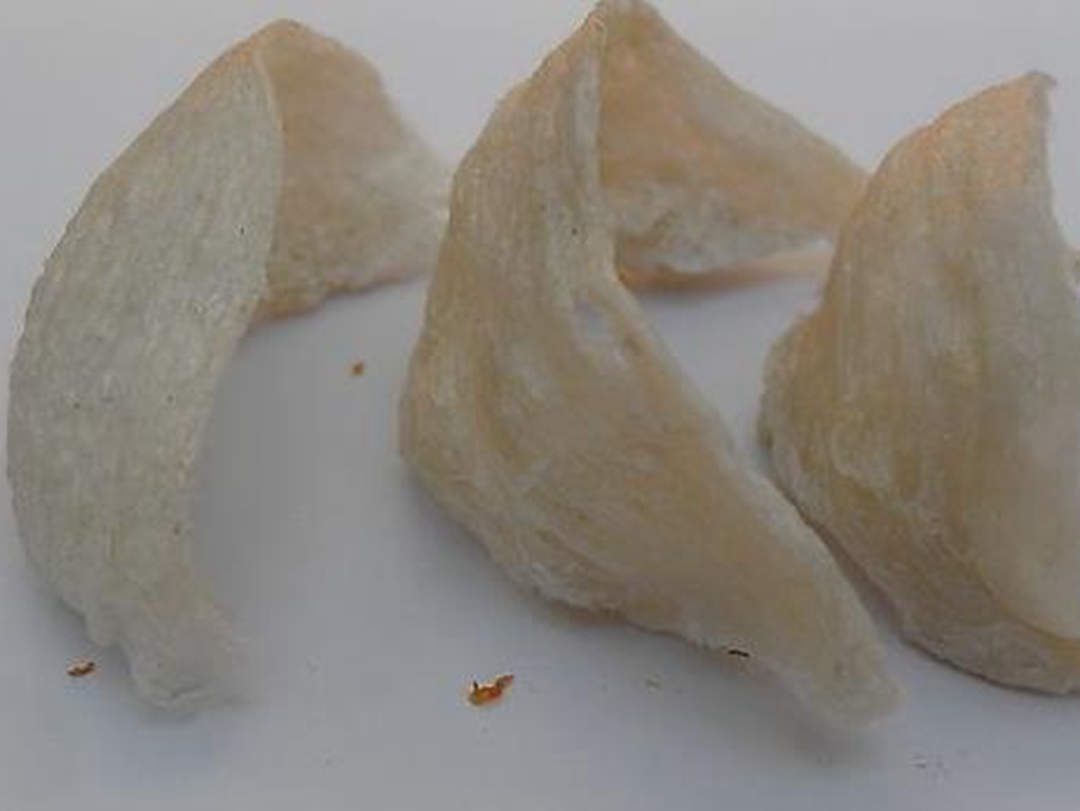
Bird’s Nest
Bird’s nest is a name for a traditional Chinese medicine. It consists of nests built by the edible-nest swiftlet (Collocalia esculenta L.) of the family Apodidae, formed by the coagulation of a mixture of saliva and down feathers.This herb has a sweet taste and neutral nature; it enters the Lung, Stomach, and Kidney meridians. It nourishes yin, moistens dryness, tonifies qi, and strengthens the middle jiao. It is primarily used to treat deficiency syndromes, consumptive diseases, cough with phlegm and wheezing, hemoptysis, hematemesis, chronic dysentery, chronic malaria, dysphagia, and regurgitation.
Chinese Name : 燕窝
Aliases : Bird’s Nest Vegetable, Swallow Vegetable, Swallow Herb, Swallow Root
Nature, Flavor & Meridian Tropism : Sweet in taste, neutral in nature; enters the Lung, Stomach, and Kidney meridians
Benefits & Efficacy
Benefits
Nourishes yin and moistens dryness; tonifies qi and strengthens the middle jiao.
Indications
Bird’s nest is primarily used to treat deficiency syndromes, consumption, cough with phlegm and wheezing, hemoptysis, hematemesis, chronic dysentery, chronic malaria, dysphagia, and regurgitation.
Usage and Dosage
Internal use: Wrap in silk and decoct, or stew in a double boiler; 5–10 g; or incorporate into a medicinal paste.
Precautions
Use with caution in cases of deficiency-cold in the Lung and Stomach meridians, stagnation of damp phlegm, or the presence of exterior pathogens.
Relevant Discussions
1. *Foods: What to Eat and What to Avoid*: “Enhances yang and qi, harmonizes the middle burner and stimulates the appetite, replenishes essence and marrow, moistens the lungs, stops chronic diarrhea, and eliminates phlegm.”
2. *Revised Materia Medica*: “Powerfully tonifies original qi, moistens the lungs and nourishes yin, treats consumptive coughs, hemoptysis, and hematemesis; directs fire back to its source; and lubricates the intestines and stimulates the appetite.”
Applications
Clinical Applications
1. For treating physical weakness with spontaneous sweating: 20g of Astragalus, 5g of bird’s nest. Decoct and take twice daily. (*Chinese Animal Medicines*)
2. For treating consumptive cough: 2 qian of Scrophularia root, 3 qian of bird’s nest, 5 qian of lily bulbs. Simmer until tender and consume. (*Essentials for Those Unfamiliar with Medicine*)
Notes
1. Nests built by other species in the same genus—such as the short-billed swiftlet and the brown-backed swiftlet—are also used medicinally. 2. Commercially available bird’s nests are classified as white nests, hairy nests, and blood nests. White nests (official nests) are pure white, occasionally containing a few feathers; hairy nests are gray in color and contain a relatively large number of grayish-black feathers; blood nests contain reddish-brown blood streaks. White nests are considered the highest quality. 3. Patients requiring treatment with traditional Chinese medicine should first consult a licensed TCM hospital, where a TCM practitioner will conduct a professional pattern differentiation and issue a prescription.
Processing & Preparation
Harvesting & Processing
Harvested in February, April, and August, the nests are removed and impurities are removed.
Processing Methods
Take the raw material, moisten it with water to soften, remove the feathers, and dry it. Alternatively, brush off any dust or debris.
Storage Methods
Store in a well-ventilated, dry place to prevent insect infestation.
Crude Drug Identification
Properties of Crude Drugs
Intact specimens are irregularly crescent- or boat-shaped, often concave into a pouch-like form, 6–10 cm long and 3–5 cm wide; the surface is yellowish-white or grayish-white, with the side attached to the rock relatively flat and the other side slightly convex; the interior of the pouch is rough, resembling a loofah, and fine feathers are visible under a magnifying glass.The texture is hard and brittle; the cross-section is fine-grained with a horn-like luster. When soaked in water, it softens and swells, becoming crystal-clear and translucent; it feels elastic when lightly pressed. It has a faint fishy odor and a slightly salty taste; chewing it produces a sticky, slippery sensation.
Properties of Processed Slices
See “Characteristics of Medicinal Materials.”
Botanical Information
Morphological Characteristics
A small bird. Body length approximately 9 cm. The head and back are dark brown, with a lighter shade on the flanks; the wings are long and pointed, with the wing tips extending beyond the tail tip when the wings are folded; the flight feathers and tail feathers are pure black with a greenish sheen. The underparts are entirely brown. The tail is short, with tail feathers that are slightly square in shape. The bill is short and broad, slightly curved; the legs are brown, feathered, and slender; the claws are black.
Distribution Area
Found in Southeast Asia and the islands of the Pacific; in Central and Southwest China.