Locust, a name in traditional Chinese medicine. It refers to the adult forms of various insects, including the migratory locust (Locusta migratoria Linnaeus) of the genus Locusta in the family Acrididae; the Chinese rice locust (Oxyachinensis Thunberg) of the genus Oxyachis; and the rice-leaf sword-horned locust (Acridalata Motsch) of the genus Acrida.The migratory locust and the rice-leaf sword-horned locust are distributed throughout the country; the Chinese rice locust is found in most regions of China. It has the therapeutic effects of dispelling wind, relieving spasms, suppressing cough, and alleviating wheezing. It is primarily used to treat infantile convulsions, tetanus, whooping cough, and asthma.
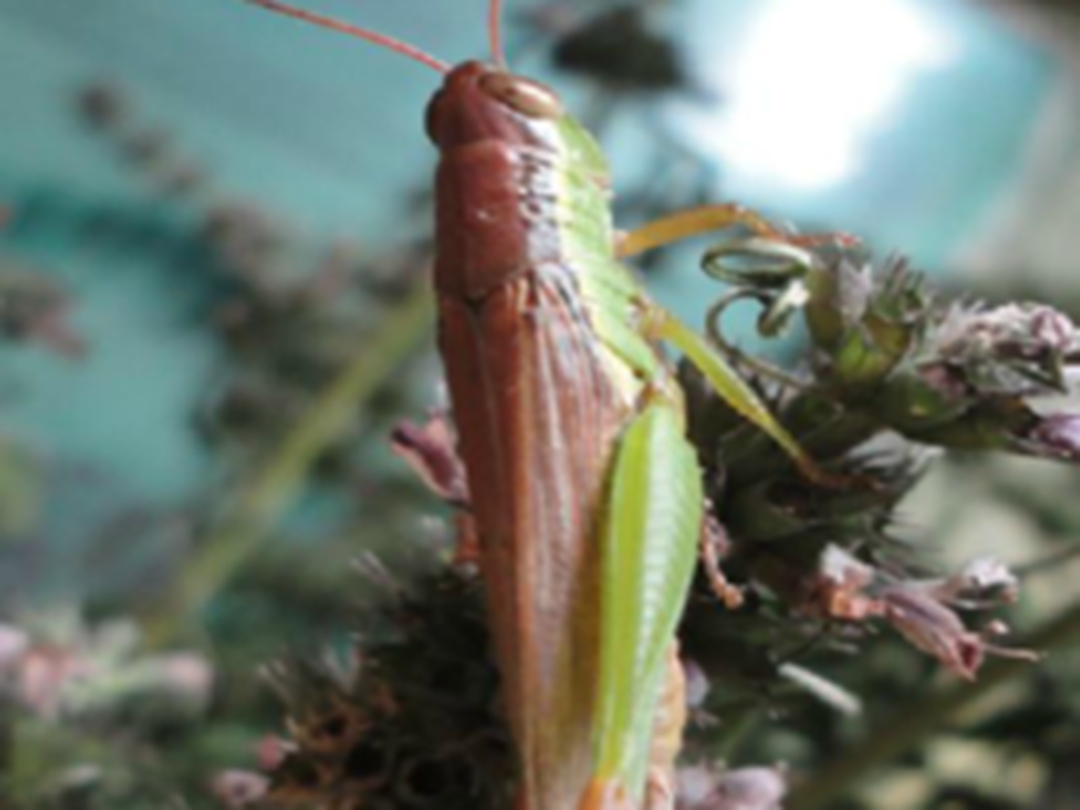
Grasshopper
Locust, a name in traditional Chinese medicine. It refers to the adult forms of various insects, including the migratory locust (Locusta migratoria Linnaeus) of the genus Locusta in the family Acrididae; the Chinese rice locust (Oxyachinensis Thunberg) of the genus Oxyachis; and the rice-leaf sword-horned locust (Acridalata Motsch) of the genus Acrida.The migratory locust and the rice-leaf sword-horned locust are distributed throughout the country; the Chinese rice locust is found in most regions of China. It has the therapeutic effects of dispelling wind, relieving spasms, suppressing cough, and alleviating wheezing. It is primarily used to treat infantile convulsions, tetanus, whooping cough, and asthma.
Chinese Name : 蚱蜢
Aliases : Huo Zhong, Wan, Zhong, Mang, Gui Mang, Xian, Bai Quan, Hu Shi, Shi Hu, Bo Zhong
Nature, Flavor & Meridian Tropism : Pungent and sweet in taste; warm in nature. Enters the Lung, Liver, and Spleen meridians
Benefits & Efficacy
Benefits
Dispels wind and relieves spasms; stops coughing and alleviates wheezing.
Indications
Infantile convulsions, tetanus, whooping cough, asthma.
Usage and Dosage
Internal use: Decocted as a soup, 5–10 insects; ground into powder, 1.5–3 g. External use: As needed; sprinkle the powder or apply as a paste.
Precautions
Use with caution during pregnancy.
Relevant Discussions
1. *Supplements to the Compendium of Materia Medica*: “Treats cough, infantile convulsions, tetanus, fractures, frostbite, and rashes that fail to erupt.”
2. *Dietary Spectrum of Suixi Residence*: “Warms the stomach and aids yang; strengthens the spleen and promotes digestion.”
Applications
Related Compatibility
1. To treat infantile convulsions: Take any number of grasshoppers, calcine until charred (then grind into powder), mix with rock sugar, and administer orally. (*Supplements to the Compendium of Materia Medica*)
2. To treat acute and chronic infantile convulsions: After the Frost Descent solar term, collect grasshoppers and air-dry them. Use seven or ten grasshoppers, add one pinch each of Uncaria hook vine and peppermint leaves, decoct into a decoction, and administer orally; then decoct the residue and drink it as well. (*Mirror of a Hundred Herbs*)
3. To treat tetanus: After the Frost Descent solar term, sun-dry grasshoppers; use a dozen or so, calcine them on a tile until charred, and take with wine. (*Rescuing from the Sea of Suffering*)
4. To treat postpartum wind-induced illness: Take several dozen dried grasshoppers, calcine them on a tile until charred, and take with fine wine. (*Supplements to the Compendium of Materia Medica*, citing *Wang Liangsheng’s Emergency Formulas*)
5. To treat cormorant fever (characterized by unceasing coughing, with dozens of consecutive coughs that resemble asthma but are not, and resemble wheezing but are not; this condition commonly affects young children): Take ten grasshoppers. Decoct them in water and drink the decoction. (*Mirror of a Hundred Herbs*)
6. To treat three-day malaria: Dry grasshoppers in the shade, grind into powder, and on the day symptoms are about to appear, take one fangcun bi of the powder mixed with wine at the fifth watch. (Yao Kecheng, *Food Materia Medica*)
7. To treat frostbite: Air-dry grasshoppers, calcine them, and grind into powder. Mix with sesame oil and apply; sprinkling the powder directly is also effective. (*Trusted Formulas from the Yangsu Garden*)
Processing & Preparation
Harvesting & Processing
Capture in summer or fall and use fresh; alternatively, scald with boiling water, then sun-dry or oven-dry.
Processing Methods
Take the raw material, remove impurities, roast until crisp, and grind into a powder.
Storage Methods
Store in a dry container, seal tightly, and keep in a well-ventilated, dry place to prevent insect infestation.
Crude Drug Identification
Properties of Crude Drugs
It appears as a fine powder, yellowish-brown in color, with a burnt, aromatic odor.
Botanical Information
Morphological Characteristics
1. Flying Locust: Body length approximately 5.4 cm, yellowish-brown. The top of the head is pale; the compound eyes are brown and oval. There are three simple eyes arranged in a tripod pattern. The antennae are filamentous and brown. The mouthparts are of the chewing type. The pronotum is large and green, with a raised longitudinal ridge in the center.The forewings are papery, narrow and long, grayish-yellow, with irregular markings. The forelegs and middle legs are yellowish-brown; the hind leg femora are green, with three band-like blackish-green markings on the inner side. The abdomen consists of 11 segments; the first abdominal segment bears auditory organs, the second through eighth segments bear eight pairs of spiracles, and the tip is adorned with a tuft of hairs.2. Chinese Rice Locust: The body is oblong, 3–4 cm long, yellowish-green or green, sometimes yellowish-brown, with a glossy sheen. The top of the head has a circular depression, and the central part of the face has a deep groove. The compound eyes are gray and oval; the antennae are filamentous and brown. The pronotum is well-developed, with three transverse grooves in the middle.The anterior margin of the forewings is green, while the remainder is brown; the abdomen is yellowish-brown, and the tip of the male’s abdomen is curved upward.3. Rice Leaf Sword-horned Locust: The body is slender and oval-shaped; males are about 5.4 cm long, and females about 9 cm long. The entire body is green, sometimes grayish-brown. The head is conical, with a pointed face that is noticeably slanted; it has chewing mouthparts and sword-shaped antennae. The central part of the female’s forewings features a single row of longitudinal white stripes.