Goose meat, a name in traditional Chinese medicine. It is the meat of the domestic goose (Ansercygnoides orientalis (L.)) of the Anatidae family. It is commonly raised in East and South China. It has the effects of tonifying qi, replenishing deficiency, harmonizing the stomach, and quenching thirst. It is often used to treat emaciation due to deficiency and diabetes.
Goose Meat
Goose meat, a name in traditional Chinese medicine. It is the meat of the domestic goose (Ansercygnoides orientalis (L.)) of the Anatidae family. It is commonly raised in East and South China. It has the effects of tonifying qi, replenishing deficiency, harmonizing the stomach, and quenching thirst. It is often used to treat emaciation due to deficiency and diabetes.
Chinese Name : 鹅肉
Nature, Flavor & Meridian Tropism : Sweet in taste, neutral in nature. Enters the Spleen and Lung meridians
Benefits & Efficacy
Benefits
It tonifies qi, replenishes deficiency, harmonizes the stomach, and quenches thirst.
Indications
Weakness and emaciation, diabetes.
Usage and Dosage
Internal use: Take an appropriate amount; cook thoroughly and consume the meat or broth. Related Formulations 1. For diabetes: 100g of goose meat, 30g each of Rehmannia glutinosa (Shu Di), Pueraria root (Ge Gen), and Chinese yam (Huaishan Yao), and 15g each of pollen, lotus seed, and mung beans. Decoct in water, strain out the herbal residue, and drink the broth while eating the goose meat. Take one dose daily.2. For loss of appetite: 200g goose meat, cooking wine, salt, and star anise in appropriate amounts; simmer together to make soup and consume. 3. For yin deficiency fever, heat in the palms and soles, weakness in the lower back and legs, and forgetfulness: 500g goose meat, 40g fish swim bladder; cook until tender, season with salt and MSG, and consume.
Precautions
Those with internal damp-heat should avoid this dish. 1. *Dietary Therapy Materia Medica*: “Do not eat in excess, as it may cause diarrhea. It may also trigger chronic illnesses.” 2. *Essentials of Diet and Nutrition*: “Excessive consumption may cause sores and scabies. Those suffering from swollen abscesses should not eat it; smoked goose meat is particularly toxic; those with deficiency-heat coughs should not eat it.”
Relevant Discussions
1. Regarding the mechanism of action based on the divergent medicinal properties of goose meat: Li Shizhen stated: “The goose has a heavy nature and flavor; it induces wind and sores.” “Yet the *Compendium of Materia Medica* describes its nature as cool and beneficial to the five viscera, and Han Mao’s *Yi Tong* states that it dispels wind—can this truly be the case? As for quenching thirst, any substance that stimulates the stomach’s qi can generate body fluids; should we then label only those that quench thirst as having a cool nature? The Ginseng, Poria, and Atractylodes Decoction is a key remedy for treating thirst—is it not cool in nature?” (*Compendium of Materia Medica*)
2.*Compendium of Materia Medica*: “Shi Kuang’s *Classic of Birds* states: ‘Those with feet close together can walk well’; this refers to geese and ducks. It also states: ‘When geese incubate eggs, they face the moon,’ meaning they face the moon to draw in energy to aid the incubation. Geese are capable of devouring snakes and earthworms and subduing the arrow-toad; therefore, raising them can ward off insects and venomous snakes. Some claim that geese do not eat live insects, but this is not true.”
Applications
Clinical Applications
Medicinal Cuisine and Dietary Therapy:
Braised Goose Slices:
Effects: Tonifies qi and nourishes deficiency, harmonizes the stomach, and quenches thirst; treats emaciation due to deficiency and diabetes.
Ingredients: 50g goose meat, 1 old hen, 1 pig’s trotter, star anise and cinnamon bark to taste.
Preparation: Wash the goose meat, old hen, and pork trotter thoroughly, then cut them into small pieces. Place the old hen and pork trotter in a pot with an appropriate amount of water and bring to a boil. Add seasonings and simmer for 8 hours to make the braising broth. Add the goose meat and simmer over low heat for 1 hour. Remove, let cool, then slice and arrange on a plate.
Usage: Consume the meat.
Processing & Preparation
Harvesting & Processing
Can be slaughtered in any season, though winter is best. Remove feathers and entrails, and use the meat fresh.
Crude Drug Identification
Botanical Information
Morphological Characteristics
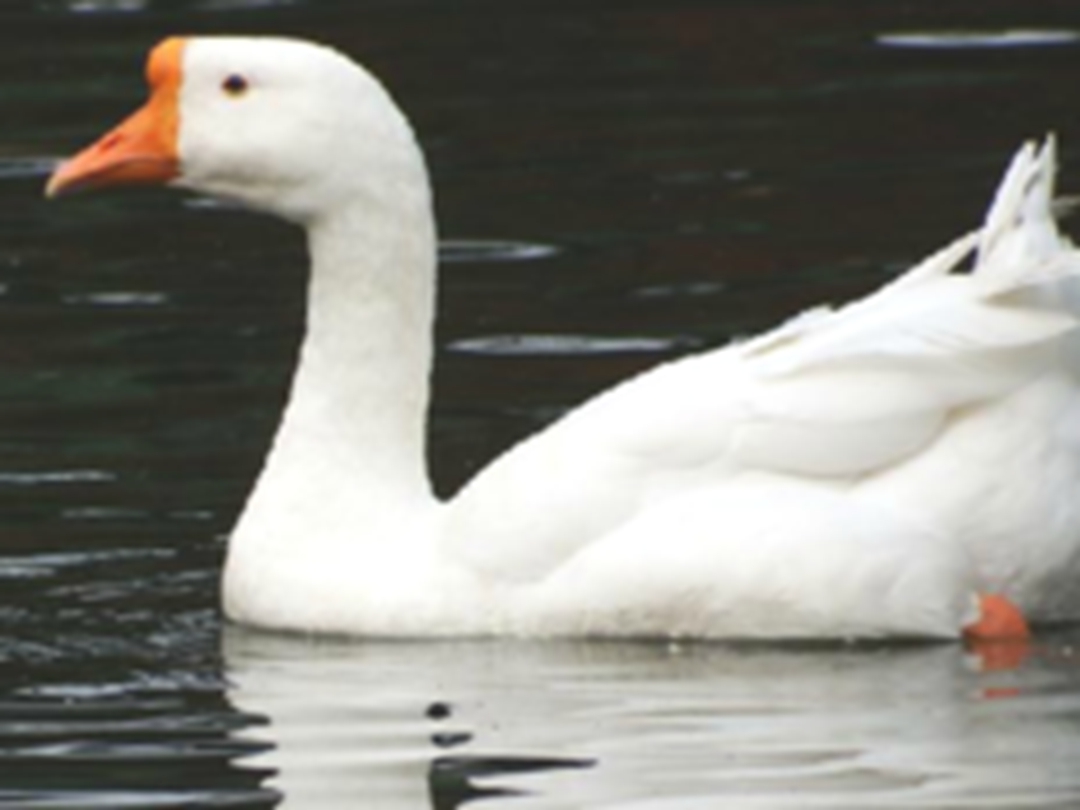
Domestic goose, also known as goose, shuyan, or domestic goose. Body length is approximately 60–80 cm. The beak is flat and broad, with a fleshy caruncle on the forehead; in males, this caruncle is enlarged and yellow or dark brown. The neck is long. The body is broad and sturdy, with a long keel and a full breast. The tail is short. The plumage is white or gray.The feet are large and webbed, yellow or dark brown. When standing, the body is held high and upright.
Distribution Area
It is commonly raised in eastern and southern China, typically near rivers and lakes.