

Inner Mongolia desert standardized licorice base produces authentic Ural licorice. Learn about desert growing environment, GAP management, organic certification, geo‑indication, desert‑combining‑pharmaceutical‑herb model.
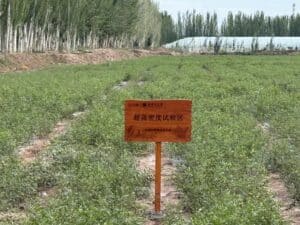
Spanning the Ulan Buh Desert and Kubuqi Desert in western Inner Mongolia, the desert‑based standardized licorice base is a distinctive Daodi Chinese medicinal herb production zone built on desert ecological restoration. It mainly cultivates Glycyrrhiza uralensis (Ural red‑bark licorice), historically known as Liangwai Licorice. Relying on desert light‑sandy soil, ample sunshine and huge day‑night temperature difference, the base integrates standardized cultivation, GAP management, organic certification, geographical indication protection and sand‑fixing ecological functions, forming a globally‑representative “desert‑industry‑ecology” integrated medicinal herb base. Major concentrated planting zones include Dengkou County (Ulan Buh Desert), Hangjin Banner of Ordos (Kubuqi Desert Amugulong demonstration park), and Jinshuiwan standardized licorice park.
Unique Desert Growing Environment
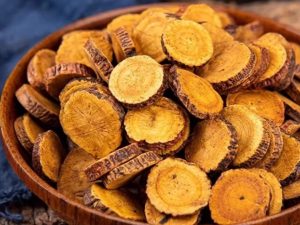
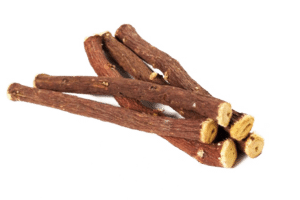
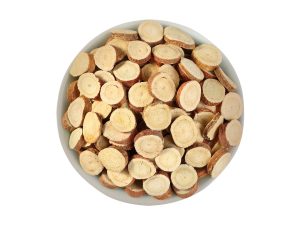
The desert brings irreplaceable advantages for licorice accumulation of active ingredients. Loose, well‑drained sandy soil allows licorice taproots to stretch freely without soil compaction restriction, developing thick, compact rhizomes. Long sunshine hours, strong ultraviolet radiation and large diurnal temperature variation promote the biosynthesis of glycyrrhizic acid and glycyrrhizin, making licorice pieces red‑skinned, high‑starch, dense‑textured, with active ingredients exceeding Chinese Pharmacopoeia standards in many plots.
Licorice itself is a drought‑tolerant, saline‑alkali resistant desert plant. Its sprawling root system stabilizes shifting sand dunes, and root nodules fix nitrogen to improve desert soil fertility. Planting licorice turns bare desert into medicinal farmland, realizing dual outputs of ecological restoration and herbal raw materials
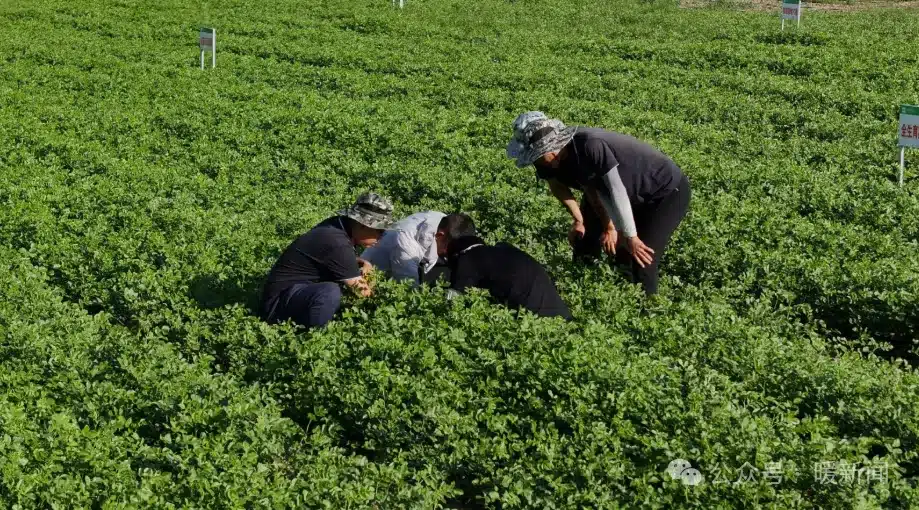
Standardized Desert Planting Mode
Multiple mature standardized technical systems are applied across Inner Mongolia desert licorice bases:
- Seedling selection: Adopt local provenance Glycyrrhiza uralensis seedlings, implement seedling breeding base management to guarantee genetic purity of Daodi germplasm.
- Desert transplanting & special cultivation technology: Including patented horizontal‑laying licorice planting technique. By burying rootstock horizontally under sand surface, single‑plant sand‑fixing coverage rises nearly 10‑fold, improving both ecological benefit and root yield. Intercropping mode such as seabuckthorn mixed with licorice is widely used for sand‑control compound planting.
- Water‑saving smart irrigation: Deploy drip irrigation systems adapted to desert conditions, precisely control water consumption in arid desert and avoid desert soil salinization risk.
- Rotation and fallow management: Enforce multi‑year growth cycle (3‑5‑year harvest cycle), rotational fallow to prevent desert land degradation, forbid over‑continuous cropping.
- Whole‑process field record: Keep planting log covering seedling source, field management, water consumption, harvest time, to support full‑chain traceability.
Certification & Quality Management System
- GAP Chinese Medicinal Herb Base: Large‑scale demonstration parks follow Good Agricultural Practice for Chinese Crude Drugs, with complete infrastructure including desert shelter‑forest belts, reservoirs, irrigation pumping stations, field roads and power supply networks for desert farmland.
- Organic dual‑certification: Core demonstration zones obtain both China organic certification and EU organic certification, prohibiting chemical fertilizers and synthetic pesticides in the whole planting process.
- Geographical Indication protection: “Hangjin Licorice” is registered as national GI product, “Liangwai Licorice” is the historical famous Daodi desert licorice commodity of Inner Mongolia.
- Quality testing: Regular laboratory inspection for glycyrrhizic acid, glycyrrhizin, heavy‑metal and pollutant residues. Many demonstration plots reach or approach wild‑licorice‑level active‑substance content, meeting international herbal‑material procurement requirements.

Ecological‑economic Industrial Model
Inner Mongolia desert licorice base practices the mature “enterprise + base + cooperative + farmer” operation framework. Enterprises are responsible for seedling supply, technical guidance, unified purchasing; local herders provide desert land and participate in field management. While producing high‑grade licorice raw materials for pharmaceutical, herbal‑tea and extract industries, the large‑scale licorice vegetation holds back desert expansion, rehabilitates degraded desert land, and increases local household income. It becomes a typical case of turning desert resources into green herbal economy.
FAQ
Q: Why is desert‑grown Inner Mongolia licorice better than ordinary farmland licorice?
A: Desert loose sandy soil, strong sunlight and large temperature difference promote accumulation of glycyrrhizic acid and glycyrrhizin. Far away from industrial pollution, desert farmland delivers cleaner raw material, while licorice roots grow more robust under natural desert stress environment.
Q: What is the normal harvest cycle for desert‑planting licorice?
A: Standard harvest period is 3‑5 years. Longer growth cycle helps enrich active pharmaceutical ingredients, consistent with Daodi medicinal‑herb production rules.
Q: Does desert licorice planting damage desert ecology?
A: On the contrary. Licorice is native desert sand‑binding plant. Standardized managed large‑scale licorice planting stabilizes moving sand, fixes nitrogen and improves soil, achieving ecological restoration together with herbal production. Over‑exploitation of wild licorice is strictly prohibited; standardized bases rely on artificially cultivated seedlings instead of wild digging.




¡Qué interesante! Nunca imaginé que el regaliz auténtico pudiera cultivarse en el desierto. Me encanta que se combine la medicina tradicional con la recuperación ecológica. ¿Sabéis si este modelo también se aplica a otras hierbas? Me gustaría saber más sobre su sabor comparado con el regaliz común. ¡Gran artículo!
वाह! इनर मंगोलिया के रेगिस्तान में इस तरह की खेती सच में प्रेरणादायक