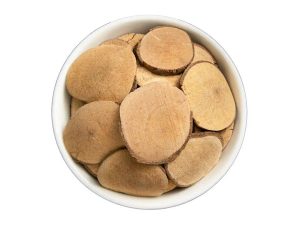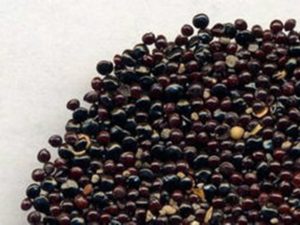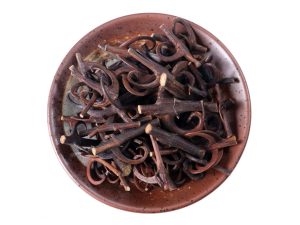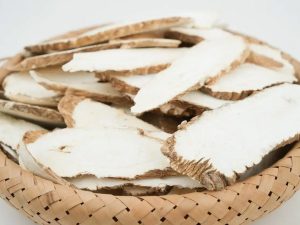
Kao Li, a name in traditional Chinese medicine. It refers to the seeds of Castanopsis chinensis Hance, a plant in the Fagaceae family. It is distributed in Guangdong, Guangxi, southwestern Guizhou, and Yunnan, among other regions. It has the effects of tonifying the kidneys and strengthening the stomach. It is commonly used to treat kidney deficiency, weakness, emaciation, and fatigue.
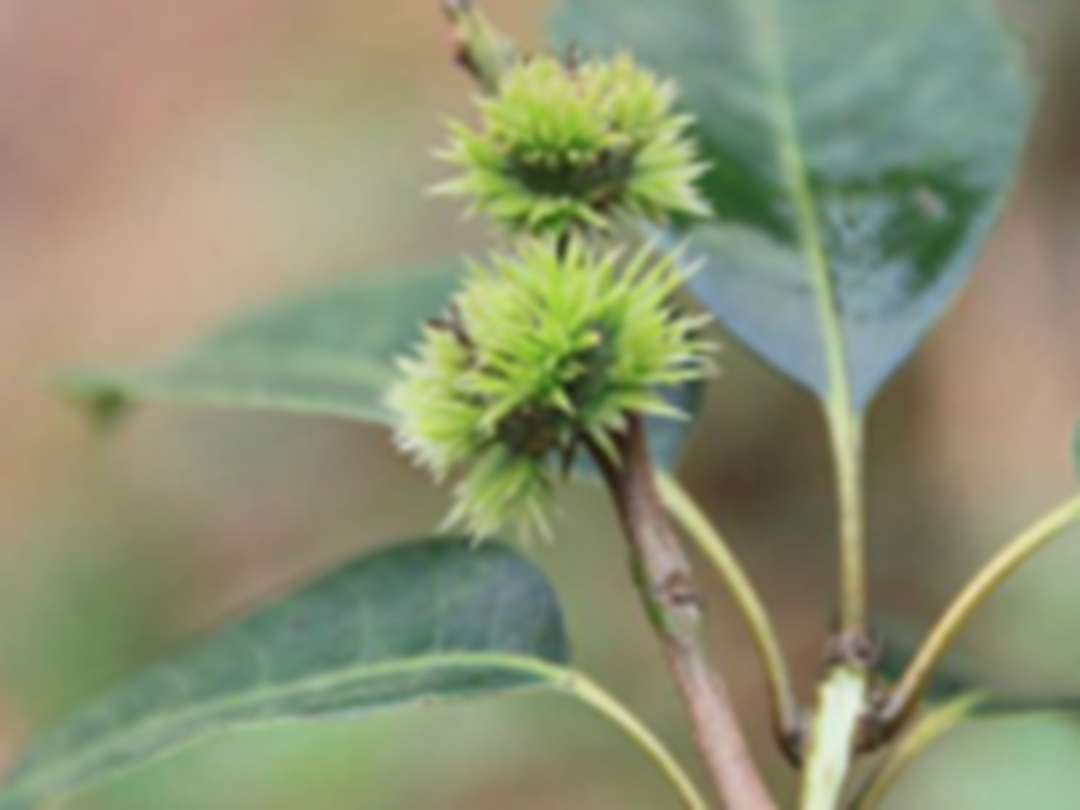
Chestnut
Kao Li, a name in traditional Chinese medicine. It refers to the seeds of Castanopsis chinensis Hance, a plant in the Fagaceae family. It is distributed in Guangdong, Guangxi, southwestern Guizhou, and Yunnan, among other regions. It has the effects of tonifying the kidneys and strengthening the stomach. It is commonly used to treat kidney deficiency, weakness, emaciation, and fatigue.
Chinese Name : 栲栗
Latin Name : Castanopsis chinensis Hance
Aliases : Conical Chestnut, Rice-Grain Conical Chestnut, Lecui
Authentic Producing Area : Guangdong, Guangxi, Guizhou, Yunnan
Nature, Flavor & Meridian Tropism : Sweet in taste, neutral in nature; enters the Spleen, Stomach, and Kidney meridians
Benefits & Efficacy
Benefits
Tonifies the kidneys and strengthens the stomach.
Indications
Used for kidney deficiency, weakness, emaciation, and fatigue.
Usage and Dosage
Internal use: Take an appropriate amount, stir-fried; or simmered with lean pork.
Precautions
Not yet established.
Relevant Discussions
*Compendium of Chinese Herbal Medicines*: “Sweet, neutral.”
*Compendium of Chinese Herbal Medicines*: “Strengthens the stomach and tonifies the kidneys. Treats kidney deficiency, weakness, and emaciation.”
Applications
Processing & Preparation
Harvesting & Processing
Harvested in spring and fall; remove the fruit shell and sun-dry.
Crude Drug Identification
Botanical Information
Botanical Classification
Guilin oak (a plant of the Fagaceae family).
Morphological Characteristics
Guilin Quercus, also known as “Cone” in *Supplement to the Illustrated Flora of China*, “Cone Chestnut Oak” or “Wild Chestnut Oak” in *Catalog of Seed Plants of Yunnan*, and “Rice Cone” or “Guilin Cone” in *Flora of China*. A tree reaching up to 20 m in height with a breast height diameter of 60 cm. The bark is dark gray and becomes longitudinally fissured with age. Young branches have elliptical lenticels and are glabrous.Leaves are alternate; petioles are 1–2.5 cm long; leaf blades are lanceolate or ovate-lanceolate, 7–18 cm long and 2–5 cm wide, with an acuminate apex, a base that is often rounded or broadly cuneate, serrations above the middle, a relatively distinct reticulate venation, and both surfaces of the leaf are nearly the same color; the midrib is raised on the upper surface, glabrous, with 10–12 pairs of pinnate lateral veins.Flowers are unisexual, with male and female flowers on the same plant; male inflorescences are conical or spicate, with the rachis nearly glabrous; male flowers are greenish-white, minute, arranged in erect, branched conical or spicate inflorescences, clustered at the tips of twigs; each female flower is enclosed within a bract and arranged in a short spicate inflorescence.The involucre is approximately 2.5 cm in diameter, densely covered with antler-like sharp spines on the outside; it splits open when mature, revealing 3–4 lobes.The cupule wall is 1–1.5 mm thick; the spines are 0.7–1.4 cm long, converging at the base or below the middle to form spine bundles, which are relatively densely arranged. The inner wall of the cupule is densely covered with long brown villi, while the outer wall and spines are covered with fine gray hairs when young; the cupule is nearly glabrous when mature, and each cupule contains one nut;The nut is nearly ovate, 1–1.3 cm in diameter and 1.2–1.6 cm tall, glabrous, with the umbilicus nearly as large as the base of the fruit. Flowering occurs from May to July, and fruiting occurs from September to November of the following year.
Distribution Area
It is distributed in Guangdong, Guangxi, southwestern Guizhou, and Yunnan, among other areas.