
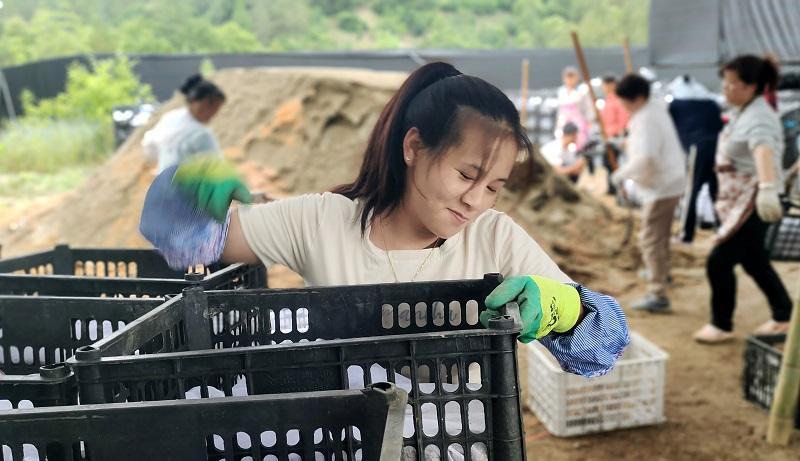
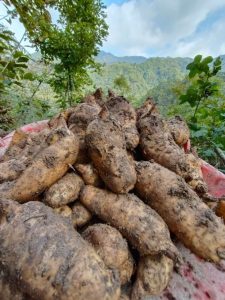
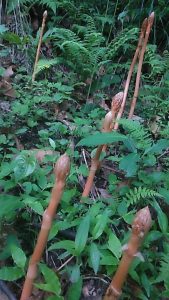
Ningqiang Gastrodia elata: Ningqiang County has the largest area dedicated to Gastrodia elata cultivation in Hanzhong. The county is rich in Gastrodia elata cultivation resources, with 112,000 hectares of forests suitable for Gastrodia elata mycelium growth, a timber reserve of 3.71 million cubic meters, and more than 33,333 hectares of forest land suitable for ecological Gastrodia elata cultivation, ensuring the sustainable development of rotational Gastrodia elata cultivation.
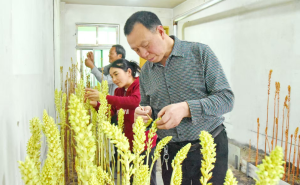
Since 1976, when Professor Xu Jintang—known as the “Father of Gastrodia elata”—established the Ningqiang Gastrodia Research Institute, the county has had a history of over 40 years in the artificial cultivation of Gastrodia elata. As the birthplace of China’s transition from wild to cultivated Gastrodia elata, Ningqiang County has deeply explored the historical and cultural significance of its status as the “Birthplace of Chinese Gastrodia elata” and built the Ningqiang Gastrodia elata regional public brand. Between 2016 and 2020, Ningqiang County successfully hosted the National Gastrodia elata Conference and the Ningqiang Gastrodia elata Trade Fair three consecutive times; In 2019, the county partnered with Beijing University of Chinese Medicine to establish a Gastrodia elata Expert Workstation; in 2020, Ningqiang’s “Qiangwu Brand” obtained organic certification for Gastrodia elata; in 2021, “Ningqiang Gastrodia elata” passed the national ecological origin protection certification and was designated as a provincial demonstration base for the cultivation of authentic medicinal herbs by the Provincial Administration of Traditional Chinese Medicine and the Provincial Department of Agriculture and Rural Affairs; In 2022, “Ningqiang Gastrodia elata” was approved as a National Geographical Indication Certification Trademark and was selected by the Provincial Administration of Traditional Chinese Medicine, the Provincial Department of Agriculture and Rural Affairs, and the Provincial Forestry Bureau as a demonstration base for the propagation of high-quality Gastrodia elata varieties. The quality of Ningqiang Gastrodia elata is renowned nationwide; in 2023, it was recognized as a “Nationally Renowned, Special, Superior, and Innovative Agricultural Product” by the Agricultural Product Quality Safety Center of the Ministry of Agriculture and Rural Affairs, and the “Ningqiang Gastrodia elata Geographical Indication Certification Trademark” was successfully registered. Ningqiang Gastrodia elata has become a pillar industry for rural revitalization and farmers’ prosperity in Ningqiang County, making significant contributions to the local economy, society, and ecological well-being.
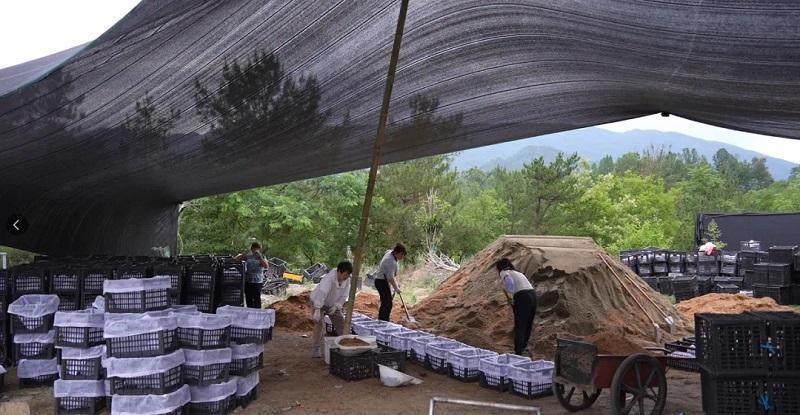
In 2023, the planting area for Ningqiang Gastrodia elata reached 40,000 mu, with a fresh Gastrodia elata yield of 60,000 metric tons, accounting for over 60% of the Hanzhong region’s total. The county is home to 25 manufacturers of Gastrodia elata-based fungal products, 115 cultivation enterprises, 56 processing enterprises, and 219 distributors. Equipped with advanced processing facilities for drying, slicing, cell wall disruption, and preservation, the industry has developed eight types of traditional Chinese patent medicines and health supplements using Gastrodia elata as the raw material, as well as a series of Gastrodia elata-based products—primarily Gastrodia elata wine, Gastrodia elata noodles, Gastrodia elata wine, and Gastrodia noodles. This has established a fully integrated industrial chain encompassing Gastrodia elata research and development, cultivation, production, processing, and sales.
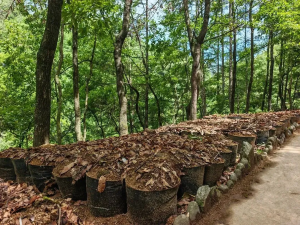
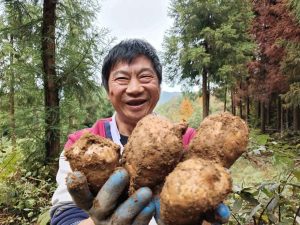
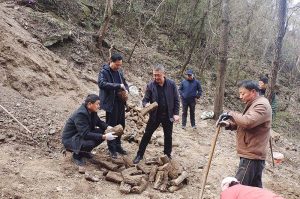
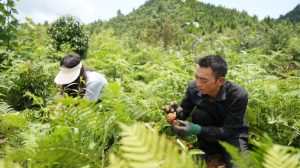
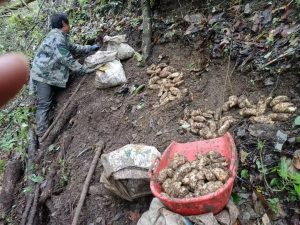
Leveraging its unique natural ecological resources, Chanjiayan Town in Ningqiang County, Hanzhong City, has vigorously developed the under-forest economy and actively guided local residents to cultivate the Gastrodia elata industry.
Ningqiang is the birthplace of artificial cultivation of Gastrodia elata in China and has long been known as the “Hometown of Gastrodia elata.” Its production ranks among the top three nationwide and first in Northwest China, accounting for more than one-fifth of the country’s total output. In recent years, the county has made sustained efforts in improving high-quality seed propagation, promoting standardized cultivation, upgrading processing capabilities, building and promoting its brand, and establishing a market system. As a result, it has forged a distinctive path of industrial development that is empowered by scientific research, focuses on full-chain development, and works to lift farmers out of poverty.
Known as “the foremost city along the 3,000-li Han River,” Ningqiang is situated in the “bridging Gansu and Sichuan” fold belt where the Qinling and Ba Mountains converge. It serves as the primary gateway and golden corridor connecting the Greater Northwest and the Greater Southwest. With an average elevation of over 1,000 meters, the area is shrouded in mist and clouds year-round and enjoys a mild, humid climate. This unique alpine microclimate, combined with the humus-rich, slightly acidic sandy loam soil beneath the primeval forests, provides an ideal “nursery” for the growth of numerous traditional Chinese medicinal herbs, including Gastrodia elata, eucommia, epimedium, ginkgo, and schisandra.
In particular, since the 1970s, Professor Xu Jintang of the Chinese Academy of Medical Sciences—hailed as the “Father of Gastrodia elata”—and the research team he led have worked tirelessly and conducted in-depth research in Ningqiang, successfully pioneering the transformation of wild Gastrodia elata into a cultivated variety. They achieved major breakthroughs in the field of Gastrodia elata cultivation research and produced three significant scientific achievements. The “Research on Sexual Propagation of Gastrodia elata—the Tree-Leaf Bedding Method” won the First Prize for Scientific and Technological Achievements in Shaanxi Province in 1979 and the Second Prize for National Invention in 1980. In 1992, Gastrodia elata cultivated by the Ningqiang County Tianma Research Institute was honored with the title “Chinese Gastrodia elata” and awarded a silver medal at the Mexico International Exposition. In 1976, the Ningqiang Gastrodia elata Research Institute was established to promote scientific and technological achievements in Gastrodia elata production nationwide. By combining sexual and asexual propagation methods, the institute achieved stable and high yields across large-scale Gastrodia elata cultivation.
At the same time, in collaboration with relevant research institutions, a series of highly effective measures were formulated, including the Technical Specifications for Ningqiang Gastrodia elata Production and the Technical Specifications for Ningqiang Gastrodia elata Seed and Seedling Production. Additionally, Ningqiang was included in the national directory of authentic medicinal herb production areas for Gastrodia elata and successfully obtained organic certification for Gastrodia elata. By the end of 2021, Ningqiang had completed the certification for the ecological origin protection of Ningqiang Gastrodia elata and was designated as a provincial demonstration base for the cultivation of authentic medicinal herbs; In 2022, the “Ningqiang Gastrodia elata Geographical Indication Certification Mark” passed the review by the National Intellectual Property Administration, and Ningqiang was designated as a demonstration base for the breeding of high-quality varieties of authentic medicinal herbs in Shaanxi Province. In 2024, the county expanded its Gastrodia elata cultivation by 50,000 mu, including more than 5,000 mu of seed plants, with an annual output of over 60,000 metric tons of fresh Gastrodia elata and a total output value exceeding 1.8 billion yuan.
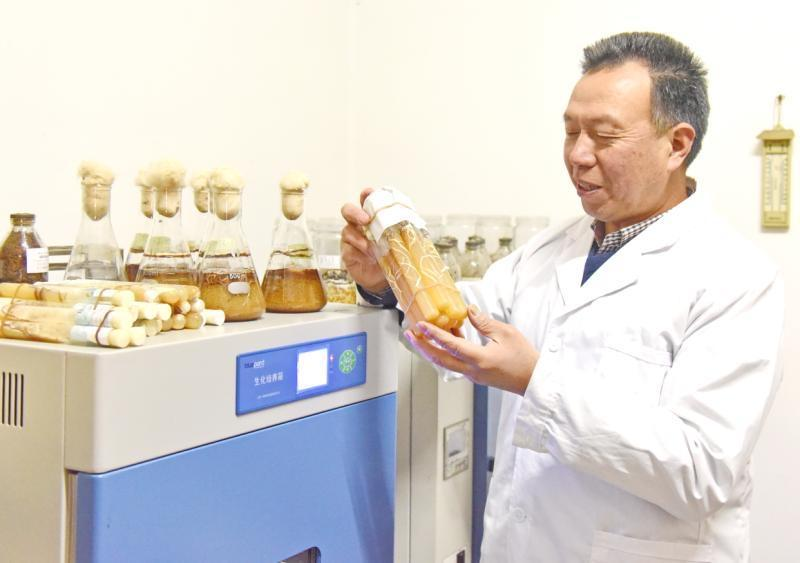
The Gastrodia elata spawn developed by the Ningqiang County Fungal Research Institute consistently holds a 75% share of the national market, while its Mycelium ring-shaped fungus strain accounts for 30% of the national market, making it the largest producer of Gastrodia elata strains in Northwest China. The county has established a research and development center for the “two fungi” used in Gastrodia elata cultivation and an international trading center for Gastrodia elata, continuously improving the full industrial chain encompassing “research, production, processing, and sales.” With an annual production capacity of 10 million sets of fungal strains, the county is vigorously building itself into the “Fungal Capital of China.”
مقال رائع!