
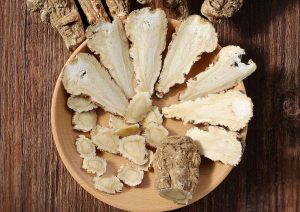
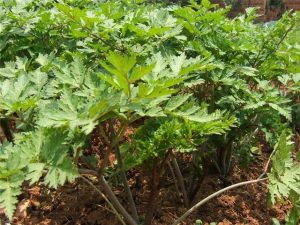
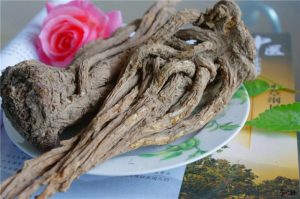
Dong Quai (Angelica sinensis) is a widely‑used herbal support for menopause‑related irritability, frustration, emotional outbursts and inner tension. It is not an antidepressant medicine, yet it eases hormone‑driven mood instability by balancing blood status, soothing liver qi and moderating neuroendocrine fluctuation during declining estrogen conditions.
Core Mechanisms
- Soothe liver‑qi stagnation (primary TCM pattern for menopausal irritability) Falling and fluctuating sex hormones easily trigger constrained liver qi. This state manifests as short temper, easy frustration, impatience, chest tightness and sleep restlessness. Dong quai nourishes blood while promoting smooth qi movement, relieving emotional congestion amplified by hormonal shifts.
- Selective estrogen‑receptor modulation Dong quai does not raise circulating blood estrogen levels. Its weak phytoestrogen‑like compounds bind to estrogen receptors within brain mood‑regulating regions. When estrogen drops in menopause, this mild tissue‑level activity helps stabilise HPO‑axis response and reduces nervous‑system over‑reactivity that fuels irritability.
- Nourish blood‑yin to calm deficiency‑related mental agitation Menopause often brings blood‑yin deficiency. Empty‑heat disturbs the spirit, leading to irritability accompanied by hot flashes, night sweats, dizziness and fatigue. Dong quai tonifies blood, reduces deficient‑heat agitation and improves mental resilience.
- Lower neuro‑inflammatory mediators Low‑grade neuroinflammation worsens mood lability, anxiety and sleep disturbance. Ligustilide from dong quai moderates inflammatory signalling, easing over‑excitation of the nervous system.
Suitable Symptom Profiles
✅ Best‑responding presentations
- Menopause / perimenopause irritability, impatience, easy frustration, mood swings, often paired with hot flashes or night sweats.
- Accompanying signs: fatigue, dry skin, palpitations, sleep fragmentation, stress sensitivity.
- Emotional discomfort linked to hormone shifts; symptoms worsen during hormonal surges and declines.
❌ Limited‑effect or avoid scenarios
- Severe depression, persistent rage or suicidal ideation: dong quai is only mild adjuvant support; professional mental‑health intervention is required.
- Mood issues caused by thyroid disease, primary psychiatric disorders: herbal supplementation cannot replace standard treatment.
- Irritability with heavy unexplained vaginal bleeding: complete gynecological evaluation first before herbal use.
Practical Usage Protocol
- Perimenopause (still having periods): Main toning window: 5‑7 days after menstruation ends. If mood tension spikes pre‑menstrually: take 2 g per day for 5‑7 days before expected period; stop completely when bleeding starts.
- Post‑menopause (periods ceased): Cyclic on‑off schedule: 2‑3 g daily for 14 days, pause 7 days, repeat. Avoid continuous year‑round daily intake.
Formula 1: Dong Quai‑Rose Tea (irritability, inner tension)
- Dong quai 2 g, dried rose buds 3‑4
- Hot‑water steep for 12‑15 minutes, drink once daily. Rose enhances qi‑soothing effects for emotional stress.
Formula 2: Dong Quai + Poria cocos blend (irritability plus poor sleep, restless mind)
- Dong quai 2 g, poria cocos 4 g
- Simmer 15 minutes. Suitable for users whose bad mood worsens at night.
Formula 3: Nourishing soup for long‑term baseline improvement
Dong quai 3 g + astragalus 5 g + wolfberry, stew with chicken 1‑2 times weekly. Build blood‑yin foundation to lower overall emotional fragility.
Synergistic Herbal Partners
- Severe irritability and chest distension: add bupleurum
- Hot flashes + bad temper: add lily bulb
- Fatigue‑related low mood: add white peony root
Contraindications & Safety Warnings
- Estrogen‑sensitive conditions (breast cancer history, large uterine fibroids, endometrial hyperplasia): avoid self‑medication due to receptor‑interaction risks.
- Anticoagulants (warfarin, aspirin): avoid dong quai, increased bleeding risk.
- Concurrent hormone replacement therapy: consult healthcare provider before combining.
- Chronic diarrhea: dong quai has mild laxative property; choose cooked soup form and reduce dosage.
- If mood symptoms seriously affect daily life, seek medical help; dong quai is supportive herbal care, not psychiatric treatment.
Expected Timeline
Mood improvement develops gradually. Less inner restlessness may appear within 4‑6 weeks; noticeable reduction in irritability episodes generally takes 8‑12 weeks of cyclic consistent use. It is not an instant calming remedy for sudden anger outbursts.
Summary
Dong quai eases menopause‑related irritability mainly for presentations of liver‑qi stagnation and blood‑yin deficiency, usually paired with hot flashes, night sweats, fatigue and sleep trouble. Follow cyclic administration rules; discontinue during heavy menstrual bleeding for perimenopausal women. It cannot treat severe mental‑health conditions.



I’ve been taking dong quai for about two months now, and the difference in my irritability is honestly noticeable. I still have tough days, but the constant inner tension and snapping at my family has eased a lot. It’s reassuring to read about the liver qi and blood connection—makes me
Interesting read! I’ve been dealing with exactly this kind of irritability for the past year, and my doctor suggested Dong Quai, but I
¡Qué interesante! Llevo meses con esa irritabilidad horrible y nada me calmaba. Justo estaba buscando algo natural. ¿Alguien ha probado el Dong Quai y notó mejoría en ese “fuego interno”? Me da un poco de respeto, pero con lo que cuentan aquí, me dan ganas de consultarlo con mi médica. Gracias por explicar el mecanismo, así se entiende mejor.
I’ve been using Dong Quai for about two months now, and the difference in my irritability is honestly night and day. I still have tough days, but the constant edge and snapping at my family is gone. Glad to see this herb getting more attention—it’s not a cure-all, but