
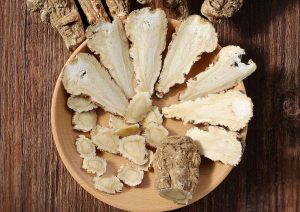
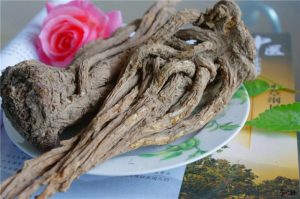
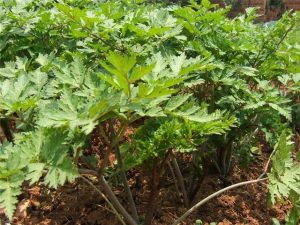
Dong Quai (Angelica sinensis), often called “female ginseng”, is one of the most‑studied traditional botanicals for perimenopausal and menopausal discomfort. It does not supply human estrogen directly, yet delivers gentle supportive effects for women experiencing declining ovarian hormone production.
Core Mechanisms for Menopause Support
- Phytoestrogen‑like bidirectional modulation Dong Quai contains plant compounds that bind weakly to estrogen receptors. When endogenous estrogen drops during menopause, these constituents exert mild estrogen‑mimicking activity to ease deficiency‑related symptoms. For people with relative estrogen excess, it competes for receptor sites to reduce over‑stimulation.
- Improve pelvic and systemic blood circulation Ligustilide, its key active compound, enhances microcirculation. This helps mitigate vasomotor reactions such as hot flashes, supports vaginal mucosal blood perfusion, and reduces dizziness caused by poor blood flow.
- Nourish blood and calm the nervous system From Traditional Chinese Medicine perspective, menopause complaints frequently stem from blood‑yin deficiency. Dong Quai tonifies blood, relieves restlessness, nervous irritability and sleep fragmentation linked to hormonal swings.
- Modulate inflammatory response It lowers excessive inflammatory signalling, which contributes to joint discomfort, mood lability and sleep disruption common in the menopausal transition.
Menopause‑Related Symptoms That Dong Quai May Help
- Hot flashes & night sweats: Reduces frequency and intensity of mild‑to‑moderate vasomotor episodes (not a fast‑acting instant fix).
- Sleep disturbance: Eases difficulty falling asleep and restless sleep triggered by hormone‑driven nervous agitation.
- Mood swings, irritability and mild anxiety: Supports emotional stability tied to endocrine fluctuation.
- Vaginal dryness: Better local blood perfusion helps improve mucosal moisture for mild cases.
- Dizziness, palpitations and fatigue: Targets symptoms associated with blood deficiency.
- Dry skin and dull complexion: Circulation‑boosting and antioxidant properties improve skin nourishment.
Important note: Dong Quai works best for mild‑moderate symptoms. Severe menopause syndrome may require physician‑guided hormone‑replacement or other clinical treatments.
Suitable User Profile
- Women in perimenopause or natural menopause with mild vasomotor, sleep and emotional symptoms.
- Individuals who prefer herbal alternatives and cannot or choose not to take synthetic hormone therapy.
- People with accompanying signs of blood deficiency: fatigue, pale complexion, dry skin.
Practical Usage Protocols for Menopause
Since most menopausal women no longer have regular periods, cyclic on‑off use is recommended instead of continuous daily intake to avoid over‑exposure.
1. Herbal Tea (mild daily support)
- Dosage: 2–3 g dried Dong Quai slices
- Method: Pour hot water, steep 10‑15 minutes. Drink once per day.
- Cycle: Take for 14 consecutive days, then pause for 7 days and repeat.
2. Soup tonic (1‑2 times weekly)
Dong Quai 4‑5 g + wolfberry + lily bulb, stew with chicken or bone broth. Ideal for nourishing blood‑yin and easing nightly hot flashes.
3. Common synergistic combinations for menopause
- Hot flashes, night sweats, insomnia: Dong Quai + Lily bulb + Rehmannia
- Mood swings, stress‑related irritability: Dong Quai + Rose + Poria cocos
- Fatigue, poor energy: Dong Quai + Astragalus (Danggui Buxue classic pairing)
Contraindications & Critical Safety Warnings
Do NOT use Dong Quai if you:
- Have estrogen‑sensitive conditions: breast cancer history, ovarian cancer, endometrial cancer, large uterine fibroids, endometrial hyperplasia. Phytoestrogen‑like compounds carry theoretical risk of stimulating hormone‑dependent tissue.
- Are taking hormone‑replacement therapy (HRT), oral estrogen‑containing medications: risk of additive hormone‑related side‑effects.
- Take anticoagulants such as warfarin or high‑dose aspirin: Dong Quai enhances bleeding tendency, may cause bruising or abnormal bleeding.
- Still have irregular heavy vaginal bleeding of unknown origin: consult a gynecologist first, do not self‑treat with herbs.
General precautions
- On‑off cycling is recommended; avoid non‑stop year‑round daily consumption. Long‑term unbroken use may trigger dryness, mouth ulcers or digestive upset.
- Mild side‑effects can include loose stools, bloating. If diarrhea occurs, reduce dosage or discontinue.
- Dong Quai is a supportive botanical, not a replacement for professional medical care. If symptoms severely impact quality of life, seek clinical evaluation.
Expected Timeline of Effects
Menopause herbal conditioning is gradual. Most users notice subtle improvements in sleep stability and emotional state within 4‑8 weeks; hot‑flash reduction often requires 8‑12 weeks of consistent cyclic use. Results vary individually.
Summary
Dong Quai delivers multi‑target menopause relief through mild phytoestrogen‑like balancing, improved circulation and blood‑nourishing action. It is well‑suited for mild‑moderate vasomotor, sleep and mood complaints. Use in cyclic on‑off fashion and strictly avoid in estrogen‑dependent disease.

Interesting read! I’ve been dealing with hot flashes for a year now, and my herbalist suggested dong quai. I was skeptical about the “female ginseng” hype, but this explanation of phytoestrogen modulation makes sense. Glad to see it doesn’t just dump fake hormones into your system. Has anyone tried combining it with evening primrose
這篇文章講得好清楚!我本身更年期症狀不明顯,但身邊好多朋友都在找天然輔助方式。原來當歸不是直接補充雌激素,而是用溫和調節的方式來支持身體,長知識了。謝謝分享,會推薦給需要的朋友參考。