
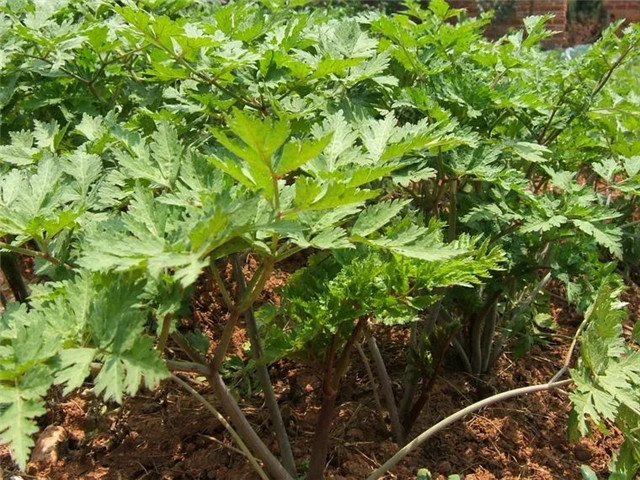
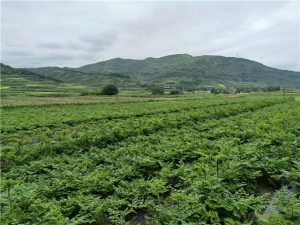
Located in Min County, Dingxi, Gansu — renowned as the Hometown of Dong Quai in China — the standardized Daodi Chinese Herb Planting Base focuses on ecological cultivation of authentic Min Gui. Rooted in the core Daodi origin zone of Dong Quai, the base inherits centuries of local planting tradition and complies with national specification Code of Practice for Production of Daodi Herbs — Min Dong Quai.
Possessing National Geographical Indication Product protection and included within the China-EU GI Mutual Recognition Catalogue, the base follows origin-specific agronomic norms. It integrates ecological rotation cultivation, whole-process field management, quality inspection and traceability systems, safeguarding the inherent authentic properties of Min Gui. As a landmark Daodi herb source base, it provides premium origin-verified Dong Quai raw materials for TCM manufacturers, herbal decoction factories and global wellness brands.
1. Daodi Origin Qualifications & Standard System
- Authorized Daodi production zone Min County is officially confirmed as the canonical Daodi producing region for Dong Quai. Only Dong Quai grown within the defined protected territory qualifies as genuine Min Gui.
- Geographical Indication protection Covered by national GI product protection and registered GI certification trademark; recognized under China-EU GI mutual recognition framework to prevent origin counterfeiting.
- Unified Daodi technical specifications All planting plots implement GB/T 45190-2025 national standards for Min Danggui production. Key demonstration fields adopt GAP management requirements to harmonize traditional experience and modern standardized cultivation.
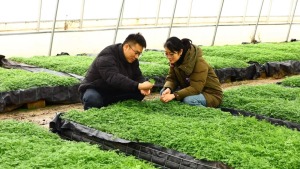
- Professional quality testing support Backed by CMA & CNAS accredited laboratories to test ferulic acid, volatile oil, heavy metals and pesticide residues, meeting domestic pharmacopoeia and international export thresholds.
2. Unique Alpine Terroir Underpinning Daodi Quality
The convergence of the Loess Plateau, Qinghai-Tibet Plateau and West Qinling Mountains creates one-of-a-kind growing conditions for Daodi Dong Quai:
- Elevation ranging from 2000 m to 3000 m, cold and humid alpine climate with striking diurnal temperature difference, slowing vegetative growth and extending accumulation cycle of active medicinal constituents.
- Deep black loam and brown humus soil rich in organic matter and trace minerals, loose, well-drained, ideal for taproot development and oil formation of Dong Quai.
- Low industrial disturbance and clean mountain water resources, offering unpolluted growing environment consistent with Daodi herb ecological requirements.
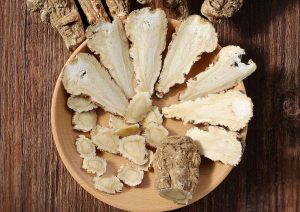
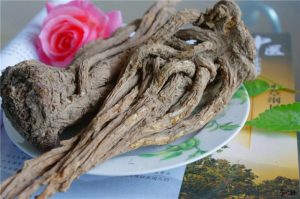
Genuine Min Gui produced here features thick, compact roots, abundant essential oil and distinct herbal aroma. Its core active ingredient levels steadily surpass the limits laid down in Chinese Pharmacopoeia, forming the irreplaceable marker of Daodi Dong Quai.
3. Standardized Ecological Cultivation Management for Daodi Herbs
The base adopts systematic field control measures to sustain Daodi characteristics generation after generation:
- Stable local germplasm resources Promote purified improved varieties MinGui No.1–No.6; strictly screen seedlings, restrict exotic hybrid strains and preserve the hereditary traits of native Min Gui.
- Scientific rotational cropping regime Implement rational crop rotation to mitigate continuous cropping obstacles, suppress soil-borne diseases and lower the demand for agrochemical intervention.
- Green low-input field maintenance Prioritize organic fertilizers sourced locally; enforce bans on prohibited pesticides and apply ecological pest control methods to reduce harmful residues.
- Three-year complete growth cycle discipline Premature harvesting is prohibited to guarantee sufficient buildup of volatile oil, ferulic acid and ligustilide.
- Low-sulfur environmentally friendly processing Adopt mild low-temperature drying techniques to control sulfur residues far below international limits.
- Full lifecycle traceability system Each batch of Daodi Min Gui carries exclusive QR traceability information covering seedling origin, field archives, inspection results and processing records to authenticate provenance.
4. Base Scale & Operational Mechanism
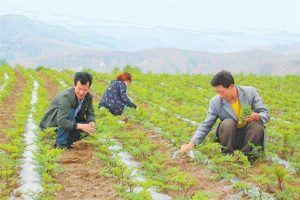
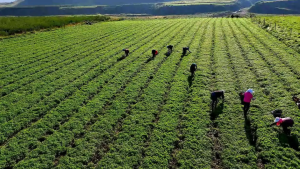
Min County’s overall Dong Quai planting area exceeds 270,000 mu. This Daodi demonstration planting base covers large contiguous land within the GI protected region across 18 townships.
Operating framework: Leading Enterprise + Daodi Chinese Herb Planting Base + Cooperatives + Local Growers.
Technical guidance and standardized purchasing mechanisms are provided to farmers. The industrial chain drives tens of thousands of mountain households to engage in authentic Daodi Dong Quai cultivation.
Relying on Daodi origin reputation and cross-border GI recognition, Min County Dong Quai is exported widely to East Asia, Southeast Asia, Europe and North America.
5. Core Value of Daodi Chinese Herb Planting Base
- Protect Daodi authenticity Strict origin boundary and cultivation specifications maintain the unique quality advantages of genuine Min Gui and curb counterfeit non-origin Dong Quai circulating in markets.
- Stabilize batch-to-batch quality Unified Daodi technical standards reduce quality fluctuation caused by scattered traditional farming.
- Carry forward TCM origin theory Realize the inheritance and modernized upgrading of Daodi medicinal material production mode.
- Build replicable industry template Offer a mature model combining origin protection, ecological planting and brand operation for Daodi herbs on the Loess Plateau.
Conclusion
Situated in the canonical Daodi territory of Min County, Gansu, the Daodi Chinese Herb Planting Base leverages distinctive highland terroir, multi-generation planting heritage and standardized ecological management. It continuously supplies authentic, high-potency Min Gui Dong Quai, standing as a representative benchmark of Daodi medicinal herb production in northwest China.
This is fascinating! I’ve read that Min County dong quai is considered the gold standard in TCM. Love that they’re keeping the traditional Daodi methods alive with ecological farming. Would be great to see more photos of the actual harvest process. Any plans for a visitor program?
민현은 당귀의 고장이라더니, 정말 대대로 내려온 재배 전통이 살아 숨쉬는 곳이네요. 표준화된 재배 기지에서 도지(道地) 약재를 제대로 키운다니 믿음이 갑니다. 앞으로도 좋은 민귀(岷歸)가 널리 알려졌으면 좋겠어요. 건강에 관심