Search for Herbal Teas Recipes by Symptom:

Rauvolfia Stems and Leaves

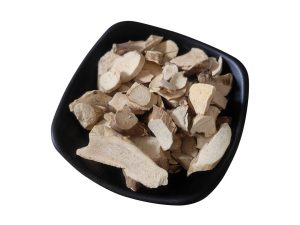
Stems and leaves of Rauvolfia verticillata are a traditional Chinese medicine. They are derived from the stems and leaves of Rauvolfia verticillata (Lour.) Baill. and other species of the same genus within the Apocynaceae family. They are distributed in Taiwan, Guangdong, Hainan, Guangxi, Guizhou, Yunnan, and other regions. They have a bitter taste and a cool nature. They enter the Lung, Spleen, and Liver meridians. They possess the effects of clearing heat and detoxifying, promoting blood circulation and reducing swelling, and lowering blood pressure.It is primarily used to treat sore throat, bruises and swelling from trauma, venomous snake bites, and hypertension.

Fennel

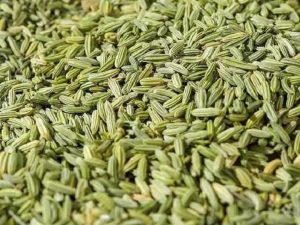
Fennel, a name in traditional Chinese medicine, refers to the dried, mature fruits of Foeniculum vulgare Mill., a plant of the genus Foeniculum in the Apiaceae family. It is primarily produced in Inner Mongolia and Shanxi.This product has the effects of dispelling cold and relieving pain, as well as regulating qi and harmonizing the stomach. It is primarily used to treat cold-induced hernia pain, testicular torsion, dysmenorrhea, cold pain in the lower abdomen, epigastric and abdominal distension and pain, and loss of appetite accompanied by vomiting and diarrhea. Salted fennel has the effects of warming the kidneys, dispelling cold, and relieving pain; it can be used to treat cold-induced hernia pain, testicular torsion, and cold-induced menstrual abdominal pain.

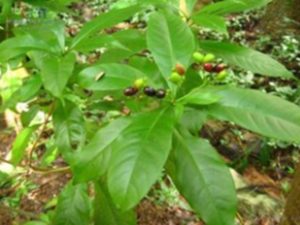
Central Chinese Tumid-foot Fern

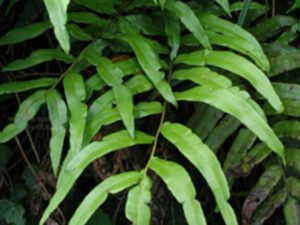
Central China Tumid-foot Fern, a name in traditional Chinese medicine. It refers to the rhizome or the whole plant of Plagiogyriaeuphlebia Mett., a species in the family Polypodiaceae. It has the efficacy of clearing heat and detoxifying. It is used to treat influenza.

Reeves’s Pheasant

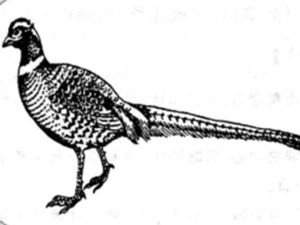
Reeves’s Pheasant, a name in traditional Chinese medicine. It refers to the meat of the long-tailed pheasant (Syrmaticus reevesii (Gray)), an animal of the Phasianidae family. It is distributed in the mountainous regions of northern and central China. The long-tailed pheasant is a Class II nationally protected animal; due to its scarce population, hunting is prohibited. It has the therapeutic effects of tonifying the middle burner and boosting qi, as well as relieving wheezing. It is commonly used to treat qi deficiency with shortness of breath and general physical weakness.

Facial Beauty Massage Techniques

Beauty Massage Techniques (1) Use the pads of the middle and ring fingers of both hands to perform spiral-shaped massage movements from the center of the forehead outward to both sides. When reaching the temples, pause briefly and apply gentle pressure for half a minute. Then, move the fingers back to the center of the … Read more

Scalp Massage Technique

Scalp massage is a therapeutic method that involves applying manual manipulation techniques to the scalp to help maintain a balanced internal environment, promote blood circulation, and support comfortable movement of tendons and meridians. This technique can help with occasional discomfort and promote general well-being. Due to busy work schedules and the accelerating pace of modern … Read more

Facial Wrinkle-Reducing Massage Technique

This massage method helps maintain a balanced internal environment of the facial skin, supports comfortable movement of tendons and meridians, and promotes general well-being of the facial appearance. Generally speaking, forehead wrinkles are the first to appear on the face, but wrinkles can be classified as either true or false. Before false wrinkles develop into … Read more

Facial Feature Beauty Massage

Facial feature beautification refers to the application of beauty massage techniques to the five facial features: face, eyes, nose, ears, lips, and teeth. This practice aims to regulate the Qi and blood, as well as the yin and yang, of the body’s internal organs, thereby promoting bright and lively eyes, a clear and radiant complexion … Read more

17 Common Beauty Techniques and Their Effects (11–17)

11. Flicking (Tan Fa) 1. Definition The technique of using fingers to tap and flick on supports areas or acupoints. 2. Types finger flicking (Zhi Tan Fa) The method in which the practitioner applies force with the fingertip to snap (pluck) the patient’s muscles and sinews. finger-flicking technique (Tanzhifa) Lifting and Snapping technique (Titanfa) A … Read more

17 Common Beauty Techniques and Their Effects (5–10)

5. Stroking (Mo) 1. Definition Apply the palm surface or the aligned finger surfaces of the index, middle, and ring fingers to adhere to the acupoint or body area, and perform active, circular, rhythmic stroking movements with the wrist joint. 2. Types Four-Finger Stroking (Sizhi Mo) A method of circular stroking (Mo) performed with the … Read more

17 Common Beauty Techniques and Their Effects (1–4)

One-Finger Meditation Pushing (Yizhichan) 1. Definition Apply the tip, the palmar surface of the thumb pad, or the radial side of the thumb (i.e., the thenar edge) onto the meridian, acupoint, or region. Keep the shoulder, elbow, and upper limb muscles relaxed. Through continuous wrist swinging combined with flexion and extension of the thumb joint, … Read more

The Medical Foundation of TCM Cosmetic Tuina

A. Skin Classification and Care Human skin can be broadly categorized into five types: normal, dry, oily, combination, and sensitive skin. Each skin type requires different care and maintenance approaches. By observing the specific characteristics that appear, one can identify the skin type in order to better apply targeted treatments. 1. Normal Skin This describes … Read more

Fundamentals of Cosmetic Tuina (Basic Cosmetic Massage)

A. Principles of Facial Tuina 1. Apply an ample amount of massage cream (oil) to lubricate the skin and prevent friction burns. Occasionally, various nutrient creams suitable for one’s skin type may also be used to promote skin absorption of nutrients or achieve other skincare benefits. 2. The choice of massage medium should be based … Read more