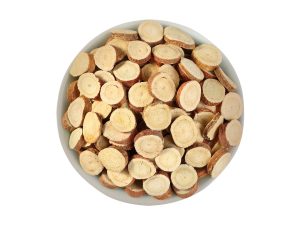
Licorice root does NOT directly raise or lower raw blood cortisol production—it preserves active cortisol longer and balances dysfunctional HPA-axis activity, creating a stabilizing bidirectional effect. As a herbal pharmacist, this is one of the most technically misunderstood licorice mechanisms. Unlike adaptogens that boost adrenal output or calming herbs that blunt cortisol spikes, full-spectrum licorice works through a unique enzyme-blocking pathway to fix both low cortisol fatigue and chronic high cortisol stress. DGL licorice has zero cortisol-modulating effects.
Simplified clinical truth: Licorice keeps your existing cortisol biologically active instead of letting it get broken down and wasted. It raises tissue-level cortisol activity in deficient states and prevents runaway chronic cortisol elevation in stressed states.
Disclaimer: This article is for educational wellness reference only, not adrenal medical treatment. Severe HPA dysfunction, Cushing’s syndrome, or Addison’s disease requires specialized endocrinologist care.
Core Pharmacist Mechanism: How Licorice Acts on Cortisol
All cortisol-related effects come from glycyrrhizin, licorice’s signature active compound. Glycyrrhizin inhibits the key metabolic enzyme 11β-HSD2, which normally converts active cortisol into inactive cortisone for elimination.
- No increase in new cortisol production: Licorice does not stimulate the adrenal glands to pump out more cortisol.
- Blocks cortisol breakdown: It pauses the body’s natural cortisol inactivation process, letting active cortisol circulate longer in tissues and organs.
- Bi-directional adaptogenic balance: In low-cortisol states, it lifts functional cortisol activity to resolve fatigue; in high-cortisol chronic stress states, it regulates HPA overactivity to reduce stress burnout.
Lab data confirms serum cortisol levels stay stable while tissue-active cortisol availability increases with consistent cycled licorice use.
Licorice for Low Cortisol (Adrenal Fatigue)
For users with mild adrenal insufficiency, morning fatigue, sluggish energy, and flat cortisol rhythm, licorice delivers restorative benefits:
Many burnt-out individuals have normal blood cortisol lab numbers but poor active cortisol bioavailability. Their bodies break down cortisol too quickly, leaving them tired, unmotivated, and stress-intolerant. Licorice’s enzyme-blocking action fixes this wasting pattern, boosting functional cortisol activity to restore steady energy, stress resilience, and healthy circadian rhythm.
This is why licorice is the top herbal choice for mild stress-induced adrenal fatigue.
Licorice for High Chronic Cortisol (Stress Burnout)
For users with chronic stress, elevated nighttime cortisol, anxiety, and sleep disruption, licorice acts as a regulatory adaptogen:
Long-term unmanaged stress causes erratic, unregulated cortisol surges and HPA-axis hyperactivity. Licorice modulates overactive stress signaling, calms chronic inflammatory cortisol drive, and balances the body’s stress response. While preserving healthy daytime cortisol function, it reduces abnormal stress-triggered cortisol spikes that cause insomnia, anxiety, and stress weight gain.
Real Client Case: Licorice Fixed Dysregulated Cortisol Rhythm
This is a classic HPA-balancing case I guide in daily herbal consultations:
A 39-year-old female client suffered from mixed cortisol dysregulation: severe morning fatigue (low functional cortisol) plus nighttime racing thoughts and insomnia (high chronic cortisol spikes). Her blood cortisol labs were technically “normal,” but her circadian rhythm was completely disrupted. She tried multiple generic adaptogens with no consistent results.
I prescribed cycled full-spectrum licorice root (4 weeks on, 1 week off). Within two weeks, her morning energy stabilized drastically, and her nighttime cortisol-driven mental hyperactivity calmed down. She no longer experienced afternoon crashes or sleepless nights.
This case proves licorice does not simply raise or lower cortisol—it fixes broken cortisol regulation.
DGL vs. Regular Licorice for Cortisol Balance
DGL licorice has zero cortisol-modulating effects.
The 11β-HSD2 enzyme-blocking ability relies entirely on glycyrrhizin, which is removed during DGL processing. DGL only repairs gut lining and reduces stomach inflammation; it cannot alter cortisol metabolism, HPA function, or adrenal energy balance in any way.
For cortisol and adrenal support, only cycled regular full-spectrum licorice works.
Critical Safety Rule: Uncycled Use Causes Cortisol Side Effects
While short-term cycled licorice balances cortisol, long-term non-stop overuse creates persistent high tissue cortisol activity. This triggers the classic licorice pseudoaldosteronism side effects: fluid retention, elevated blood pressure, low potassium, and hormonal strain. Proper cycling prevents cortisol buildup and maintains healthy metabolic balance.
Pharmacist Recommended Cortisol Support Protocol
- Form: Full-spectrum regular licorice root tea or standardized extract
- Cycling rule: 4–5 weeks daily use, 1 week full break
- Best for: Dysregulated cortisol rhythm, mild adrenal fatigue, stress burnout, HPA-axis imbalance
- Avoid: Daily non-stop use, high-dose overdosing, users with hypertension or Cushing’s tendencies
FAQs (Licorice Root & Cortisol)
Q: Does licorice root increase cortisol levels?
A: It does not raise raw blood cortisol production. It increases active tissue cortisol lifespan, boosting functional cortisol activity without overproducing the hormone.
Q: Does licorice lower high cortisol from stress?
A: Yes, indirectly. It modulates overactive HPA-axis signaling, calms chronic stress inflammation, and reduces erratic cortisol spikes to restore balanced rhythm.
Q: Can licorice fix cortisol rhythm issues?
A: Yes, it is one of the best herbs for reversed or flattened cortisol rhythm, improving morning energy and nighttime calm.
Q: Does DGL help with adrenal or cortisol fatigue?
A: No. DGL removes glycyrrhizin and has no impact on cortisol metabolism or adrenal function whatsoever.
Q: Can too much licorice cause high cortisol side effects?
A: Yes. Uncycled long-term use leads to accumulated active cortisol in tissues, causing fluid retention and blood pressure elevation.
Final Pharmacist Verdict
Licorice root neither purely raises nor purely lowers cortisol—it optimizes and balances cortisol function. By blocking the enzyme that breaks down active cortisol, full-spectrum licorice fixes low functional cortisol fatigue and regulates chronic stress-induced cortisol dysregulation. It does not artificially spike adrenal hormone production but improves the body’s ability to utilize existing cortisol efficiently. Only properly cycled regular licorice delivers cortisol-balancing benefits, while DGL offers no adrenal support. For disrupted stress response, mild adrenal burnout, and unbalanced cortisol rhythm, licorice is a uniquely effective evidence-backed herbal regulator when used safely.