
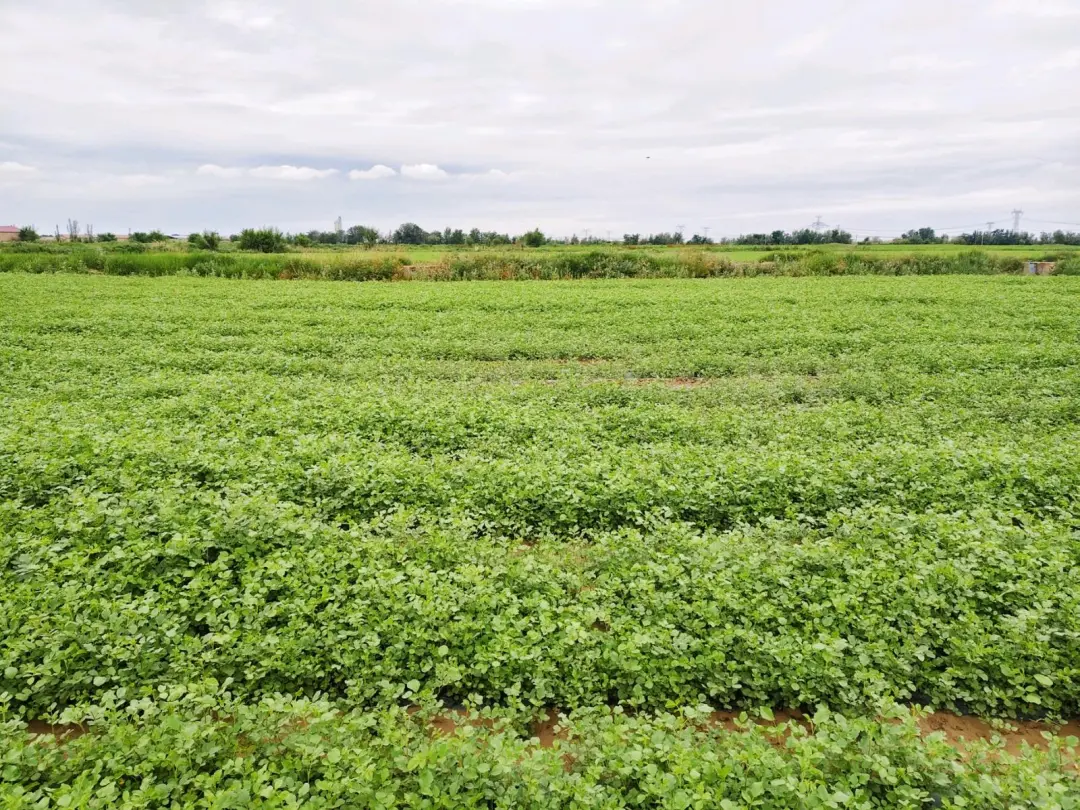
Gulang County, Wuwei, located at the southern edge of Tengger Desert, belongs to the core Daodi licorice producing zone listed in the First Batch of Gansu Provincial Daodi Chinese Herbal Catalogue, mainly cultivating Glycyrrhiza uralensis (Ural licorice, local improved variety Wulahong licorice). Concentrated demonstration bases are distributed in Zhitan Town, Haizitan Town, Peijiaying Town and Hengliang Town, forming large‑scale contiguous planting parks built on desertified sandy land.
Benefiting from cold‑arid desert‑oasis climate, deep loose sandy soil and low‑pollution ecological background, Gulang licorice presents excellent intrinsic quality with high content of glycyrrhizic acid and flavonoids. Local bases widely adopt mechanized transplanting, film‑mulched drip irrigation and crop rotation fallow systems, practicing the “enterprise + cooperative + large‑scale grower + farmer” operating framework, and developing order‑based planting mode to stabilize raw‑material supply for pharmaceutical factories, botanical‑extract enterprises and health‑product industries.While producing high‑grade Daodi licorice raw materials, large‑area licorice planting realizes sand‑fixing and soil improvement, forming a characteristic “desert‑turned‑herb‑farm” industrial‑ecological model in Hexi Corridor.
Unique Desert‑Oasis Growing Environment
Gulang features typical temperate continental cold‑arid climate, abundant sunshine, strong ultraviolet radiation and huge diurnal temperature difference, which greatly promotes biosynthesis and accumulation of licorice’s active pharmaceutical ingredients. The base soil is dominated by deep‑layer breathable sandy loam, well‑drained and slightly saline‑alkali, perfectly matching the root‑growth habit of Glycyrrhiza uralensis. The taproot of licorice can stretch deeply into sand layer without compact‑soil obstruction, generating thick, compact and high‑powder‑content rhizomes.
Situated adjacent to Tengger Desert, the planting zone keeps far away from heavy‑industry pollution sources. Licorice itself is a native sand‑binding plant; its well‑developed root system fixes moving sand and activates soil nitrogen fixation, improving the physicochemical property of degraded desertified land. Planting licorice on previous desertified wasteland achieves dual goals of ecological restoration and herbal raw‑material output.
Standardized Cultivation & Base Management
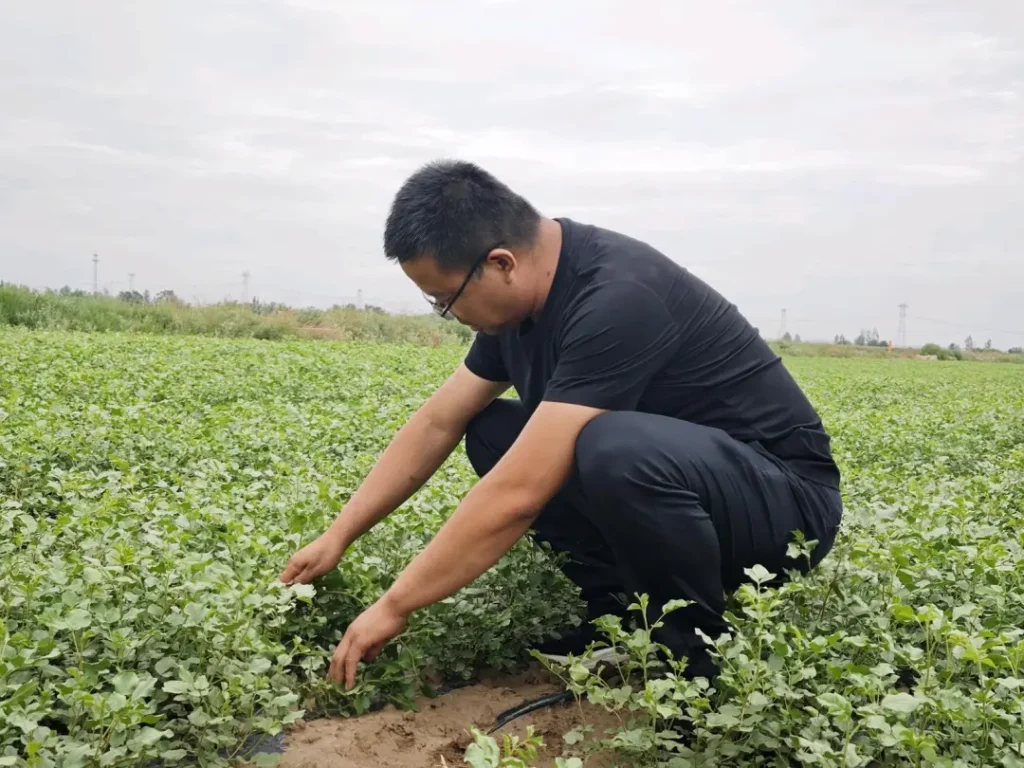
Gulang large‑scale licorice demonstration bases apply mature standardized technical system adapted to Hexi cold‑arid oasis conditions.
- Superior provenance seedling selection: Prioritize local fine‑bred Wulahong licorice seedlings. Adopt seedling‑transplanting instead of direct sowing, which effectively restrains fibrous‑root growth, makes main taproot straighter and thicker and improves commodity grade of licorice roots.
- Mechanized field operation: Deploy special licorice transplanting machines, harvesting machinery, cooperating with manual fine management, greatly lifting planting and harvesting efficiency for large‑scale bases.
- Water‑saving irrigation technology: Popularize film‑mulched drip irrigation system to precisely control water consumption in arid zones and prevent secondary soil salinization of sandy land.
- Scientific rotation & harvest cycle: Implement crop rotation with corn and other local crops to conserve soil fertility. Follow strict 3‑year growth cycle before autumn harvest to guarantee full accumulation of glycyrrhizic acid and flavonoid compounds; premature digging is prohibited to safeguard medicinal quality.
- Green pest prevention: Give priority to biological and physical prevention & control; strictly limit synthetic chemical pesticides and chemical fertilizer dosage to satisfy TCM raw‑material safety standards.
- Whole‑process field record: Keep complete planting logs covering seedling source, irrigation, fertilization, pest control and harvest date, laying foundation for product traceability.
Most bases carry out order‑driven production: enterprises provide seedlings and technical guidance, sign purchasing contracts with growers in advance, effectively solving market‑selling risks for local farmers.
Certification, Quality Standard & Industrial Construction
- Gansu Provincial Daodi Chinese Medicinal Herb: Gulang licorice is formally included in the First Batch of Gansu Daodi TCM Catalogue, confirming its authentic Daodi producing‑area status.Local authorities promote green planting certification and organic certification for demonstration parks as key industrial tasks.
- Quality performance: Test results show that Gulang‑planted Glycyrrhiza uralensis meets or exceeds the specification requirements of Chinese Pharmacopoeia on glycyrrhizic acid and glycyrrhizin, gaining consistent recognition among herbal merchants across the country.
- Ecological‑oriented industrial policy: Local government supports the construction of standardized demonstration bases, seedling‑breeding system and primary‑processing facilities, encouraging Chinese‑medicine enterprises to build source bases in Gulang, promoting the transformation from scattered household planting to large‑scale intensive production.
- Resource protection: Uncontrolled digging of wild licorice is banned. Commercial raw materials mainly originate from artificially‑cultivated standardized bases, realizing sustainable utilization of desert herbal resources.
Ecological & Economic Value
As one of the signature characteristic industries of Gulang County, licorice planting revitalizes large tracts of desertified sandy wasteland. It brings stable planting income for local growers and immigration communities meanwhile delivering ecological benefits including sand fixation and land rehabilitation. The harvested licorice raw materials are widely supplied to TCM prescription preparation, plant‑extraction, food‑additive and cosmetic sectors.
Supported by order‑based industrial chain, Gulang licorice has become a typical representative of Hexi Corridor desert‑oasis medicinal‑herb economy, realizing mutual promotion among ecological protection, rural revitalization and Daodi TCM industry development.
FAQ
Q: What are the features of Gulang Wulahong licorice?
A: Wulahong licorice is a local improved variety adapting to Gulang sandy soil. It develops thick main taproot, high powder content and abundant active ingredients, with good market commodity performance. Seedling transplanting technology effectively reduces fine fibrous roots and improves root quality.
Q: How long is the normal growth cycle for Gulang licorice?
A: Standard commercial harvest cycle is 3 years. Sufficient growth period ensures adequate accumulation of triterpenoid and flavonoid active substances, complying with Daodi medicinal‑herb production rules.
Q: What ecological benefits does Gulang licorice planting bring?
A: Licorice is sand‑tolerant desert plant. Large‑scale standardized planting stabilizes shifting sand dunes, improves degraded sandy soil, turning desertified wasteland into productive herbal farmland, achieving win‑win of ecology and economy.


مقال رائع! من الجميل أن نرى اهتماماً بزراعة العرقسوس في بيئة صحراوية قاسية، فهذا يثبت أن الإرادة والتقنية يمكن أن يصنعا المعجزات. جودة العرقسوس البرّي معروفة منذ
Fascinating to see how traditional Daodi herbs are being standardized right at the edge of the Tengger Desert. Licorice