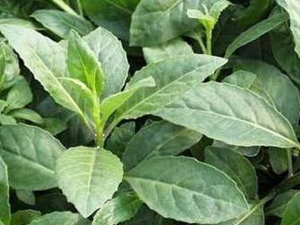
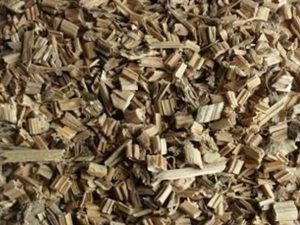

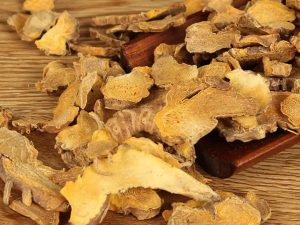
Guava is a name used in traditional Chinese medicine. It refers to the leaves or fruit of Psidium guajava Linn., a plant in the Myrtaceae family. It is distributed or cultivated in Fujian, Taiwan, Guangdong, Guangxi, Sichuan, and Yunnan. Dried young fruit has astringent, antidiarrheal, and hemostatic effects and is commonly used to treat uncontrollable diarrhea and dysentery, as well as metrorrhagia and menorrhagia.Ripe fruits have the effects of strengthening the spleen, eliminating food stagnation, and astringing the intestines to stop diarrhea; they are commonly used to treat food stagnation with bloating, malnutrition, diarrhea, dysentery, rectal prolapse, and menorrhagia.The leaves have the effects of dispelling dampness, strengthening the spleen, clearing heat, and detoxifying; they are commonly used to treat abdominal pain associated with diarrhea and dysentery, abdominal distension due to food stagnation, diabetes insipidus, swollen and painful gums, rheumatic arthralgia, eczema and chronic leg sores, boils and abscesses, swelling and pain from falls and blows, external bleeding, and snake and insect bites.Fresh leaves have hemostatic properties and are commonly used to treat contusions and bruises, bleeding from external injuries, and chronic, non-healing leg sores.