Cordyceps sinensis
lungs
cordyceps benefits
best chinese herbal tea for lungs
cordyceps tea
chinese herbs for cognitive function
Chinese Yam

Taxillus

Taxillus chinensis, a name in traditional Chinese medicine, refers to the dried stems and branches with leaves of Taxillus chinensis (DC.) Danser, a plant in the genus Taxillus of the family Taxillaceae.This product is effective in dispelling wind-dampness, tonifying the liver and kidneys, strengthening tendons and bones, and stabilizing the fetus. It is primarily used to treat rheumatic pain, soreness and weakness in the lower back and knees, weakness of tendons and bones, excessive menstrual bleeding, bleeding during pregnancy, fetal restlessness, and dizziness.

Reeves’s Pheasant

Reeves’s Pheasant, a name in traditional Chinese medicine. It refers to the meat of the long-tailed pheasant (Syrmaticus reevesii (Gray)), an animal of the Phasianidae family. It is distributed in the mountainous regions of northern and central China. The long-tailed pheasant is a Class II nationally protected animal; due to its scarce population, hunting is prohibited. It has the therapeutic effects of tonifying the middle burner and boosting qi, as well as relieving wheezing. It is commonly used to treat qi deficiency with shortness of breath and general physical weakness.

Sunflower

The sunflower is a plant of the genus Helianthus in the Asteraceae family; its fruits, flowers, flower heads, leaves, stem pith, and roots are used medicinally.Sunflower seeds (fruit) have a sweet taste and neutral nature; they are effective in promoting the eruption of rashes, stopping dysentery, and draining pus from abscesses. They are primarily used to treat rashes that fail to erupt, bloody dysentery, and chronic osteomyelitis. Sunflower flowers have a slightly sweet taste and neutral nature; they are effective in dispelling wind, calming the liver, and draining dampness. They are primarily used to treat dizziness, tinnitus, and painful urination.Sunflower flower heads have a sweet taste and a cold nature; they enter the Liver meridian and have the effects of clearing heat, calming the liver, relieving pain, and stopping bleeding. They are primarily used to treat hypertension, headaches, dizziness, tinnitus, epigastric and abdominal pain, dysmenorrhea, uterine bleeding, and skin rashes;Sunflower leaves have a bitter taste and a cool nature; they lower blood pressure, arrest malaria, and detoxify. They are primarily used to treat hypertension, malaria, and boils; Sunflower stem pith has a sweet taste and a neutral nature; it enters the Bladder Meridian and has the effects of clearing heat, promoting urination, and relieving cough. It is primarily used to treat turbid urine, leukorrhea, chyluria, whooping cough, and rubella;Sunflower roots have a sweet and bland taste, a slightly cold nature, and enter the Stomach and Bladder meridians. They clear heat, drain dampness, regulate qi, and relieve pain, and are primarily used to treat dysuria with turbid discharge, edema, leukorrhea, hernias, epigastric and abdominal distension and pain, and trauma.

Jing Sanqi

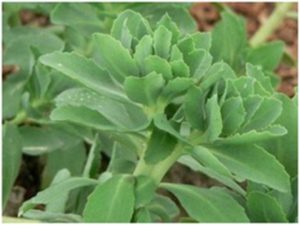
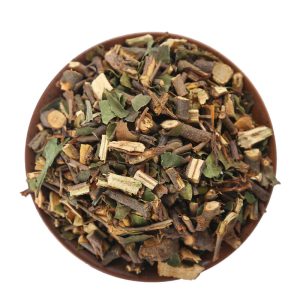
Jing Sanqi is the name of a traditional Chinese medicine. It consists of the root or whole plant of Sedum izoon L., a species of the genus Sedum in the Crassulaceae family. It is distributed in Northeast China, Northwest China, East China, Hebei, Hubei, and Sichuan, among other regions. It has the therapeutic effects of dispersing blood stasis and stopping bleeding, calming the heart and soothing the mind, and detoxifying.It is commonly used for hematemesis, hemoptysis, gingival bleeding, hematochezia, hematuria, metrorrhagia, thrombocytopenic purpura, traumatic bleeding, palpitations, and restlessness with insomnia; externally, it is used for contusions, traumatic bleeding, burns and scalds, and conditions such as boils, abscesses, and swellings.

Adzuki Bean and Coix Seed Carp Soup: A Traditional Recipe to Support Healthy Fluid Balance

Adzuki Bean and Coix Seed Carp Soup – Traditional Dietary Support Introduction to a Traditional Dietary Practice Red Bean and Coix Seed Carp Soup is a time-honored traditional Chinese dietary recipe, widely popular among the people, especially prevalent in the Jiangnan water town regions. This soup features carp as the main ingredient, combined with two … Read more

Baizhu Baiji Pig Stomach Soup: A Classic Spleen Tonic

Introduction to Medicinal Cuisine Atractylodes Macrocephala and Bletilla Striata Pork Stomach Soup is a traditional dietary preparation that combines flavor with nutritional support. It has been used in folk dietary practices to help maintain digestive comfort, especially for those seeking to support a balanced digestive system. This soup uses pork stomach as the main ingredient, … Read more

Stewed Hen with Poria and Alisma: A Traditional Tonic Soup Recipe

Stewed Hen with Poria (Poria cocos) and Alisma (Alisma orientale) – Medicinal Diet Introduction to Medicinal Diet Poria and Alisma Stewed Hen is a classic medicinal dietary dish adapted from the Tai Ping Hui Min He Ji Ju Fang (Formulary of the Bureau of Taiping People’s Welfare Pharmacy), with the core actions of promoting urination … Read more

Snakehead Fish, Black Soybean, and Licorice Soup: Benefits & Recipe

Snakehead Fish, Black Soybean, and Licorice Decoction · Traditional Food Knowledge Introduction to Traditional Food Practice Black Fish and Black Soybean Licorice Decoction is a classic dietary soup rooted in Lingnan folk tradition, combining nourishment with culinary enjoyment. The main ingredients are black fish (Channa argus, also known as northern snakehead), black soybean (Glycine max), … Read more

Spinach and Ginseng Soup: TCM Recipe, Benefits, and How to Make

Introduction to Medicinal Diet Spinach and Ginseng Soup is a traditional Chinese medicinal diet featuring spinach and ginseng as the main ingredients. Its creation was inspired by the theory of “homology of medicine and food” from the *Bencao Gangmu* (Compendium of Materia Medica) and the *Shiliao Bencao* (Dietary Materia Medica). This soup artfully combines the … Read more

Honeysuckle Safflower Lily Soup: Clear Heat, Move Blood, Nourish Yin

Introduction to Herbal Soup Honeysuckle, Safflower, and Lily Bulb Decoction (忍冬红花百合汤) is a traditional herbal soup that combines the triple benefits of supporting the body’s natural cooling and purification processes, promoting healthy blood circulation, and nourishing yin while soothing the spirit. This soup primarily uses three herbs: Lonicera japonica (Japanese honeysuckle, i.e., Flos Lonicerae Japonicae), … Read more

Salvia and Safflower Chicken Soup: A Medicinal Food Guide

Salvia and Safflower Chicken Soup: A Dietary Supplement Guide Introduction to Herbal Dietary Supplement Salvia miltiorrhiza and Carthamus tinctorius Chicken Soup is a classic herbal dietary formula that combines blood-nourishing and blood-activating effects with warming the center and supplementing deficiency, rooted in the traditional concept of “food as part of a balanced diet.” Salvia miltiorrhiza … Read more

Polygonum multiflorum and Black Soybean Stew: Benefits & Recipe

Introduction to Medicinal Diet “Polygonum multiflorum and Black Soybean Stew” is a time-honored TCM medicinal diet, with the key ingredients being *Polygonum multiflorum* (fleeceflower root / fo-ti) and black soybeans (*Glycine max*). *Polygonum multiflorum*, also known as *He Shou Wu*, is the tuberous root of the Polygonaceae plant *Fallopia multiflora* (Thunb.) Harald. After processing, its … Read more

Chenpi Vinegar-Boiled Peanuts: TCM Recipe for Digestion & Health

Introduction to Medicinal Diet Chenpi Vinegar-Boiled Peanuts is a classic medicinal dish that combines traditional food-based nourishment with home-style flavors. It features Xinhui Citri Reticulatae Pericarpium (aged tangerine peel), Shanxi aged vinegar, and high-quality peanuts (Arachis hypogaea) as core ingredients, gently simmered over low heat to achieve a harmonious blend of the peel’s aromatic notes, … Read more

Goji Berry Stewed Pig Brain: Benefits, Recipe & Cooking Tips

Introduction to Medicinal Diet Goji Berry Stewed Pork Brain is a time-honored traditional nourishing medicinal dish, particularly popular in the Lingnan region and the Jiangnan area. It features sweet and nourishing goji berries (Lycium barbarum) combined with tender pork brain as the main ingredients, supplemented with a small amount of fresh ginger, yellow wine (huangjiu), … Read more