
Menopause is a natural transitional stage for women, marked by declining estrogen and progesterone levels in the body. Among various menopausal symptoms, hot flashes—sudden waves of intense heat, flushing, sweating, and rapid heartbeat—are the most prevalent and disruptive, affecting up to 80% of menopausal women. Many people seek gentle, natural herbal remedies to relieve these discomforts, and licorice root has emerged as a popular traditional herb for managing menopausal hot flashes. This article comprehensively explores its working mechanism, practical benefits, correct usage, and critical safety precautions.
1. Why Licorice Root Helps Relieve Menopause Hot Flashes
The core cause of menopausal hot flashes is the sharp fluctuation and decline of endogenous estrogen, which disrupts the body’s thermoregulatory center in the hypothalamus. Licorice root exerts its relieving effects mainly through its unique phytoestrogen components and hormonal regulatory functions:
Phytoestrogen Modulation of Hormone Levels
Licorice root contains abundant isoflavones and liquiritigenin, natural plant-derived estrogens (phytoestrogens) with mild estrogenic activity. These compounds can bind to estrogen receptors in the human body, effectively supplementing the insufficient estrogen levels during menopause. By balancing the body’s hormonal imbalance, they stabilize the overactive thermoregulatory system, reducing the frequency, duration, and intensity of hot flashes and night sweats.
Regulation of the Nervous System and Stress Response
Menopausal hormonal fluctuations often lead to increased sympathetic nerve excitability and emotional anxiety, which further aggravate hot flashes. Licorice root contains glycyrrhizic acid, which can regulate the body’s hypothalamic-pituitary-adrenal (HPA) axis, relieve nervous tension, reduce stress-induced heat flushes, and improve sleep quality disrupted by night hot flashes.
Anti-Inflammatory and Antioxidant Effects
Oxidative stress and low-grade inflammation in menopausal bodies are important auxiliary factors for hot flashes. The active ingredients in licorice root have strong antioxidant and anti-inflammatory properties, which can eliminate free radicals, reduce systemic inflammation, and alleviate the physical discomfort accompanying hot flashes, such as body soreness and irritability.
2. Key Benefits of Licorice Root for Menopausal Symptoms
- Reduces hot flash frequency and severity: Long-term moderate use can significantly cut down sudden heat flushes, facial flushing, and profuse sweating, especially effective for mild to moderate menopausal hot flashes.
- Improves night sweats and sleep disorders: Stabilizes nocturnal hormonal fluctuations, reduces nighttime hot flashes and night sweats, helping users fall asleep faster and maintain stable sleep.
- Alleviates auxiliary menopausal discomforts: Relieves menopausal mood swings, irritability, fatigue, and dry skin caused by estrogen deficiency, improving overall menopausal quality of life.
- Mild and natural with low irritation: Compared with synthetic hormone replacement therapy (HRT), licorice root is a natural herbal remedy with mild effects and no strong side effects for most healthy women, suitable for long-term gentle conditioning.
3. Common Usage Methods of Licorice Root
To achieve the best relief effect for hot flashes, licorice root can be used in a variety of safe and convenient ways, with controlled dosage being the core principle:
Licorice Root Tea (Most Daily-Friendly)
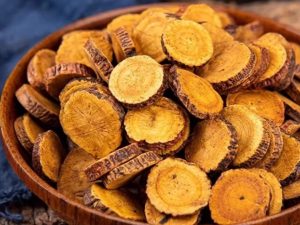
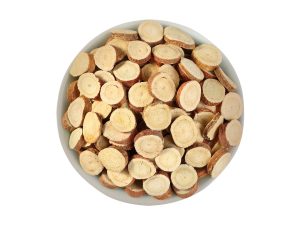
Take 3–5 grams of dried licorice root slices, brew with 200–300ml of boiling water, steep for 10–15 minutes, and drink warm. It can be brewed repeatedly for 2–3 times a day, with a maximum daily dosage of no more than 10 grams. Persistent drinking for 4–8 weeks can obviously improve mild menopausal hot flashes.
Licorice Root Herbal Supplements
Standardized licorice root capsules or extracts are available on the market with fixed active ingredient content. Follow the product instructions strictly; the common standardized dose is 200–400mg of licorice extract daily, which is more convenient for quantitative conditioning and avoids excessive intake.
Compound Herbal Blends
Licorice root is often paired with other menopausal conditioning herbs such as black cohosh, red clover, and chasteberry. The compound formula can synergistically regulate hormones and enhance the relief effect of hot flashes, which is suitable for women with severe and frequent hot flashes.
4. Critical Safety Precautions & Contraindications
Although licorice root is a natural herb, excessive or long-term unregulated use will cause side effects. Users must abide by the following rules to ensure safety:
Avoid Long-Term High-Dose Use
Excessive intake of glycyrrhizic acid will cause licorice poisoning, leading to water and sodium retention, elevated blood pressure, hypokalemia, edema, and arrhythmia. It is not recommended to use pure licorice root continuously for more than 3 months; intermittent use (1 month on, 2 weeks off) is safer.
Special Crowd Contraindications
- Women with hypertension, heart disease, kidney disease, and hypokalemia: Prohibited from using licorice root, as it may aggravate the condition.
- Patients with hormone-related diseases: Including breast cancer, ovarian cancer, uterine fibroids, and endometriosis. Phytoestrogens may stimulate lesion growth, so use is forbidden.
- Pregnant and breastfeeding women: Strictly prohibited to avoid hormonal effects on the fetus and infant.
- Diabetic patients: Licorice root contains a certain amount of sugar, which may affect blood sugar stability, so cautious use is required.
Drug Interaction Warnings
Licorice root may interact with diuretics, antihypertensive drugs, cardiac glycosides, and hormone drugs, reducing drug efficacy or triggering adverse reactions. If you are taking long-term prescription drugs, consult a doctor before using licorice root for menopausal conditioning.
5. Scientific Research Consensus
Multiple clinical studies on menopausal syndrome have shown that standardized licorice root extract can effectively reduce the frequency of hot flashes by 30%–50% in menopausal women with mild to moderate symptoms, and significantly improve night sweat and sleep problems. However, it is not effective for severe menopausal hot flashes caused by sharp ovarian function decline, which requires professional medical intervention and hormone therapy.
Final Summary
Licorice root is a safe and effective natural auxiliary remedy for mild to moderate menopausal hot flashes. It relieves hot flashes and accompanying discomforts by supplementing phytoestrogens, regulating nerves and inflammation. The key to its efficacy and safety is moderate dosage, intermittent use, and compliance with contraindications. For severe menopausal symptoms or users with underlying diseases, professional gynecological and endocrinological diagnosis and treatment should be prioritized, and herbal adjuvant therapy should be carried out under medical guidance.



Интересная статья! Сама в перименопаузе, приливы — это просто испытание. Слышала о солодке, но боялась из-за давления. Хорошо, что подробно описали безопасное применение и дозировки. Поп