
Endurance capacity, cellular stamina, fast post‑training recovery and robust immune defence are cornerstones for recreational fitness enthusiasts, endurance runners, cyclists, triathletes and competitive athletes. Intense training places massive physiological stress: elevated oxidative stress, lactic acid accumulation, mitochondrial wear‑and‑tear, HPA‑axis dysregulation and transient immune suppression after hard sessions.
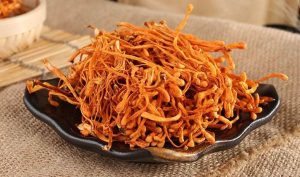
Cultivated Cordyceps militaris is one of the most‑studied adaptogenic mushrooms in sports nutrition research. Important reality check: it is not a fast‑acting stimulant or magic performance booster. Benefits develop gradually over consistent weeks of intake. Human trial results are mixed; improvements tend to show more clearly in recreationally‑active populations than already‑elite top‑level athletes who are near their physiological ceiling.
Important Disclaimer: Cordyceps is complementary sports‑nutrition support only. It cannot replace structured training plans, high‑quality protein/carbohydrate fueling, sleep and recovery protocols. While cordyceps itself is not listed on the WADA 2026 prohibited list, competitive athletes must always complete third‑party batch screening for supplements to eliminate contamination risk of banned trace substances. It does not treat sports‑related injuries. If you suffer persistent joint pain, muscle damage or training‑related illness, seek sports‑medicine clinical care.
Traditional TCM Perspective on Cordyceps for Athletes
In Traditional Chinese Medicine, athletic performance and recovery rely on strong Lung Qi and Kidney Jing.
- Lung Qi governs oxygen uptake, gas exchange and physical stamina. Deficient Lung Qi leads to early breathlessness during workouts.
- Kidney Jing is the deep constitutional reserve responsible for post‑exertion recovery, resilience and stamina. Heavy training consumes Kidney Jing, manifesting as persistent workout fatigue, slow recovery, lower‑back soreness and increased susceptibility to colds.
Cordyceps tonifies both Lung Qi and Kidney Jing. It replenishes constitutional reserves drained by repeated hard training, improves oxygen utilisation and strengthens defensive Wei‑Qi to reduce post‑training immune vulnerability. TCM practice notes cordyceps works best as a long‑term tonic, rather than one‑off pre‑workout quick fix.
Scientific Mechanisms & Human Research Findings for Athletes
Note: Multiple randomised controlled human trials exist, but study outcomes are inconsistent. Larger‑sample meta‑analysis shows statistically small‑to‑moderate benefits for endurance markers, with weaker effects for elite athletes already at peak fitness.
1. Improve aerobic capacity, VO₂ max and ventilatory threshold
Some double‑blind placebo‑controlled human trials show that consistent cordyceps supplementation can raise VO₂ max and ventilatory threshold. Ventilatory threshold is the exercise intensity where breathing becomes disproportionately heavy; raising this threshold lets athletes sustain higher‑intensity work for longer before shifting to anaerobic metabolism. Key trial observation: meaningful aerobic gains generally appear after 3 weeks or more of daily intake. Short‑term 7‑day supplementation rarely delivers statistically significant VO₂‑max improvements.
2. Boost mitochondrial function & ATP cellular energy output
Cordycepin and polysaccharides support mitochondrial biogenesis and efficiency. Better mitochondrial ATP production reduces cellular fatigue during sustained exercise, delaying time‑to‑exhaustion in endurance‑type efforts.
3. Support lactic‑acid clearance & reduce exercise‑induced oxidative stress
Strenuous exercise generates large volumes of lactic acid and reactive oxygen species (ROS). Cordyceps’ antioxidant profile helps mitigate oxidative damage to muscle tissue and assists metabolic waste clearance, which contributes to less post‑workout weariness. It is not a lactic‑acid “flush‑out” miracle agent, but offers modulatory support.
4. Mitigate transient exercise‑induced immune suppression
Heavy prolonged training temporarily suppresses natural‑killer (NK)‑cell activity, raising the risk of catching colds and upper‑respiratory tract infections during hard training blocks. As an immune‑modulating mushroom, cordyceps helps preserve NK‑cell function post‑workout, lowering infection susceptibility for athletes in high‑volume cycles.
5. Adaptogenic HPA‑axis regulation for training‑related stress
Chronic high training load elevates baseline cortisol, a driver of over‑reaching and over‑training symptoms. Cordyceps modulates HPA‑axis signalling, helping buffer stress‑hormone spikes caused by intensive physical workload.
Athlete Profiles Most Likely To Benefit From Cordyceps Support
These are functional wellness patterns, not clinical diagnoses.
- Recreational‑to‑intermediate‑level endurance athletes (running, cycling, swimming, triathlon) seeking incremental aerobic gains
- Athletes doing high‑volume training blocks who frequently get minor colds after hard sessions
- Fitness users struggling with slow post‑workout recovery, persistent workout‑linked fatigue
- People experiencing early signs of over‑reaching: constant tiredness, flat performance, sleep disruption from heavy training
Groups expecting minimal measurable performance gain:
- World‑class elite athletes already at near‑maximal physiological capacity (many RCTs show negligible VO2 changes in highly‑trained cohorts)
- Athletes chasing instant pre‑workout stimulant‑type energy jolts (cordyceps has no acute stimulant effect)
Wild vs Cultivated Cordyceps Comparison for Sports Nutrition
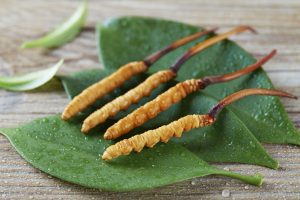
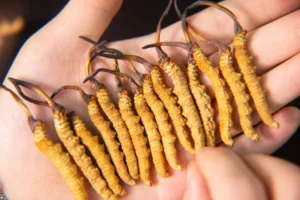
| Item | Ophiocordyceps sinensis (Wild‑harvested caterpillar fungus) | Cultivated Cordyceps militaris |
|---|---|---|
| Performance‑relevant bioactives | Highly variable cordycepin / polysaccharide levels; quality unstable | Controlled indoor cultivation; standardisable cordycepin and polysaccharide content |
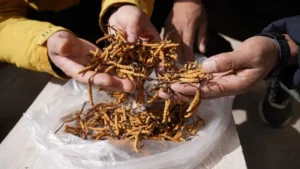
| Contamination risk | High risk of adulteration, heavy‑metal residues; dangerous for competitive tested athletes | Lab‑testable raw material; suitable for third‑party sports supplement screening |
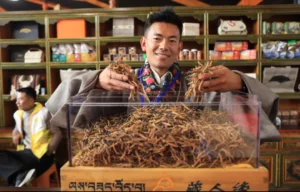
| Price | Extremely expensive for daily training‑cycle use | Cost‑effective for long‑term cyclic supplementation |
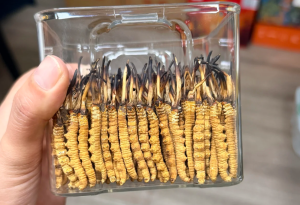
| Sports‑research background | Mostly historical observational TCM records | Most modern human exercise RCTs use Cordyceps militaris or CS‑4 fermented strain |
| Practical recommendation for athletes | Not recommended; contamination risk makes it unsafe for tested competitors | Preferred choice for recreational and competitive athletes |
Critical note for competitive athletes: Even if raw cordyceps itself is WADA‑compliant, always choose supplements with third‑party sports‑certified batch testing to rule‑out cross‑contamination with banned substances.
Recommended Usage, Dosage & Timing for Athletes
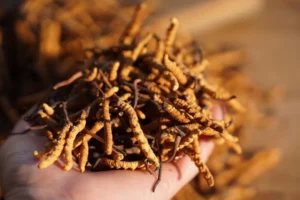
- Forms: Standardised dual‑extract capsules / powder (preferred for consistent bioactives and easy batch‑testing); decoction tea (simmer fruiting bodies for 15‑20 min).
- Research‑backed dosage range for athletic goals: 2000‑4000 mg of standardized Cordyceps militaris extract per day. Lower dose (1000‑2000 mg) for maintenance / off‑season recovery phases.
- Timing: Morning or early‑afternoon intake. It is not an acute pre‑workout supplement. Some sensitive athletes experience mild alertness; avoid large doses late evening to prevent sleep disruption — sleep is non‑negotiable for athletic adaptation.
- Cyclic protocol for training cycles: Take daily for 6‑8 weeks during hard‑training blocks, followed by a 7‑day rest break during deload / off‑weeks. Benefits accumulate slowly; do not expect performance jumps in under 2‑3 weeks.
- Synergistic herbal / supplement stacks for athletes:
- cordyceps + astragalus root: support endurance plus post‑training immune resilience
- cordyceps + rhodiola rosea: dual adaptogen support for high‑cortisol heavy training periods
Critical Safety Guidelines & Contraindications for Athletes
- WADA compliance: Cordyceps mushroom itself is not prohibited, but supplement contamination risk always exists for tested competitors. Use only third‑party sports‑tested products.
- Anticoagulant / anti‑platelet medications: Cordyceps exhibits mild anti‑platelet activity. If taking blood‑thinning agents, obtain doctor clearance before use.
- Pre‑surgery: Discontinue cordyceps a minimum of two weeks before any scheduled surgical procedure due to theoretical bleeding risk.
- Autoimmune disease / immunosuppressant drugs: Cordyceps is immune‑modulating; athletes with these conditions must seek specialist approval before self‑supplementing.
- Avoid during acute fever / active infection: TCM guidance holds tonic mushrooms should be paused during acute sickness to avoid “closing in pathogens”. Resume after fever resolves for post‑illness recovery.
- Do not substitute cordyceps for deload weeks, sleep and adequate macro‑nutrient intake. Supplements only add on top of foundational training‑nutrition‑recovery work.
Final Thoughts
Cordyceps for athletes delivers gradual, whole‑body athletic support targeting mitochondrial efficiency, aerobic endurance, exercise‑related oxidative stress and post‑training immune resilience. Human research shows moderate potential benefits mostly for recreationally‑active and intermediate‑level athletes; elite competitors near physiological maximum may see little measurable performance improvement.
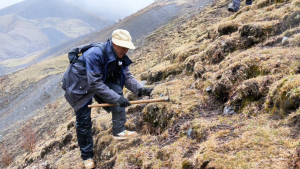
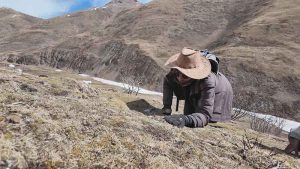
Cultivated Cordyceps militaris is the practical, test‑safe choice for sports use, while wild‑harvested sinensis carries unacceptable contamination risk for competitive tested athletes. Always treat it as complementary support layered onto structured training, quality sleep and proper fueling rather than a standalone performance pill.
Q1: Is cordyceps banned by WADA for competitive athletes?
A: Cordyceps mushroom itself is not present on the 2026 WADA prohibited substance list. However all competitive athletes must use third‑party sports‑batch‑tested supplements to eliminate risk of trace banned‑substance contamination from raw‑supply chain.
Q2: Can I take cordyceps 30 minutes before a race or workout for instant endurance boost?
A: No. It is not an acute pre‑workout stimulant. Human trials show aerobic adaptations require multiple weeks of consistent daily intake. You will not get a same‑session performance spike.
Q3: Will cordyceps raise my VO2 max?
A: Some controlled trials show measurable VO₂‑max improvements after 3+ weeks in recreationally‑active participants. Results vary individually; elite athletes often show minimal changes, as they are already close to their biological ceiling.
Q4: Does cordyceps help prevent getting sick during heavy training blocks?
A: Yes, as an immune‑modulator it helps mitigate exercise‑induced transient NK‑cell suppression. It lowers — but cannot fully eliminate — risk of upper‑respiratory infections during high‑volume training.
Q5: Can I stack cordyceps with creatine, beta‑alanine or protein powder?
A: Yes, there are no known negative interactions. Cordyceps acts on mitochondrial‑oxidative‑stress pathways, while creatine / beta‑alanine target anaerobic energy and muscle buffering; they complement one another.
Q6: What side‑effects can athletes experience taking cordyceps?
A: Mostly well‑tolerated. Rare mild digestive bloating or loose stools when first starting. A subset of sensitive users can experience heightened alertness if dosed late in the day, which may hurt sleep quality. Discontinue if mushroom‑related allergic reaction appears.
Q7: What is the difference between wild Ophiocordyceps sinensis and cultivated Cordyceps militaris for athletes?
A: Wild sinensis is expensive, frequently adulterated and carries heavy‑metal contamination risk which makes it unsafe for tested competitive athletes. Cultivated Cordyceps militaris delivers standardised cordycepin and polysaccharides and is the recommended option for sports‑nutrition use.
Interesting read! I’ve been cycling for years and started adding cordyceps to my morning routine about six months ago. Recovery after hard interval sessions feels noticeably better, and I don’t get those post-training crashes as often. Good to see the science backing up what many of us have been experiencing anecdotally. Curious if
Great breakdown! I’ve been taking cordyceps for about six months now alongside my marathon training, and the difference in my recovery is honestly noticeable. Those post-long-run slumps where you feel wiped out for days just don’t hit the same anymore. Nice to see the science behind why it actually works, not just hype. Anyone else tried it for