
Introduction to Medicinal Diet
Cordyceps and Goji Berry Basic Immune Support Tea is a classic herbal infusion derived from the traditional TCM concept of medicine-food homology. Its core ingredients are Cordyceps sinensis (Dongchongxiacao) and Lycium barbarum (Gouqizi), with a small amount of honey or rock sugar added for flavor. Cordyceps sinensis has long been regarded as “soft gold” – it is neutral in nature, sweet in taste, and enters the Lung and Kidney Meridians. Lycium barbarum is known as the “longevity fruit” – also neutral and sweet, it enters the Liver and Kidney Meridians. When blended as a tea, this combination helps support the body’s natural defenses and is suitable for gentle daily maintenance. This tea is especially popular among middle-aged, elderly, and constitutionally weaker individuals in folk tradition. It functions both as a medicinal food and a convenient tea substitute – requiring no lengthy decoction, just steeping in hot water, making it ideal for modern fast-paced lifestyles. Its simple formula focuses on supporting basic immune health, helping to maintain a strong internal environment and the body’s natural resilience through regular consumption.
The inspiration for this tea formulation originates from classical medical texts applying the theory of “Metal Generating Water” (Influx of Lung and Kidney) to Cordyceps and Goji berries. Cordyceps sinensis (Dongchongxiacao) is primarily valued for its ability to nourish Lung and Kidney Yin, while Lycium barbarum (Gouqi, Goji berry) focuses on supporting Liver blood and replenishing Kidney essence. Together, they work in harmony—one upper, one lower—to help maintain the body’s foundational balance. Modern nutritional science also confirms that Cordyceps is rich in cordycepin, cordycepic acid, and various amino acids, while Goji berries contain abundant Lycium barbarum polysaccharides, beta-carotene, and vitamin C. Their synergistic effect gently supports healthy immune cell activity. Unlike high-concentration immune-enhancing products on the market, this tea emphasizes a “moistening without noise” approach, making it suitable as a foundational formula for long-term wellness support.
Health Benefits of Medicinal Cuisine
Cordyceps and Goji Berry Basic Immunity Tea primarily supports the body’s natural immune function. Drinking one cup daily helps maintain healthy macrophage phagocytosis and antibody production, which contributes to respiratory health during seasonal transitions and helps maintain a balanced response to environmental factors. It is especially suitable for individuals with weakened constitution, frequent fatigue, those recovering from wellness, or those experiencing occasional immune stress due to irregular sleep patterns. With consistent use over one to two months, individuals may experience improved vitality, a greater sense of warmth, and a reduction in occasional respiratory discomfort.
Additionally, this tea supports the health of the Kidneys and Lungs. Cordyceps sinensis (Dong Chong Xia Cao) gently supports Lung and Kidney function, helping to helps with occasional occasional coughing, wheezing, and minor discomfort in the lower back and knees. Lycium barbarum (Gou Qi) promotes eye health and skin vitality, supporting normal vision and helping to maintain a sense of balance in cases of occasional dizziness. For middle-aged and older individuals experiencing signs of Lung-Kidney Dual Deficiency—such as mild shortness of breath with slight exertion, occasional frequent nighttime urination, ringing in the ears, and forgetfulness—this tea serves as a foundational tonic to promote overall well-being. It also supports vitality and helps maintain a healthy antioxidant balance by supporting the body’s natural defenses against oxidative stress, helping to maintain a youthful energy.
The Role of Traditional Chinese Medicine
Analyzed from the perspective of Traditional Chinese Medicine (TCM), the core mechanism of the Cordyceps sinensis (Dongchongxiacao) and Lycium barbarum (Gouqizi) Basic Immune Support Tea lies in “tonifying without causing dryness, and moistening without causing greasiness.” Cordyceps sinensis (Dongchongxiacao) is neutral in nature, capable of both tonifying Yang and nourishing Yin, thus it is known as a “substance that mildly tonifies both Yin and Yang.” It enters the Lung and Kidney Meridians, supporting Lung function and Qi vitality, and helps maintain healthy phlegm transformation and respiratory comfort. It is especially beneficial for supporting normal breathing in patterns of Kidney not grasping Qi. Lycium barbarum (Gouqizi) is neutral tending to warm, with a sweet taste, and enters the Liver and Kidney Meridians. It excels at supporting Liver and Kidney health, as well as promoting vision and vitality. When combined, they promote the mutual generation of Metal (Lung) and Water (Kidney). Abundant Lung Qi supports strong immune defense, and sufficient Kidney Essence supports the body’s foundational strength, thereby supporting the body’s vital energy (Zheng Qi) from its root.
According to Traditional Chinese Medicine (TCM), “when upright Qi is strong inside, pathogenic factors cannot easily invade.” Cordyceps and Goji Berry Tea (Chongcao Gouqi Cha) works by supporting the Spleen and Kidney’s essential Qi to help maintain a balanced immune system. In this formula, Cordyceps (Cordyceps sinensis, Dongchongxiacuo) also enters the Lung Meridian (LU) and supports the integrity of the respiratory mucosal barrier. Goji Berry (Lycium barbarum, Gouqi) enters the Liver Meridian (LR), nourishing blood, supporting healthy Liver function, and promoting emotional well-being. By harmonizing the Liver, Lung, and Kidney, it promotes the normal transformation and transportation of Qi, blood, and body fluids. Notably, both Cordyceps and Goji Berry are considered “clear tonics”—they do not easily create heat like Ginseng (Panax ginseng, Renshen) nor cause stagnation or impair digestion like Prepared Rehmannia (Rehmannia glutinosa, Shudihuang). Therefore, they are suitable for long-term use. This formula supports individuals who may experience signs of Qi deficiency (such as low energy and a weak voice), Blood deficiency (such as a sallow complexion, occasional dizziness, or Heart palpitations), and Yang deficiency (such as a tendency to feel cold, cold extremities, or frequent pale urination).
Suitable for
This tea is most suitable for individuals looking to support their immune system and maintain respiratory health, particularly those who frequently experience occasional seasonal discomforts. It is especially beneficial as a daily wellness measure during seasonal transitions and sudden temperature changes, helping to support the body’s natural defenses. As Kidney Qi gradually declines with age, middle-aged and elderly individuals often experience signs of imbalance such as soreness and weakness in the lower back and knees, increased nighttime urination, and reduced memory. This tea gently supports Kidney and replenishes Jing (Essence), helping to maintain a good quality of life. Long-term mental workers and those who frequently stay up late (such as programmers, students, and copywriters) often experience dizziness, blurred vision, and lingering fatigue due to eye strain and mental stress. The vision-supporting properties of Goji berry (Gouqi) and the energy-supporting effects of Cordyceps (Chongcao) work together to help the body regain balance.
Patients in the recovery phase of chronic conditions (e.g., chronic bronchitis, asthma remission, tuberculosis convalescence, stable-phase chronic nephritis) may, under the guidance of a qualified TCM practitioner, consume this as a supportive beverage to help reinforce the body’s vital energy (Zhengqi) and support the recovery process. Additionally, individuals with weak constitution or low white blood cell count after surgery, radiotherapy, or chemotherapy, who are diagnosed by TCM patterns as Qi and Blood Deficiency or Lung-Kidney Yin Deficiency, may also use it as a complementary dietary aid. For those living long-term in environments with poor air quality (e.g., smog, smoking areas), Cordyceps (Dongchongxiacao) may be worth trying to support Lung wellness. Pregnant and lactating women should consult a professional TCM practitioner if they consider using this product.
Contraindicated Populations
During periods of common cold and fever (especially when body temperature exceeds 38°C), consumption is not recommended. Although Cordyceps sinensis (Dongchongxiacao) and Lycium barbarum (Gouqizi) have tonifying properties, supplementing during the presence of external pathogenic factors may “lock the door and trap the bandits” (close the pathogens inside), causing the pathogenic factors to linger in the body and prolong the condition. Similarly, during acute bacterial or viral infections (such as sore throat, tonsil suppuration, Lung infections), it is also advisable to pause and resume only after acute signs of imbalance have subsided. Individuals with Yin Deficiency with Internal Heat constitution accompanied by five-center heat, night sweats, malar flush, red tongue with scanty coating should use caution. Although Cordyceps is neutral in nature, Goji berries are slightly warm; excessive intake may support internal heat. Dosage ratios should be adjusted or combined with cooling herbs such as Ophiopogon japonicus (Maidong) to help maintain balance.
Individuals with a pattern of internal Damp-Heat (characterized by yellow and greasy tongue coating, bitter taste and bad breath, sticky stools, and heavy body sensation) should not consume this product alone, as the tonifying ingredients may not support the body’s natural balance in this condition. Children (especially those under 6 years of age) have delicate organ systems, and the active constituents of *Cordyceps sinensis* (Dongchongxiacao) may influence normal immune development; therefore, use is not recommended unless specifically advised by a healthcare professional. Additionally, individuals with known allergies to fungi (as *Cordyceps* is a fungus) should avoid this product. During active phases of autoimmune conditions (such as acute flare-ups of rheumatoid arthritis, systemic lupus erythematosus, or Hashimoto’s thyroiditis with hyperthyroidism), *Cordyceps* may have a modulating effect on immune function, potentially posing risks; strict adherence to a physician’s guidance is required. It is also not recommended for use within one week before or after surgery, as it may affect blood clotting or anesthetic responses.
Ingredient Formula Ratio
The following is the precise recipe for a single serving (1-2 cups, approximately 300 ml):
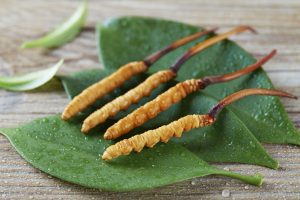
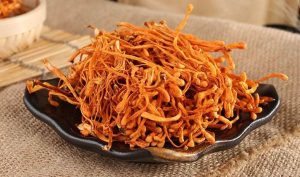
Cordyceps sinensis (Dongchongxiacao): 2 g (high-quality broken or whole grass, choose sulfur-free, clean and dry product);
Lycium barbarum (Goji Berry): 10 g (best from Zhongning, Ningxia; plump grains, bright red color, no mold);
Rock sugar or honey: 3 g (optional, adjust to personal taste; for those who need to manage sugar intake, omit or substitute with Siraitia grosvenorii (Monk Fruit)).
Purified water: 350 ml (for brewing; it is recommended to use mineral water or filtered water).
If consuming continuously for one week, you can prepare a dry powder in a 7-fold amount at one time (14g Cordyceps sinensis [Dongchongxiacuo], 70g Lycium barbarum [Gouqi]). However, note that Cordyceps easily absorbs moisture and spoils, so it is recommended to prepare it fresh as needed. Alternatively, grind the Cordyceps into a fine powder, take 0.5–1g each time, and brew together with Lycium barbarum to better facilitate the release of active constituents. For pregnant women or those with a Deficient Constitution (体虚), increase Lycium barbarum to 15g and reduce Cordyceps to 1g to lower the nourishing intensity. For those with a Damp-Heat Constitution (湿热体质), reduce Lycium barbarum to 6g and add 3g of Chrysanthemum morifolium (Juhua) to balance. The formula proportions serve as basic principles; actual use can be slightly adjusted according to individual constitution.
Preparation Method
Step 1: Cleaning and Preparation. Use a soft-bristled brush dipped in a small amount of purified water to gently brush off surface soil from Ophiocordyceps sinensis (Cordyceps). Be careful not to break the worm body, and avoid prolonged soaking. Place Lycium barbarum (Goji Berry) in a strainer and quickly rinse twice under running cool water (about 10 seconds) to remove surface dust. If using Cordyceps powder, no rinsing is needed.
Step 2: Preheat the container. Take an insulated mug with a lid (ceramic or stainless steel inner liner) or a Yixing clay teapot, and rinse it once with boiling water to improve insulation and remove any odors. If using a glass cup, it is recommended to warm the cup first.
Step 3: Place ingredients into the cup. Put the washed whole Cordyceps sinensis (Dongchongxiacao) (or Cordyceps powder) together with Goji berries (Lycium barbarum, Gouqi) into a thermos. If you prefer sweetness, you may add rock sugar at this point, or stir in honey after the brew has cooled to below 60°C (140°F).
Step 4: Brewing. Slowly pour 350ml of freshly boiled purified water (100°C) into the cup, ensuring the water level submerges the ingredients and stands 1-2 cm above them. Immediately cover with a lid and steep for 15-20 minutes. If using a regular teacup, double the steeping time (30-40 minutes).
Step 5: Drinking and re-steeping. When the tea temperature drops to 50–60℃, first drink the liquid, then chew the Cordyceps sinensis (Dongchongxiacao) and Lycium barbarum (Gouqi) thoroughly to allow absorption of beneficial components. After the first cup, you may add boiling water for 1–2 additional steepings, each lasting 10 minutes, until the flavor fades. Finally, the entire Cordyceps can be chewed and swallowed (if the head is hard, it can be discarded). It is recommended to take one serving daily for 10–15 consecutive days as a course of support, with a one-week break before resuming.
Simple Quick-Soaking Method (Ideal for Office Workers)
Place Cordyceps sinensis (Dongchongxiacao) and Lycium barbarum (Gouqi) into a portable thermal cup, pour in boiling water, and take it with you when going out. It is ready to drink after 2 hours. While this method may not fully extract the fat-soluble components of Cordyceps sinensis, the water-soluble substances are sufficient for daily health support.
Drinking Tips
1. The best time for consumption is on an empty stomach in the morning or one hour after a meal. Drinking on an empty stomach helps with better absorption of cordyceps polysaccharides, while drinking after a meal helps reduce any potential stimulation to the digestive system. It is recommended not to drink within two hours before bedtime, as goji berries may promote urination, leading to increased nighttime trips to the bathroom that could affect sleep quality.
2. During the period of consumption, avoid white radish, mung beans, and strong tea. White radish disperses Qi, which may diminish the Qi-supporting effects of Cordyceps sinensis (Dongchongxiacao); mung beans are cool in nature, which contrasts with the warm nature of Lycium barbarum (Gouqi); tannins in strong tea may affect the absorption of cordycepin. It is recommended to wait at least 2 hours before consuming these foods.
3. Observe your body’s reactions carefully. For first-time consumption, start with half the standard amount (1g Cordyceps and 5g Goji berries). If no discomfort occurs, increase to the full standard amount. If you experience dry mouth, constipation, or other minor signs of internal heat imbalance, reduce the amount of Goji berries or add 3g of Ophiopogon japonicus (Maidong). If allergic signs of imbalance such as skin rash or chest tightness occur, discontinue use immediately and consult a physician. Pregnant women, menstruating individuals, and those on long-term medication should consult a licensed TCM practitioner before consuming.
4. Cordyceps and Goji Berry Tea should not be left for a long time; it is best to consume within 6 hours after brewing. In summer when temperatures are high, discard if left for more than 2 hours to helps maintain bacterial growth. Overnight tea is not recommended as active ingredients may oxidize and it could potentially contain nitrites.
شاي رائع! أنا شخصياً أستخدم الكورديسيبس والغوجي منذ فترة، وفعلاً لاحظت تحسّن في مناعتي وزيادة في الطاقة. وصفة تقليدية بسيطة لكنها فعّالة جداً. شكرًا على المشاركة!
Love this combo! I’ve been brewing goji berries for years, but adding cordyceps sounds like a game-changer. Definitely going to try this as my morning warm-up tea—especially with flu season around the corner. Thanks for sharing!
This sounds like a wonderful, natural way to support immunity! I love that it’s rooted in food-medicine harmony. I’ve tried goji berry tea before but never with cordyceps—definitely need to give this combo a try. Thanks for sharing such a simple yet powerful tonic idea!
冬虫夏草とクコの実のお茶、免疫力アップに良さそうですね。漢方の考え方に基づいているところが気に入りました。私も最近、風邪気味なので試してみようかな。はちみつ入りだと飲みやすそうで嬉しいです。
I’ve been making this tea for years during cold season—it’s such a gentle way to support immunity without harsh stimulants. Love that it’s rooted in food-medicine tradition. Do you prefer rock sugar or honey for sweetness?