
Introduction to Medicinal Tea
Cordyceps and American Ginseng Immune Support Tea is a classic medicinal dietary tea that integrates traditional nourishing wisdom with modern wellness needs. Centered on *Ophiocordyceps sinensis* (Dongchongxiacao) and *Panax quinquefolius* (Xiyangshen), it is complemented by mild ingredients such as *Lycium barbarum* (Gouqi) and *Ophiopogon japonicus* (Maidong). Through scientific formulation, it supports Lung and organ moisture balance and helps maintain the body’s foundational strength. This tea, derived from a refined imperial palace recipe and verified over centuries, is widely praised for its elegant taste and gentle effects. In an era of frequent smog and rising work stress, this tea is especially suitable as a daily wellness companion.
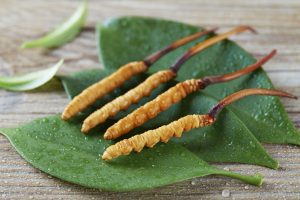
This medicinal cuisine is named after its two chief herbs (Jun herbs): “Chongcao” (Cordyceps sinensis) and “Xiyangshen” (Panax quinquefolius, American ginseng). Cordyceps has a neutral nature and gentle action, entering the Lung and Kidney meridians; American ginseng is cool in nature and tonifying, especially adept at helping to clear vacuity-heat. When combined, one is warming and the other is cooling, which not only avoids the tendency of using ginseng alone to cause internal heat, but also enhances the overall effect of supporting Yin and moistening Dryness. The tea shows a clear golden color, has a slightly sweet taste with ginseng aroma, and leaves a lingering aftertaste. It is a mild tonic suitable for people of all ages.
Origin and Development and Compatibility Characteristics
This tea formula is rooted in the TCM theories of “Cultivating Earth to Generate Metal (Peitu Shengjin)” and “Metal and Water Mutually Generating (Jinshui Xiangsheng),” emphasizing the tonification of the Lung and Kidney to support the body’s defensive (Wei) Qi function. In traditional medicinal cuisine, Cordyceps sinensis (Dongchongxiacao) is often stewed with meats, while Panax quinquefolius (American Ginseng / Xiyangshen) is typically taken as a held sublingual dose or steeped in water. This tea creatively combines these two ingredients with cooling and moistening herbs, employing a “steeping-decoction combined” process to fully release active constituents while keeping the tea broth clear and non-greasy. This formulation preserves the core role of Cordyceps in supporting healthy immune function, and through the cool-moistening nature of American Ginseng, achieves the supreme state of wellness: “tonifies without causing dryness, moistens without creating cloying heaviness.”
Benefits of Medicinal Food
The primary benefit of this herbal tea is to support the body’s natural immune function, especially for those experiencing occasional immune system challenges due to prolonged late nights, mental overwork, or general age-related weakness. Modern research suggests that the combination of cordycepin from Cordyceps sinensis (Dongchongxiacao) and ginsenosides from Panax quinquefolius (Xiyangshen) works synergistically to help regulate immune cell activity, support the phagocytic capacity of macrophages, and promote a balanced inflammatory response. After two weeks of consistent consumption, many individuals report feeling more energetic, enjoying normal immune resilience, and experiencing improved sleep quality.
In addition, this tea supports respiratory comfort and moisture balance, helping with occasional throat discomfort, dry cough, and skin dryness associated with seasonal changes. For office workers who spend long hours in air-conditioned environments or areas with air quality concerns, this tea helps maintain the health of respiratory mucosa and supports the body’s natural elimination processes. Meanwhile, the saponins in Panax quinquefolius (Xiyangshen) help maintain healthy myocardial blood supply and support balanced blood pressure and lipid levels, providing gentle support for the cardiovascular system. The Lycium barbarum (Gouqi) and Ophiopogon japonicus (Maidong) work in synergy to support vitality, visual health, and fluid balance, making the overall effect more comprehensive and balanced.
Functions of Traditional Chinese Medicine
From the perspective of TCM pattern differentiation, the core effect of the Cordyceps and American Ginseng Clearing and Moistening Immune Tea is to “support Qi and nourish Yin, and help maintain the health of the Lung system.” In the formula, Cordyceps sinensis (Dongchongxiacao) is sweet in taste and neutral in nature, entering the Lung and Kidney Meridians. It helps support the health of the Lung and Kidney, and helps with occasional bleeding and phlegm. It is considered a key substance for gently balancing Yin and Yang. American ginseng (Xiyangshen) is sweet and slightly bitter in taste, cool in nature, entering the Heart, Lung, and Kidney Meridians. It excels in supporting Qi and nourishing Yin, and helps maintain a cool internal environment while promoting body fluids. When used together, these two herbs complement each other—one supports and the other helps clear—so that Lung Qi is strengthened and any occasional internal warmth is helps with occasional. This is especially suitable for those who may experience signs of Qi and Yin imbalance along with occasional internal heat.
Meanwhile, Ophiopogon japonicus (Maidong) is sweet and slightly bitter in taste, slightly cold in nature, and enters the Heart, Lung, and Stomach Meridians. Its functions include supporting yin nourishment and Lung moisture, helping maintain stomach fluids, and promoting a calm mind. Lycium barbarum (Gouqizi) is sweet in taste and neutral in nature, enters the Liver and Kidney Meridians, and is adept at supporting Liver and Kidney nourishment, as well as healthy vision and vitality. As minister and envoy herbs, they both enhance the chief herb’s support for yin and address the shared origin of the Liver and Kidney. The overall combination of the formula reflects the principle of “supporting both Lung and Kidney health, and maintaining both Qi and Yin,” targeting common modern constitutional patterns such as “Upper Heat and Lower Cold” and “External Dryness and Internal Deficiency.” By helping clear upper heat while warming the lower body, and balancing moisture and dryness, it supports the restoration of the body’s yin-yang equilibrium, thereby promoting the state of “when healthy Qi is sufficient, external pathogenic influences cannot interfere.”
Target Audience
This tea is particularly suitable for the following groups: First, mental workers under long-term high-intensity work conditions, such as programmers, financial professionals, and scientific researchers. These individuals often experience depletion of Qi and Yin due to excessive mental exertion, manifesting as fatigue, dry mouth and throat, and difficulty concentrating. Second, middle-aged and elderly individuals with lowered immune function, especially those with underlying conditions such as chronic bronchitis, emphysema, or diabetes. Regular consumption of this tea helps support normal respiratory function and maintain overall vitality, contributing to a reduced frequency of occasional respiratory discomfort and supporting the body’s natural balance.
Third, there are white-collar workers and students who frequently stay up late and have irregular schedules. This group is prone to Yin Deficiency with Blazing Fire due to circadian rhythm disruption, manifesting as recurrent mouth sores, acne breakouts, and emotional restlessness. The clearing and moistening nature of this tea helps support the body’s ability to manage deficient fire and calm the spirit (Shen). Fourth, individuals in professions requiring frequent voice use, such as teaching, public speaking, and broadcasting. The combination of Ophiopogon japonicus (Maidong) and Panax quinquefolius (Xiyangshen) provides notable support for vocal cord health, helping to helps with occasional occasional discomfort such as vocal cord congestion and hoarseness. Additionally, women going through menopause or recovering from surgery who experience sensations like hot flashes, night sweats, and heat in the palms, soles, and chest due to deficiency of Qi, Blood, and Body Fluids may also use this tea as part of their daily wellness regimen.
Contraindicated Populations
Although this tea has a neutral and balanced nature, certain individuals should still use it with caution. First, those with Spleen and Stomach Deficiency Cold and loose stools should not consume it excessively, as both American Ginseng (Panax quinquefolius) and Ophiopogon japonicus (Maidong) have a cool nature, and overconsumption may aggravate occasional loose stools or abdominal cold discomfort. If such individuals need to use it, it is recommended to add two slices of Fresh Ginger (Zingiber officinale) or 1g of Dried Ginger (Zingiber officinale) to help warm the middle and disperse cold, thereby balancing the herbal properties. Second, during the early stages of external Wind-Cold or Wind-Heat patterns—especially when signs of imbalance such as aversion to cold, mild fever, clear nasal discharge, and temporary head and body discomfort are present—it is not advisable to immediately use tonifying measures. This is to avoid hindering the body’s natural response; instead, it is recommended to first support the exterior before considering any supportive supplementation.
Furthermore, individuals in the active phase of autoimmune conditions (such as systemic lupus erythematosus or acute rheumatoid arthritis) and those taking immunosuppressants after organ transplantation should use Cordyceps only under medical guidance, as its immune-modulating effects may interact with therapeutic medications. Additionally, due to their unique physiological conditions and lack of sufficient clinical research support, pregnant women, nursing mothers, and children under 14 are advised not to self-administer it. Finally, those with severe allergies to fungal foods (such as mushrooms or yeast) may experience cross-allergic reactions to Cordyceps; such individuals should begin with a very small amount for observation upon first use.
Formula Ingredient Ratio
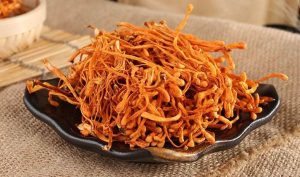
The following is the dosage for a single person (in precise grams). It is recommended to use an electronic scale to ensure stable results: Cordyceps sinensis (Dongchongxiacao) 1.5g (about 3-4 medium-sized cordyceps), Panax quinquefolius (American ginseng) slices 3g (prefer whole ginseng slices, avoid using fragments), Ophiopogon japonicus (Maidong) 6g, Lycium barbarum (Goji berries) 5g, pitted red dates (2 pieces, about 6g), and purified water 500ml. If using cultivated Cordyceps mycelium as a substitute for wild Cordyceps, it is recommended to adjust the dosage to 3g, as its active ingredient content is relatively lower.
If used for daily preventive health care, this formula can be scaled up proportionally to prepare a ten-day supply: Cordyceps sinensis (Dongchongxiacao) 15g (or Cordyceps mycelium 30g), Panax quinquefolius (Xiyangshen) slices 30g, Ophiopogon japonicus (Maidong) 60g, Lycium barbarum (Gouqizi) 50g, pitted Ziziphus jujuba (Hongzao) 20 pieces. Mix together and store in a sealed container away from light. Take approximately 18g (about two level tablespoons) daily, steep in boiling water and drink; the brew can be topped up with hot water twice. This method is both convenient and economical. Note that both Cordyceps sinensis and Panax quinquefolius should not be stored in iron or aluminum containers; glass jars or food-grade sealed bags are recommended, and keep in a cool, dry place.
Preparation Method
Step 1: Gently brush Cordyceps sinensis (Dongchongxiacao) with a soft brush to remove surface debris. Avoid prolonged soaking in water to helps maintain loss of active constituents. Quickly rinse Panax quinquefolius (American ginseng) slices, Ophiopogon japonicus (Maidong), Lycium barbarum (Goji berry), and pitted Ziziphus jujuba (Red date) in clean water, then drain and set aside. Prepare a glass or ceramic teapot with a capacity of approximately 500 ml. Metal teapots are not recommended.
Step 2: Place all ingredients except wolfberry (Lycium barbarum, Gouqi), specifically Cordyceps sinensis (Cordyceps), Panax quinquefolius (Xiyangshen), Ophiopogon japonicus (Maidong), and Ziziphus jujuba (Hongzao), into a pot. Add 500ml of purified water and soak for 20 minutes to allow the herbs to fully absorb water and expand, which helps support the release of beneficial compounds during subsequent cooking. Bring to a boil over high heat, then immediately reduce to low heat and maintain a gentle simmer for 15 minutes to help release beneficial polysaccharides and saponins from the dense herbs.
Step 3: After turning off the heat, add Goji berries (Lycium barbarum) into the pot and let them steep for 5 minutes using residual heat. This helps maintain the Goji berries from being damaged by prolonged high-temperature heating, which could compromise their nutritional structure. Strain out the tea residue and pour the tea into a pre-warmed fairness pitcher or teacup. It can be enjoyed while hot. The remaining herbal residue can be steeped again with 300ml of boiling water for 10 minutes to be consumed as a second brew, ensuring full utilization of the herbs.
Consumption Tips
1. The best times for consumption are in the morning on an empty stomach or between 3-5 PM (Shen hour), when Lung Meridian (LU) Qi and blood are most abundant, helping the tea support its intended benefits to reach their proper targets. It is not recommended to drink after 8 PM, as the stimulating effect of American ginseng (Xiyangshen) may affect sleep. Drink for 5 days and take a 2-day break each week to allow the body time for self-regulation. After one month of continuous use, you may take a one-week break before resuming.
2. This tea has a clear, smooth taste with a sweet aftertaste. You may add a small amount of honey for flavor according to personal preference. However, special attention is needed: first, wait until the tea has cooled to below 60°C before adding honey, as high temperatures will destroy the active enzymes in honey; second, those with diabetes or poor blood sugar control should avoid adding sugar and drink it plain. If the ginseng taste is too bitter, you can add half a Ziziphus jujuba (red date) and boil together to use its natural sweetness to balance the flavor.
3. It is not recommended to consume leftover herbal tea the next day, as it is rich in proteins and polysaccharides, which can promote bacterial growth when stored at room temperature for more than four hours. If a larger quantity is brewed at once, pour the hot tea into a thermos and seal it tightly for storage; consume within six hours. For long-term users, a “cold brewing method” can be tried: place the formula’s herbs in a tea bag, soak in cold water for eight hours, then refrigerate. This method helps maintain a cool internal environment and supports mental clarity, making it especially suitable for warm weather.
I’ve been drinking a similar blend with ginseng and goji berries—it really helps during allergy season. Never tried adding cordyceps though! Does the earthiness of the mushroom pair well with the ginseng’s slight bitterness? Might have to experiment this weekend.
Toller Artikel! Die Kombi aus Cordyceps und amerikanischem Ginseng klingt wirklich spannend. Ich habe schon viel über die immunstärkende Wirkung gehört, aber wusste nicht, dass beides so gut für die Lunge sein soll. Werd ich auf jeden Fall mal ausprobieren – danke für den Tipp! 🌿☕
Lately I’ve been trying more herbal teas for lung support—this combination of cordyceps and American ginseng sounds perfect. Love that it includes goji berries and mai dong too. Have you tried brewing it yourself? Would love to know the exact
Love this combo! I’ve been adding American ginseng to my routine for stress, but never thought to pair it with cordyceps for lung support. Perfect timing as we head into cold season. Do you simmer it like a traditional decoction or just steep it?
This sounds like a perfect blend for winter wellness! I’ve been looking for natural ways to support my lungs and immunity. The combination of cordyceps and American ginseng is intriguing—so different from the usual green