
Introduction to Medicinal Cuisine
“Cordyceps and Astragalus Vitality Tea” is a classic herbal formula rooted in traditional Chinese dietary therapy, centered on the principle of supporting healthy defense (Fu Zheng Gu Biao). It skillfully combines the renowned nourishing herb Ophiocordyceps sinensis (Dongchongxiacao) with the Qi-tonifying Astragalus membranaceus (Huangqi), complemented by mild ingredients such as Lycium barbarum (Gouqi) and Ziziphus jujuba (Hongzao). Through gentle steeping or decoction, the active components of the herbs are fully released, resulting in a daily wellness tea with a sweet, smooth taste that supports overall vitality and normal physiological balance.
Cordyceps sinensis (Dongchongxiacao), known as the “soft gold,” has been traditionally used to support Lung and Kidney health and nourish the essence. *Astragalus membranaceus* (Huangqi) is considered the “supreme tonic for Qi,” primarily focusing on supporting Qi and strengthening the body’s surface defenses, as well as promoting healthy tissue repair. When combined, these two herbs work synergistically to deeply nourish the internal organs and reinforce the body’s external protection. This synergy makes them particularly suitable for modern individuals during seasonal changes or periods of fatigue and sleep deprivation as a daily support for immune resilience. This herbal tea has a balanced nature and is suitable for all seasons. With regular consumption, it helps maintain a healthy immune response.
Medicinal Diet Benefits
The primary benefit of this tea is to comprehensively support the body’s immune function. Cordyceps sinensis (Dongchongxiacao) contains active components such as cordyceps polysaccharides and cordycepic acid, which help modulate immune cells in a balanced manner and support the phagocytic activity of macrophages. Astragalus membranaceus (Huangqi) provides astragalus polysaccharides that promote the proliferation of T lymphocytes and B lymphocytes, working synergistically to support the body’s natural defenses against environmental stressors and to maintain vitality and energy. Together, these two herbs help maintain a healthy respiratory system and support overall immune resilience.
Moreover, “Chongcao Huangqi Gu Mianyi Cha” (Cordyceps and Astragalus Immune-Supporting Tea) also supports restful sleep, helps reduce occasional fatigue, and promotes vitality. It helps maintain normal energy levels, supports healthy respiratory function, and contributes to a balanced immune response in individuals with Qi Deficiency. With regular consumption, it may also help maintain normal blood pressure within a healthy range, support cardiovascular health, and promote healthy aging, making it a valuable wellness tonic for those seeking to enhance overall well-being.
Functions of Traditional Chinese Medicine
In traditional Chinese medicine (TCM), the core of immunity lies in the principle that “when healthy Qi (Zheng Qi) is abundant within, pathogenic factors cannot interfere.” Ophiocordyceps sinensis (Dongchongxiacao) enters the Lung and Kidney meridians. It gently tonifies both Yin and Yang, and is especially adept at supplementing the Lungs and Kidneys, supporting normal hemostasis and resolving phlegm. It helps maintain normal function related to occasional discomfort in the lower back and knees associated with Kidney deficiency, and supports occasional chronic cough and shortness of breath due to Lung deficiency. Astragalus membranaceus (Huangqi) enters the Spleen and Lung meridians and is a key herb for tonifying Qi. It raises Yang and secures the exterior, promoting water metabolism and reducing swelling. When combined with Ophiocordyceps sinensis, it enhances Qi and strengthens the exterior, making it difficult for pathogenic factors to invade.
From the perspective of compatibility mechanism, the ascending and dispersing nature of *Astragalus membranaceus* (Huangqi) can guide the nourishing power of *Cordyceps sinensis* (Dongchongxiacao) upward to the Lung and outward to the exterior; meanwhile, the descending and sinking nature of *Cordyceps sinensis* can bring the Yang Qi of *Astragalus* downward to the Kidney, forming a complete cycle of “supplementing the Lung above, strengthening the Spleen in the middle, and nourishing the Kidney below.” This is a vivid reflection of the TCM theories of “cultivating Earth to generate Metal” and “Metal and Water mutually generating,” thereby allowing the Qi of the Triple Burner to flow smoothly, harmonizing the Nutritive and Defensive Qi, and thus supporting the ideal condition of “healthy Qi remaining within.”
Classical Combination Analysis
The ratio of Astragalus membranaceus (Huangqi) to Cordyceps sinensis (Dongchongxiacao) is typically controlled between 3:1 and 5:1. This allows Huangqi to play its leading role in supporting the body’s defensive and surface protection functions, while ensuring that the effects are not diminished by too small a proportion of Cordyceps. Modern pharmacological studies have confirmed that such a ratio can optimize the synergistic effects of antioxidant and anti-inflammatory activities, while helping to avoid excessive supplementation that may generate internal heat.
Suitable Population
This herbal tea is primarily suitable for the following groups: – Individuals with weakened constitution and lowered immune function, especially those who experience colds more than three times per year with prolonged recovery periods. – Urban professionals and students who frequently stay up late, experience high work-related stress, and have depleted vitality. – Elderly individuals presenting with Lung and Kidney Deficiency, a tendency to spontaneous sweating, shortness of breath, fatigue, and soreness/weakness in the lower back and knees. – Patients recovering after surgery or serious wellness—this tea supports the body’s natural supports process and helps maintain a healthy recovery, promoting normal bodily functions.
Meanwhile, for individuals who experience occasional respiratory discomfort, consuming this tea during non-acute periods may help support normal respiratory function and reduce occasional discomfort. Additionally, for those undergoing certain medical treatments that may affect white blood cell count, moderate consumption under professional guidance may provide additional immune support.
Contraindicated Populations
Although the ‘Chongcao Huangqi Gu Mianyi Cha’ (Cordyceps-Astragalus Immune-Supporting Tea) is considered a mildly tonifying product, it still has strict contraindications. First, it should be avoided in cases of Excess-Heat pattern and Yin Deficiency with Effulgent Fire—manifestations such as high fever, oral ulcers, gum bleeding, dry stool with constipation, red tongue with yellow coating, etc. Taking tonics under these conditions is like adding fuel to the fire. Second, during the period of a cold with fever or acute infection (such as tonsil suppuration, pneumonia), one should pause consumption and resume only after the wellness has resolved.”
Pregnant and breastfeeding women should use with caution, particularly as Cordyceps sinensis (Dongchongxiacao)’s effect on hormonal balance remains unclear; it is recommended to decide after evaluation by a TCM practitioner. Additionally, children under 6 years old should not casually undergo tonifying supplementation, as their internal organs are delicate and metabolic capacity is weak. For individuals with hypertension or diabetes, if they wish to consume such formulas, the ingredients should be adjusted based on individual conditions (e.g., removing sugar-containing ingredients like red dates or goji berries). Those allergic to Cordyceps or Astragalus membranaceus (Huangqi) should avoid use.
Food Ingredient Formula Proportion
To achieve the best balance of supportive effects and taste, the following precise ratio is recommended (single-person daily amount): Cordyceps sinensis (Dongchongxiacao) 3–5 g (whole cordyceps is recommended for better quality), Astragalus membranaceus (Sheng Huangqi) 15 g, Lycium barbarum (Gouqizi) 10 g, Ziziphus jujuba (Hongzao) 3 pieces (pitted), and Zingiber officinale (Ganjiang) slices 2 g (optional, to support warming and transporting functions). The total weight of this formula is about 30 grams, and it can be steeped repeatedly until the flavor fades.
For daily health maintenance, adjustments may be made according to constitution: for those with prominent Qi Deficiency, increase Astragalus membranaceus (Huangqi) to 20 grams; for Lung Dryness, add 5 grams of Ophiopogon japonicus (Maidong); for Blood Deficiency, add 3 grams of Angelica sinensis (Danggui). Note that Cordyceps sinensis (Dongchongxiaocao) is expensive, so it is better to use it steadily over time—not necessarily every day, but 2–3 times per week is sufficient to maintain the benefits. All herbal materials should be high-quality, sulfur-free, and mold-free to ensure optimal support for your well-being.
Cooking Method
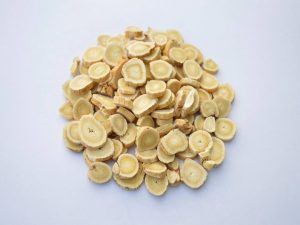
Step 1: Preparation. Gently brush off any surface dirt from Cordyceps sinensis (Dongchongxiacao) using a soft brush (do not wash with water, to preserve active constituents). Cut Astragalus membranaceus (Huangqi) into thin slices or oblique slices for easier extraction of flavors. Wash and pit red dates (Hongzao). Rinse Lycium barbarum (Goji berries) in clean water once and set aside.
Step 2: Decoction (Recommended). Use a ceramic or glass health pot (avoid iron or aluminum pots). Add *Astragalus membranaceus* (Huangqi), *Ziziphus jujuba* (Hongzao), and dried *Zingiber officinale* (Ganjiang). Pour in 800 ml of water. Bring to a boil over high heat, then reduce to low heat and simmer gently for 20 minutes to fully extract the active constituents of *Astragalus membranaceus* (Huangqi). Five minutes before turning off the heat, add the whole *Cordyceps sinensis* (Dongchongxiacao), cover, and steep. When the temperature drops to about 60°C, add *Lycium barbarum* (Gouqi), re-cover, and steep for another 5 minutes before drinking.
Step 3: Brewing (Simple Method). If time is limited, you may use a thermos/insulated cup for steeping — first steep the Astragalus membranaceus (Huangqi) and Ziziphus jujuba (Red dates/Hongzao) in boiling water for 10 minutes, then add Cordyceps sinensis (Dongchongxiacao) and Lycium barbarum (Gouqi), close the lid tightly, and steep for more than 20 minutes. Although this method is not as thorough as decoction, it is convenient and quick, suitable for the office or when traveling. After drinking each infusion, you may add more boiling water to brew again; when the flavor becomes light, chew and swallow the Cordyceps sinensis (Dongchongxiacao) so as not to waste the herbal material.
Drinking Tips
The best times for consumption are between 9-11 am (when the Spleen Meridian (SP) is active) or between 3-5 pm (when the Bladder Meridian (BL) is active). During these periods, the body’s Yang Qi is rising or metabolism is active, making the tonifying effect more pronounced. It is advisable to avoid drinking before bedtime to helps maintain disturbing sleep or increasing nighttime urination.
2. Suggested consumption: 1–2 cups daily (approximately 300–500 ml). Take for 5–7 consecutive days, then rest for 2 days to allow the body a “recovery period” and help avoid stagnation from excessive tonification. Discontinue immediately in case of common cold or signs of excess heat (Shanghuo).
3. Cordyceps sinensis (Dongchongxiacao) should not be discarded. Whether decocted or infused, the texture of Cordyceps itself is relatively hard, and chewing may be somewhat difficult, but consuming it by chewing helps the body absorb more cordycepin and protein. You can tear the soaked Cordyceps into thin strips and mix them into porridge or soup for a better taste.
Love the idea of blending cordyceps and astragalus—two powerhouses for energy and immunity! I’ve been experimenting with herbal teas lately, and this combo sounds perfect for a morning boost. Has anyone tried it with a touch of honey or ginger? Curious if it’s as earthy as it sounds!
Love this combo! I’ve been adding astragalus to my teas for years, but never thought to pair it with cordyceps. Definitely trying this for a natural energy boost this winter. Thanks for sharing such a clear breakdown of the TCM principles behind it!
Love this! I’ve been brewing astragalus in my teas for years, but never thought to pair it with cordyceps. The immune-boosting combo sounds genius—perfect for getting through cold season. Do you simmer the roots together or just steep like regular tea? Can’t wait to try this!
This sounds amazing! I’ve been looking for natural ways to boost my energy and immunity. I love that it combines cordyceps and astragalus—two powerhouse herbs. Has anyone here tried making this tea at home? Would love to hear about your experience with the taste and benefits. Definitely adding this to my wellness
I’ve been experimenting with TCM herbs lately and this combo sounds amazing! Love how cordyceps and astragalus work together for both energy and immune support. Definitely going to try brewing this vitality tea—thanks for sharing the background on the formula!