
1. Neck Gua Sha Therapy
(1) Scrape along the midline of the neck (the Governor Vessel (GV), the part running along the neck) from Yaneixue (an acupoint, not officially named in standard acupoint systems, literal meaning: mute inner point) to Dazhui (GV14).
(2) Scrape along both sides of the neck to the shoulders, starting from Fengchi (GB20) and extending to Jianjing (GB21) and Jugu (LI16). The acupoints passed include Jianzhongyu (SI15), Jianwaishu (SI14), Tianliao (SJ15), Bingfeng (SI12), etc.
2. Indications for Neck Gua Sha Therapy (supports comfortable movement of tendons and meridians in the neck region, helps maintain a balanced internal environment, and promotes general well-being)
It primarily helps maintain the health of the neck and nape regions, such as supporting cervical spine health, and also supports the health of the head, eyes, throat, and other areas, helping with occasional discomforts like common cold, headache, myopia, and pharyngitis.
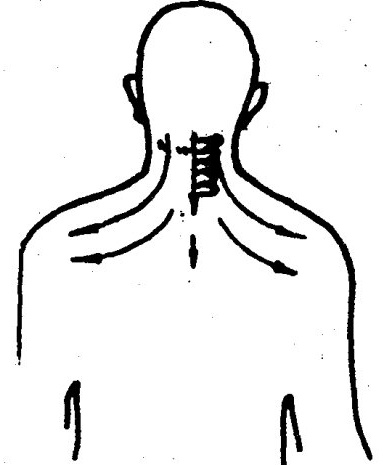
Neck Gua Sha Therapy
3. Precautions
(1) When performing Gua Sha along the midline of the neck, especially at GV14 (Dazhui) at the seventh cervical vertebra, apply gentle pressure (using tonifying technique) and avoid excessive force. If the patient has prominent cervical spinous processes, the edge of the scraping tool can be used to press and scrape between the two spinous processes.
(2) When scraping from both sides of the neck to the shoulders, generally try to extend the scraping length, that is, scrape continuously from Fengchi (GB20) to the vicinity of Jianjing (GB21) without pausing midway. The area from the neck to the shoulders has relatively abundant muscle, so slightly heavier pressure can be applied. Usually, the even reinforcing-reducing technique is frequently used, which involves applying strong pressure with a slow frequency.
Q1: How to do gua sha on neck for lymph drainage?
A1: To perform gua sha on the neck for lymph drainage, start by applying oil to the neck. Then, using a smooth-edged tool, scrape along the midline of the neck from the point below the chin (Yaneixue) down to Dazhui (GV14) at the base of the neck. Next, scrape from Fengchi (GB20) at the base of the skull outward to Jianjing (GB21) on the shoulders, following the course of the sternocleidomastoid and trapezius muscles to stimulate lymphatic flow.
Q2: Can neck gua sha help with tension headaches?
A2: Yes, neck gua sha can effectively help with tension headaches. The technique releases muscle tightness in the neck and shoulders, particularly by scraping from Fengchi (GB20) to Jianjing (GB21), which targets common tension points. Improved blood circulation and lymphatic drainage from gua sha reduce pressure on nerves and muscles, alleviating headache symptoms.
Q3: What are neck gua sha before and after results?
A3: Before neck gua sha, patients often report stiffness, reduced range of motion, and discomfort in the neck and shoulders. After treatment, typical results include visible redness (sha) indicating released stagnation, immediate relaxation, improved lymphatic drainage, and decreased tension. Many users experience reduced frequency and intensity of tension headaches and better overall neck mobility.
Q4: Is neck gua sha safe for beginners?
A4: Neck gua sha is generally safe for beginners when performed gently with proper technique. It is important to use a lubricating oil, apply light to moderate pressure, and avoid scraping over swollen or inflamed areas. Beginners should focus on the described pathways—down the midline and outward along the shoulders—and stop if sharp pain occurs, gradually increasing pressure as the tissue responds.
Q5: Which acupoints are targeted in neck gua sha?
A5: Neck gua sha targets several key acupoints along the neck and shoulders. On the midline, it scrapes from Yaneixue (a point below the chin) to Dazhui (GV14). Along the sides, it moves from Fengchi (GB20) to Jianjing (GB21), passing through Jianzhongyu (SI15), Jianwaishu (SI14), Tianliao (SJ15), and Bingfeng (SI12). These points are selected to release tension and promote lymphatic and blood circulation.
I’ve been curious about trying gua sha on my neck for tension relief. The specific midline and side scraping paths sound easy to follow. Has anyone noticed a difference with regular practice? Would love to hear real experiences before I try it myself.
Interesting! I’ve been curious about gua sha for neck tension. The specific points along the spine make sense—prob helps with that tight, stiff feeling from desk work. Has anyone here tried it for headaches? Would love to hear real results before attempting.
Interesting technique! I’ve been trying gua sha on my face, but never thought about the neck midline. Does it help with tension headaches? Might give this a try.
I’ve been trying gua sha on my neck for tension headaches—this sequence along the midline and sides sounds really helpful. Do you recommend using oil or lotion for sensitive skin? Thanks for sharing!
¡Qué interesante! Nunca había pensado en usar Gua Sha específicamente en el cuello. Siempre lo hago en la cara, pero con esta guía me animaré a probar en la nuca para aliviar la tensión. Gracias por los pasos tan claros.