
Disclaimer: All herbal teas, medicinal soups, acupuncture and Tui Na described in this article are only auxiliary wellness regimens for traditional health maintenance, not formal medical treatments. They cannot replace professional physician diagnosis, prescription drugs or clinical therapies. Anyone diagnosed with physical diseases shall strictly follow the treatment plans formulated by licensed medical practitioners. All TCM terminology, wellness regulation theories and traditional health philosophies in this text are solely for the inheritance, popularization and cultural exchange of traditional Chinese medicine. No content herein shall be deemed guidance for clinical diagnosis or medical treatment. Read more
1. Guasha Therapy for the Knee Joint
(1) Scrape Knee Eyes (Xiyan) First, use the edge of the scraping board to apply acupressure by pressing on both Knee Eyes (EX-LE5, Xiyan), moving from the inside outward. Begin with deep acupressure at the depression, then scrape outward.
(2) Scrape the anterior surface of the knee joint (where the Stomach Meridian of Foot-Yangming (ST) passes through the anterior part of the knee joint). For the part above the knee joint, scrape from Futu (ST32) through Yinshi (ST33) to Liangqiu (ST34); for the part below the knee joint, scrape from Dubi (ST35) to Zusanli (ST36), in a top-down direction.
(3) Scrape the medial aspect of the knee joint (where the Foot Three Yin Meridians pass through the medial part of the knee joint). The acupoints to be scraped include SP10 (Xuehai), LR8 (Ququan), SP9 (Yinlingquan), LR7 (Xiguan), and KI10 (Yingu).
(4) Scrape the lateral part of the knee joint (where the Gall Bladder Meridian of Foot-Shaoyang passes through the lateral part of the knee joint). The acupoints to be scraped include GB33 (Yanglingquan), GB34 (Yangguangguan), etc.
(5) Scrape the posterior aspect of the knee joint (the section of the Bladder Meridian of Foot-Taiyang passing through the posterior knee). The acupoints to be scraped include YM (Yinmen), FS (Fuxi), BL40 (Weizhong), BL39 (Weiyang), and BL55 (Heyang).
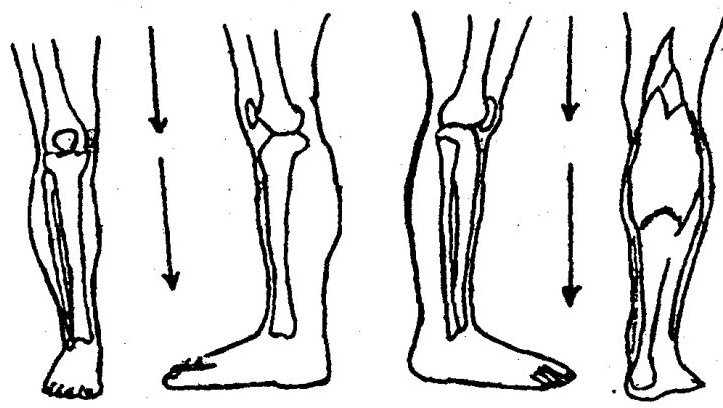
Knee Joint Gua Sha Therapy
2. Indications for Gua Sha on the Knee Joint
supports comfortable movement of tendons and meridians, helps maintain joint health.
Gua sha therapy on the knee joint primarily addresses knee-related conditions, such as hyperplastic knee arthritis, rheumatoid arthritis, strain of knee ligaments and tendons, and patellar chondromalacia. Additionally, it helps maintain normal function for certain conditions of the lumbar-back region and gastrointestinal system.
3. Precautions for Gua Sha on the Knee Joint
(1) For elderly individuals with physical weakness, joint deformities, or muscle atrophy, tonifying scraping (gentle scraping with light pressure and slow speed) is recommended.
(2) The knee joint has a complex structure. During Gua Sha, it is advisable to use the edge or corner of the scraping board to scrape, which facilitates accurate control of the scraping location and direction, thereby avoiding joint injury.
(3) For patients with knee joint effusion, local Gua Sha is not recommended; instead, Gua Sha can be applied to distal areas or acupoints.
(4) When performing Gua Sha on the posterior and inferior aspects of the knee joint, Sha blisters are prone to appear. When blisters arise, it is advisable to scrape gently or, in the case of varicose veins, change the direction and scrape from bottom to top.
Q1: How to perform gua sha on knee joint effectively?
A1: To perform gua sha on the knee joint, begin by using the edge of the scraping board to apply acupressure on both Knee Eyes (EX-LE5, Xiyan), pressing deeply into the depression and then scraping outward. Next, scrape the anterior surface of the knee joint along the Stomach Meridian, moving from Futu (ST32) downward, using steady, moderate pressure to stimulate circulation and reduce tension.
Q2: What are the benefits of gua sha for knee pain?
A2: Gua sha for knee pain helps improve local blood circulation, reduce inflammation, and relieve stiffness by promoting microcirculation in the joint area. It can also release fascial adhesions and soothe sore muscles, leading to decreased pain and improved mobility, especially when combined with targeted acupressure on points like the Knee Eyes.
Q3: How often can you do gua sha on knees safely?
A3: For knee joint gua sha, it is generally safe to perform the therapy 2 to 3 times per week, allowing the skin and tissues to recover between sessions. However, frequency should be adjusted based on individual sensitivity and the severity of pain; if bruising or discomfort persists, reduce to once weekly and consult a professional.
Q4: Can gua sha help with chronic knee joint stiffness?
A4: Yes, gua sha can be beneficial for chronic knee joint stiffness by improving blood flow to the area and breaking down scar tissue or adhesions in the fascia. Regular scraping along the knee’s anterior surface and around the Knee Eyes can enhance flexibility and reduce the sensation of tightness over time.
Q5: Is gua sha on the knee joint painful?
A5: Gua sha on the knee joint may cause mild discomfort, especially when pressing deeply on tender points like the Knee Eyes, but it should not be intensely painful. A sensation of warmth or slight stinging is normal as stagnation is released, but sharp pain indicates excessive pressure; it is important to communicate with your practitioner to adjust intensity.
Q6: Do you need oil for gua sha on knees?
A6: Yes, using a lubricating oil or balm is essential for gua sha on the knees to prevent friction and skin irritation. A small amount of massage oil applied to the area before scraping ensures smooth gliding of the tool and enhances the therapeutic effect by allowing deeper penetration without discomfort.
Q7: What precautions should be taken when performing gua sha on the knee joint?
A7: Precautions include avoiding open wounds, varicose veins, or acute injuries on the knee, and never scraping over swollen or inflamed joints. Use light to moderate pressure, and stop if you experience sharp pain; also, keep the scraping board clean and sanitized to prevent infection, and consult a qualified therapist if you have underlying conditions like thrombosis.
TCM Terminology Disclaimer:All traditional Chinese medicine (TCM) terms, descriptions, and wellness expressions including but not limited to nourishing lungs, soothing throat discomfort, supporting respiratory comfort, clearing mild internal heat, balancing qi and blood, harmonizing bodily functions, and regulating general wellness featured on this website are traditional TCM cultural descriptions and historical wellness theories only. These phrases are used solely for traditional TCM knowledge sharing and cultural interpretation. They do not constitute medical efficacy claims, have not been evaluated by the FDA, and are not intended to diagnose, treat, cure, or prevent any disease. All TCM wording describes traditional auxiliary wellness conditioning effects only and should never be interpreted as clinical medical treatment results. Individuals with confirmed illnesses must seek professional medical diagnosis and follow standard Western medical treatment.
FDA Mandatory Disclaimer:These statements have not been evaluated by the FDA. Chinese herbal dietary supplements and traditional wellness practices are not intended to diagnose, treat, cure or prevent any disease and serve only as daily auxiliary health support. If you have been diagnosed with any illness, please seek professional medical care and follow standard Western medical treatment regimens.
I’ve been dealing with knee stiffness for years and just tried this gua sha technique on the Xiyan points. The outward scraping motion was surprisingly soothing, not painful at all. Definitely noticing less tightness after a few sessions. Thanks for the clear instructions—will keep at it!
Já experimentei essa técnica no joelho e senti uma melhora incrível! Começar pressionando os pontos Xiyan faz toda a diferença. Recomendo para quem sofre com dores articulares. Obrigado por compartilhar o passo a passo!
Interesting technique! I’ve been dealing with some knee stiffness lately, and I’m curious—does this gua sha approach work well for arthritis or just general soreness? Might try it out.
बहुत उपयोगी जानकारी है! घुटने के दर्द के लिए गुआ शा थेरेपी बहुत कारगर लगती है। खासकर घुटने की आँखों (Xiyan) पर दबाव डालने की तकनीक अच्छी है। क्या इसे घर पर ही किया जा सकता है या किसी विशेषज्ञ से सीखना ज़रूरी है?
ขอบคุณสำหรับข้อมูล