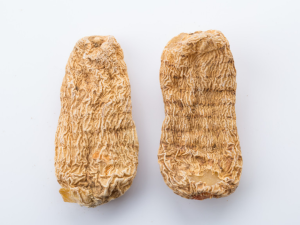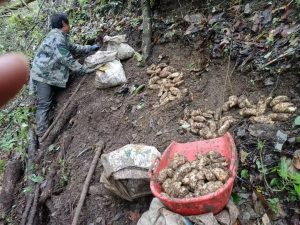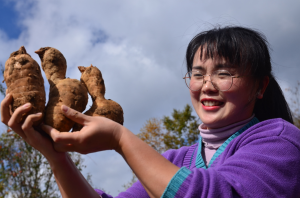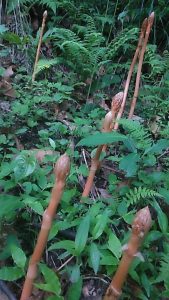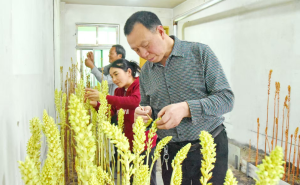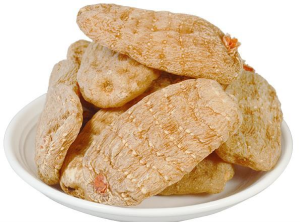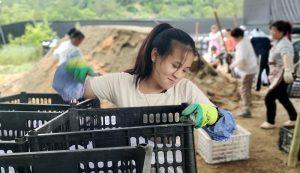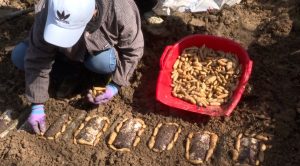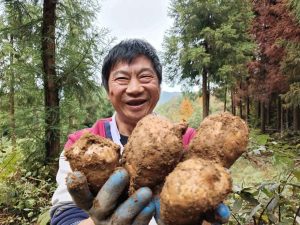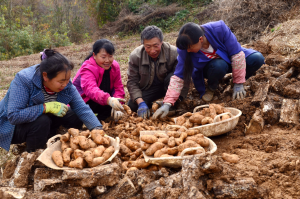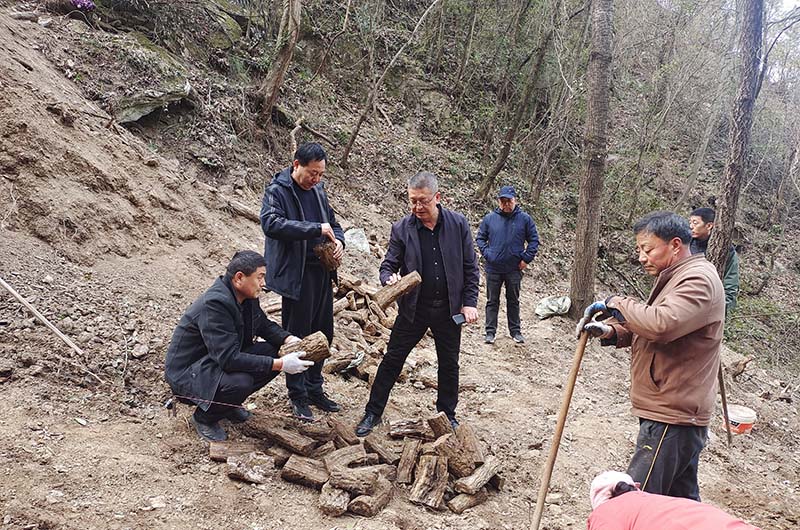
Nestled in the Qinling Mountains forest ecological zone of Lueyang County, Hanzhong City, Shaanxi Province, the large-scale Wild simulated herb planting base takes natural oak and broad-leaved forests as the carrier and develops under-forest wild-simulated cultivation of Gastrodia elata. Completely simulating the natural growth environment of wild gastrodia in virgin forests, the base abandons greenhouse intensive cultivation and chemical cultivation modes. Combined with Lueyang’s national GAP management system and geographical indication protection rules, it retains the wild medicinal properties of gastrodia while realizing standardized large-scale production. It is a characteristic ecological medicinal herb base integrating forest conservation, wild bionic planting and authentic medicinal material output.
1. Construction Logic of Under-Forest Wild-Simulated Planting
Wild gastrodia naturally grows in shaded mountain broad-leaved forests with thick humus, scattered light and natural microbial communities. Lueyang’s abundant natural forest resources create innate conditions for wild simulated planting:
- Make full use of existing oak, poplar and walnut forest lands in mountainous areas, no deforestation or new land reclamation, realize “growing medicinal herbs under forests, nourishing forests with medicinal herbs”, conforming to ecological protection policies;
- Keep the original forest canopy density between 70% and 85% to form scattered diffused light, consistent with the shade-loving habit of wild gastrodia;
- Retain the original forest fallen leaves, rotten branches and humus layer as natural substrates for gastrodia growth, no large application of chemical fertilizers, and rely on forest natural ecological chains to restrain diseases and insect pests.
Different from artificial greenhouse planting, wild simulated gastrodia grows slowly with a full growth cycle of 12–14 months, which is conducive to the continuous accumulation of gastrodin and active ingredients, and the medicinal quality is close to wild gastrodia.
2. Standardized Planting Specifications of Wild Simulated Herb Base
As a standardized Wild simulated herb planting base, unified technical norms are implemented in all forest planting areas to unify the quality of under-forest gastrodia:
- Germplasm unification: Only the improved varieties Lue Ma No.1 and Lue Ma No.2 bred locally are used, eliminating degraded varieties and foreign hybrid seedlings to ensure the stable medicinal traits of bionic gastrodia;
- Natural strain matching: Deploy self-developed special germination bacteria and Armillaria mellea adapted to the under-forest microenvironment, without adding growth regulators;
- Pollution-free management: Prohibit the use of chemical pesticides, herbicides and chemical compound fertilizers. Forest insects, birds and soil microorganisms naturally control pests, and fallen oak leaves supplement organic nutrients;
- Rotation fallow mechanism: After harvesting gastrodia in each forest plot, implement a 2–3 year fallow period to restore soil fertility and forest microbial environment, avoiding continuous cropping degradation;
- Harvesting rules: Harvest only in the mature season of gastrodia every year, prohibit premature digging to ensure sufficient accumulation of medicinal components.
3. Quality Advantages of Lueyang Under-Forest Wild-Simulated Gastrodia
- High content of active ingredients: The gastrodin content of under-forest bionic gastrodia ranges from 0.36% to 0.40%, 1.8–2 times the standard specified in Chinese Pharmacopoeia, superior to greenhouse artificially cultivated gastrodia;
- Pure wild medicinal property: No chemical intervention in the whole growth process, no pesticide residue, natural medicinal fragrance is strong, and the medicinal effect is close to wild gastrodia;
- Safe and ecological: Planting under natural forests avoids soil hardening and pollution caused by artificial cultivation, meets organic medicinal material standards, and is favored by high-end pharmaceutical factories and organic health product markets.
4. Base Scale & Ecological Economic Model
The total area of wild simulated gastrodia planting in Lueyang reaches nearly 30,000 mu, covering more than 20 mountain towns across the county, all built in natural secondary broad-leaved forests.
Adopt the ecological operation mode of forest farm + wild simulated base + cooperative farmers: the local government delimits special under-forest medicinal planting protection areas, uniformly provides improved seedlings and bionic planting technologies, organizes villagers to carry out under-forest gastrodia cultivation, and uniformly purchases and processes qualified gastrodia in accordance with geographical indication and GAP standards.
This model not only protects forest vegetation and consolidates ecological barriers in the southern foot of the Qinling Mountains, but also turns forest ecological resources into economic income, realizing the dual gains of ecological protection and farmers’ income increase.
5. Industrial Matching Certification System
The under-forest wild simulated herb planting base is incorporated into Lueyang gastrodia’s certification system:
- Protected by national geographical indication products (approved in 2009), only gastrodia planted in designated forest areas can use the geographical indication mark;
- Included in the management scope of China’s first gastrodia GAP base (certified in 2006);
- Multiple core wild-simulated demonstration forest plots have passed organic product certification and ecological origin protection certification, laying qualifications for export to overseas organic herbal markets.
Conclusion
Relying on the natural forest resources of the southern foot of the Qinling Mountains, Lueyang builds a mature Wild simulated herb planting base for gastrodia. By simulating the wild growth environment of gastrodia, it retains the natural medicinal efficacy of authentic Qinling gastrodia while adhering to ecological priority. The under-forest bionic planting model solves the contradiction between medicinal material cultivation and ecological protection, and becomes a replicable ecological planting model for daodi medicinal herbs in mountain forest areas of central and western China.