Search for Herbal Teas Recipes by Symptom:

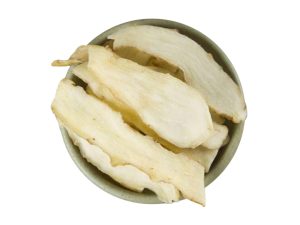
Dipsacus

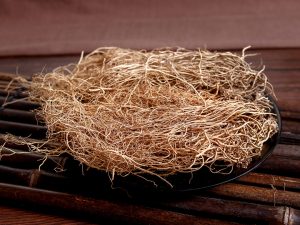
Dipsacus, a name in traditional Chinese medicine, refers to the dried roots of Dipsacus asper Wall. ex Henry, a plant belonging to the genus Dipsacus in the family Dipsacaceae. This product has the effects of tonifying the liver and kidneys, strengthening tendons and bones, and promoting blood circulation. It is primarily used to treat liver and kidney deficiency, soreness and pain in the lower back and knees, pain caused by cold and dampness, metrorrhagia and menorrhagia, fetal restlessness, and injuries from falls or blows, as well as fractures and sprains.

Black Wood Ear

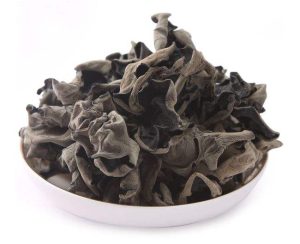
Black Wood Ear is a name for a traditional Chinese medicine. It is the fruiting body of Auricularia auricula (L. ex Hook.) Underw., a plant in the Auriculariaceae family. It has the effects of tonifying qi and blood, moistening the lungs and nourishing yin, cooling the blood and stopping bleeding, lowering blood pressure, and fighting cancer.It is primarily used to treat blood deficiency and qi deficiency, limb spasms, cough due to lung deficiency, hemoptysis, hematemesis, epistaxis, postpartum weakness, excessive leukorrhea, metrorrhagia and menorrhagia, bloody dysentery, hemorrhoids with bleeding, constipation, and trauma.

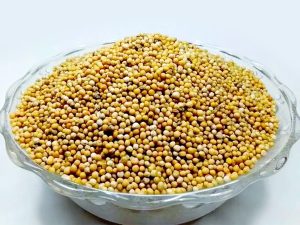
White Mustard Seed

White Mustard Seed, a name in traditional Chinese medicine. It is the seed of the plant Sinapis alba L. (family Brassicaceae). It has the effects of warming the lungs and resolving phlegm, promoting the flow of qi, and dispersing nodules and reducing swelling. It is primarily used for cold-phlegm-induced wheezing and cough, fluid retention, wandering abscesses, numbness of the limbs, and swollen, painful joints.

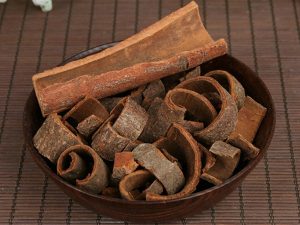
Cinnamon

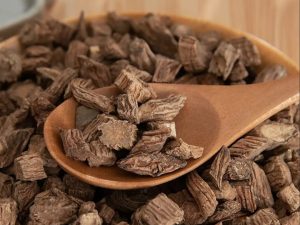
Cinnamon is a warming herbal medicine derived from the dried bark of Cinnamomum cassia Presl, a plant in the genus Cinnamomum of the Lauraceae family.It has the effects of tonifying fire and assisting yang, directing fire back to the source, dispelling cold and relieving pain, and warming and unblocking the meridians. It is primarily used for impotence and uterine coldness, cold pain in the lower back and knees, shortness of breath due to kidney deficiency, floating yang due to deficiency, dizziness and red eyes, cold pain in the chest and abdomen, vomiting and diarrhea caused by deficiency-cold, abdominal pain from cold hernia, and dysmenorrhea or amenorrhea.

Preventing Coronary Heart Disease with TCM

What is coronary heart disease? Coronary atherosclerotic heart disease, commonly referred to as “coronary heart disease,” refers to a condition in which the coronary arteries surrounding the heart become narrowed or blocked due to atherosclerosis, leading to myocardial ischemia and hypoxia. Clinical manifestations primarily include angina pectoris, myocardial infarction, arrhythmia, heart failure, and cardiac enlargement. … Read more

A Casual Discussion of Palpitations

What are palpitations? Palpitations are a subjective symptom characterized by abnormal heartbeats or a sensation of restlessness in the chest—and in severe cases, a loss of control over the heartbeat—that occurs when the heart is subjected to strenuous physical activity, emotional excitement, or the effects of disease. They are commonly known as “heart fluttering.” Here, … Read more

A Brief Discussion on Hyperlipidemia and Hyperlipoproteinemia

When a person’s plasma lipid concentration exceeds the upper limit of normal, it is referred to as hyperlipidemia; when plasma lipoprotein levels exceed the upper limit of normal, it is referred to as hyperlipoproteinemia. Since most lipids are transported throughout the body bound to plasma proteins, hyperlipidemia is often reflected as hyperlipoproteinemia. I. Normal Blood … Read more

How Traditional Chinese Medicine Views Hypertension

Hypertension is a common condition among middle-aged and elderly people. Once established, hypertension is a chronic disease that is difficult to cure and can lead to secondary changes in many organs, particularly the heart, brain, and kidneys. I. Definition of Hypertension Hypertension refers to clinically elevated systolic or diastolic blood pressure. Mainland China adopts the … Read more

How Does Traditional Chinese Medicine View Asthma?

Asthma is commonly known as “hoarseness disease.” “Xiao” refers to wheezing sounds in the throat, while “chuan” refers to difficult and rapid breathing; the combination of the two is called “asthma.” Other terms include “sugar asthma,” “salt asthma,” “fish and shrimp asthma,” “cold asthma,” and “heat asthma.” This condition is characterized by recurrent episodes. It … Read more

What is an exogenous cough?

The causes of coughs can be broadly categorized into two types: external pathogens and internal imbalances. Coughs caused by external pathogens result from the body being affected by external pathogenic factors; modern medicine believes these are related to viruses, bacteria, physical irritants, chemical fumes, parasitic diseases, and allergic reactions to foreign proteins. Triggering factors include … Read more

The Terrifying Disease of AIDS

AIDS, also known as Acquired Immunodeficiency Syndrome, is a globally spreading disease discovered in recent years that has a high mortality rate and is caused by a virus. Although many people are familiar with this disease, they tend to adopt an “it doesn’t concern me” attitude. In fact, AIDS is spreading rapidly. In the early … Read more

Be Aware of Viral Hepatitis

Viral hepatitis can be classified into three types: hepatitis A, hepatitis B, and non-A, non-B hepatitis. All are caused by hepatitis viruses and are common in the general population. When making a diagnosis, it is important to consider the prevalence of hepatitis in the community, whether the patient has a history of close contact with … Read more

Don’t ever underestimate the common cold

The common cold is the most common respiratory infectious disease caused by various viruses, primarily characterized by localized inflammation of the upper respiratory tract, such as sneezing, nasal congestion, runny nose, itchy or sore throat, and coughing. Influenza is an acute respiratory infectious disease caused by the influenza virus; its clinical manifestations are generally similar … Read more

Why Can Traditional Chinese Medicine Cure Diseases?

Traditional Chinese Medicine (TCM) has a long history. As far back as ancient times, our ancestors developed primitive forms of medicine while struggling to survive in the natural world. TCM is not only a distillation of thousands of years of experience in combating disease, but also the culmination of the most brilliant scientific and cultural … Read more