Search for Herbal Teas Recipes by Symptom:

Pearl Shell

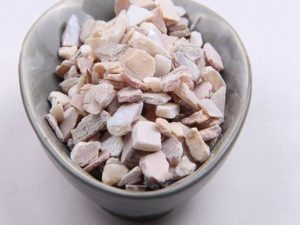
Pearl Shell, a name in traditional Chinese medicine. It refers to the shells of the following mollusks: Hyriopsis cumingii (Lea) of the family Veneridae, Cristaria plicata (Leach) of the family Cristariidae, or Pteria martensii (Dunker) of the family Pteriidae. It has the therapeutic effects of calming the liver and subduing yang, soothing the mind and alleviating convulsions, and improving vision and removing corneal opacities.It is primarily used to treat headaches and dizziness, palpitations and insomnia, red eyes with opacities, and blurred vision.

Qingpi

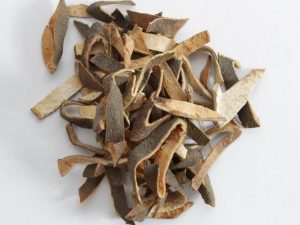
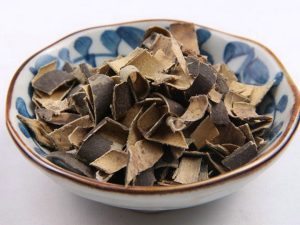
Qingpi is a commonly used herb for regulating qi. It consists of the dried peel of young or unripe fruits of Citrus reticulata Blanco (a species of the genus Citrus in the Rutaceae family) and its cultivated varieties. It has the effects of soothing the liver, dispelling stagnant qi, resolving food stagnation, and alleviating digestive stagnation. It is commonly used to treat distending pain in the chest and flanks, hernia pain, mastalgia, mastitis, food stagnation with qi stagnation, and epigastric and abdominal distension and pain.

Kudzu Root

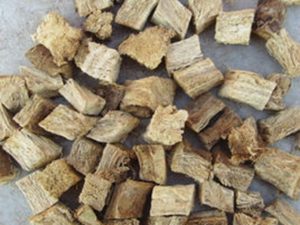
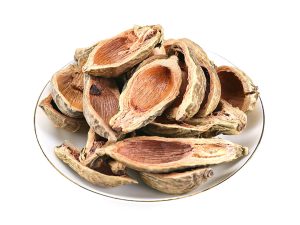
Pueraria root is a herb used to relieve exterior syndromes; it is the dried root of Pueraria lobata (Willd.) Ohwi, a plant of the genus Pueraria in the legume family. It is primarily produced in Henan, Hunan, Zhejiang, and Sichuan. It has the effects of relieving muscle tension and reducing fever, promoting fluid production and quenching thirst, promoting the eruption of rashes, raising yang energy to stop diarrhea, unblocking meridians and activating collaterals, and alleviating alcohol toxicity.It is primarily used to treat fever and headache caused by external pathogens, stiffness and pain in the neck and back, thirst, diabetes insipidus, measles that fail to erupt, febrile dysentery, diarrhea, dizziness and headache, hemiplegia due to stroke, chest pain caused by heart obstruction, and alcohol poisoning affecting the middle burner.

Scissors-Leg

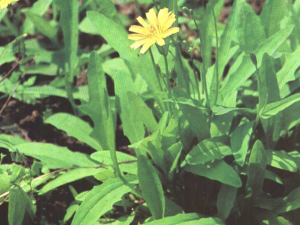
Scissors-leg is the name of a traditional Chinese medicine. It is the whole plant of Xeris debilis A. Gray, a member of the Asteraceae family. It has the effects of clearing heat, detoxifying, promoting urination, and reducing swelling. It is primarily used to treat lung abscesses, sore throat, red eyes, mastitis, boils, carbuncles, and sores, as well as edema and difficulty urinating.

Diagnosis and Treatment of Bone Spurs

A Story About Eating Fish

Bone spurs—known in Chinese as “骨刺”—are medically referred to as osteophytes or bone hyperplasia. They are bony projections that form along the edges of bones. Most bone spurs are asymptomatic and do not require treatment; intervention is only necessary when they compress nerves or impair joint movement. Symptoms by Location ‌Cervical bone spurs‌: Neck pain … Read more

Diagnosis and Treatment of Musculoskeletal Disorders

The Story of Making a Bow

Musculoskeletal disorders is a general term for a group of conditions that affect the muscles, bones, nervous system, and related tissues of the human body, including arthritis, tendinitis, back pain, and other conditions. Classification by Cause: Inflammatory diseases: such as rheumatoid arthritis.Painful conditions: such as osteoarthritis and back pain.Osteoporosis and fragility fractures.‌‌ The Story of … Read more

Diagnosis and Treatment of Imbalance Between Cold and Heat

A Story About Air Conditioning

In Traditional Chinese Medicine, “Imbalance Between Cold and Heat” corresponds to the term “imbalance of cold and heat,” commonly referred to as “intermingled cold and heat”—a condition where both cold and heat pathogenic factors coexist in the body, leading to contradictory symptoms such as “heat above and cold below” or “stomach heat and intestinal cold.” … Read more

Diagnosis and Treatment of Cold-induced Syndromes

The Story of a Frozen Water Pipe

In Traditional Chinese Medicine, cold-induced syndromes are a category of conditions caused by an external invasion of cold pathogens or an internal deficiency of yang qi. Typical symptoms include sensitivity to cold, pain that worsens with cold exposure, and relief upon warming. These syndromes are classified into superficial cold, internal cold, excess cold, and deficiency … Read more

Diagnosis and Treatment of “Internal Heat”

The Story of Releasing Kongming Lanterns

“Internal Heat” refers to a state of “excessive internal heat” or “internal heat” in the human body, indicating an excess of heat within the body. Common symptoms include mouth and tongue sores, a swollen and sore throat, dry mouth and tongue, dark yellow urine, and hard, dry stools. The Story of Releasing Kongming Lanterns Every … Read more

Diagnosis and Treatment of Cold-Dampness Syndrome

The Story of the Wet Towel

“Cold-Dampness Syndrome” is a syndrome in Traditional Chinese Medicine caused by external invasion of cold and dampness or the internal retention of cold and dampness. Typical symptoms include sensitivity to cold, heaviness and fatigue in the limbs, cold and painful joints, abdominal distension, and loose stools.‌‌ Cold-dampness syndrome is often caused by prolonged exposure to … Read more

Diagnosis and Treatment of Liver Cancer in TCM

Liver tumors are classified as benign or malignant. Benign tumors are relatively rare, while malignant tumors—commonly known as liver cancer—are more common. Liver cancer is further divided into primary liver cancer and secondary liver cancer. Primary liver cancer refers to cancer that originates in liver cells (arising from the liver itself) or the intrahepatic bile … Read more

Treatment of Pruritus with TCM

Pruritus is a skin condition characterized solely by itching without any primary skin lesions. Clinically, it is generally classified into two types: localized and generalized. Localized pruritus is most commonly found in areas such as the anus, vulva, and scrotum, while generalized pruritus affects a broader area of the body. This condition is similar to … Read more