Chinese Herbal Teas
lungs
TCM Herbal Teas
Health-Preserving Tea
health-preserving teas
best chinese herbal tea for lungs
cordyceps benefits

Atractylodes

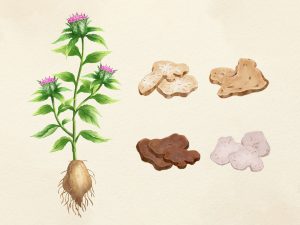
Atractylodes is a commonly used herb for tonifying qi. It is the dried rhizome of the Asteraceae plant Atractylodes, named for the resemblance of its roots, stems, branches, and leaves to the ancient seal script character “术,” and for the white interior of its rhizome. It is primarily produced in Zhejiang and Anhui; traditionally, the variety from Yuqian, Zhejiang, is considered the finest and is commonly known as “Yu Shu.”This herb has the effects of strengthening the spleen and tonifying qi, drying dampness and promoting diuresis, stopping sweating, and stabilizing the fetus. It is commonly used to treat spleen deficiency with poor appetite, abdominal distension and diarrhea, phlegm-retention with dizziness and palpitations, edema, spontaneous sweating, and fetal restlessness. In addition, Atractylodes macrocephala can be incorporated into daily meals, such as in congee or soups, to help nourish and strengthen the body.

Yizhi Seed

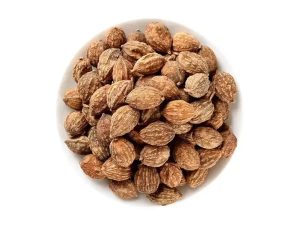
Yizhiren is the name of a traditional Chinese medicine. It is the fruit of Alpinia oxyphylla Miq., a plant belonging to the genus Alpinia in the Zingiberaceae family. It has the effects of warming the spleen, stopping diarrhea, and reducing excessive salivation, as well as warming the kidneys, reducing urination, and consolidating essence. It is primarily used to treat spleen and stomach deficiency-cold, vomiting, diarrhea, cold pain in the abdomen, excessive salivation, kidney deficiency-induced enuresis, frequent urination, nocturnal emission, and leukorrhea.

Horsetail

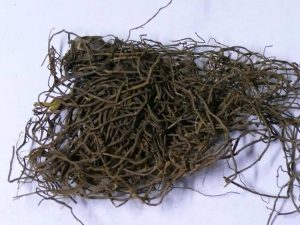
Mawei Lian is the name of a traditional Chinese medicine. It consists of the rhizomes and roots of plants from the genus Thalictrum in the Ranunculaceae family, specifically Thalictrum foliolosum DC. (multileaf meadowsweet), T. baicalense Turez. (Baikal meadowsweet), or T. delavayi Franch. (Delavay’s meadowsweet). It has the therapeutic effects of clearing heat, drying dampness, purging fire, and detoxifying.It is primarily used to treat damp-heat-induced diarrhea and dysentery, jaundice, restlessness due to febrile diseases, coughs caused by lung heat, abscesses, swellings, and toxic sores, as well as redness, swelling, and pain in the eyes.

Pufferfish Liver Oil

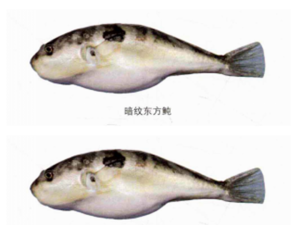
Pufferfish liver oil is the name of a traditional Chinese medicinal material. It is oil extracted by boiling the livers of the bow-spotted pufferfish (Fugu ocellatus (Osbeck)), the worm-patterned pufferfish (F. vermicularis (Temminck & Schlegel)), the dark-patterned pufferfish (F. obscurus (Abe)), and various other species of the same genus. It has the effects of reducing swelling, detoxifying, dispersing nodules, relieving pain, and killing parasites.It is primarily used to treat scrofula, boils, unexplained swellings and abscesses, and chronic skin ulcers.

7 TCM Herbal Teas for Psoriasis: Cooling Blood & Moisturizing the Skin

Psoriasis, also known as Niu Pi Xuan (cowhide-like tinea), is a common chronic inflammatory skin wellness. The basic lesions are red papules or plaques covered with silvery-white scales. They may occur on any part of the body but are more frequent on the limbs and scalp. It can affect individuals of any age, with a … Read more

8 TCM Herbal Teas for Children’s Acute Tonsillitis

Acute tonsillitis is also a common condition in children. Clinically, it is often caused by factors such as wind-cold, dampness, malnutrition, and common cold, which lead to a decline in the child’s body resistance, tonsil… When microorganisms proliferate in the tonsil area, it may lead to the onset of occasional discomfort. This condition often tends … Read more

8 Herbal Teas for Ganji (Accumulation-Malnutrition) in Children

Ganji (Accumulation-Malnutrition Syndrome) is a TCM pattern, representing the combined entity of Jizhi (Accumulation) and Gan (Malnutrition Syndrome). Jizhi, also referred to as Food Stagnation (Shizhi) or Retained Food, indicates the failure of Spleen and Stomach transportation and transformation due to irregular dietary intake and unabsorbed stagnation. Gan (Malnutrition Syndrome) develops from prolonged Jizhi, leading … Read more

7 TCM Herbal Infusions for Balanced Female Midlife Wellness

Menopause is a transitional period during which a woman’s ovarian function gradually declines until it ceases completely. It is marked by the onset of menstrual irregularities and ends with the permanent cessation of menstruation (menopause), which typically occurs between the ages of 45 and 55. During this period, some women may experience a series of … Read more

8 Chinese Herbal Teas for Harmonized Postpartum Body Balance

After deLivery, the residual blood and fluids retained in the uterus are known as “lochia.” Under normal conditions, lochia should be completely expelled within 20 days postpartum. However, if it continues to drip beyond this period, it is referred to as “persistent lochia.” Without timely support, prolonged persistence may affect the mother’s general well-being and … Read more

10 TCM Patterns and Herbal Teas for Abnormal Vaginal Discharge

In healthy women, there is a small amount of white, odorless secretion in the vagina that naturally lubricates the vaginal mucosa. This physiological leukorrhea may increase around menstruation, during ovulation, and in pregnancy, without causing any discomfort. However, if the secretion significantly increases, changes in color, becomes sticky like glue or thin and watery, or … Read more

9 TCM Herbal Teas for Beng Lou: Supporting Uterine Bleeding Patterns

Beng Lou is the general term for vaginal bleeding in women outside of their menstrual period. The primary clinical manifestation is vaginal bleeding. When the bleeding is heavy and occurs suddenly, it is referred to as “Xue Beng” or “Beng Xia”; when the bleeding is scanty but persistent, it is known as “Lou Xia”. This … Read more