Dong Quai
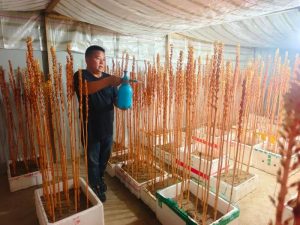
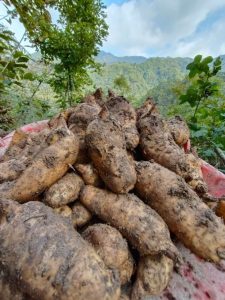
Gastrodia Elata
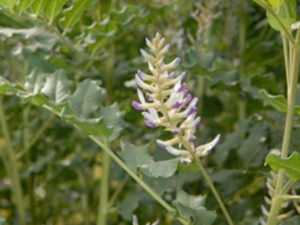
Astragalus
Goji berries
Licorice
Cordyceps
Chuanxiong

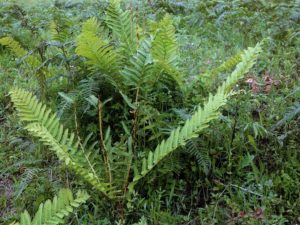
Purple-stemmed Polygonum

Polygonatum, a plant belonging to the genus Polygonatum in the family Polygonaceae, has medicinal uses in its rhizomes and leaf petiole remnants (Polygonatum rhizome) as well as the downy hairs on tender shoots or young leaf petioles (Polygonatum shoots).Ziqi Guanzhong has the effects of clearing heat, detoxifying, stopping bleeding, and killing parasites. It is primarily used to treat epidemic colds, heat-toxin-induced diarrhea and dysentery, boils, sores, and swellings caused by toxins, hemoptysis, epistaxis, hematochezia, metrorrhagia, and abdominal pain caused by parasitic infestations. Ziqi Miao has the effect of stopping bleeding and is primarily used to treat bleeding from external injuries.

Gan Tu

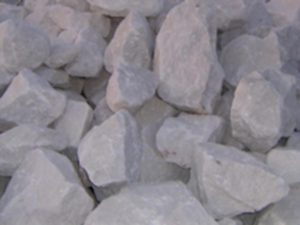
Gan Tu, a name in traditional Chinese medicine. It is a claystone known as bentonite. Bentonite is a type of clay primarily composed of montmorillonite, mainly produced in Heilongjiang, Jilin, Liaoning, Hebei, and Zhejiang, though it is also found in other provinces. However, its mineral composition, impurity content, and adsorption properties may vary across different production sites and even among different strata within the same site. It possesses detoxifying properties and is used to treat food or fungal poisoning.

Poria

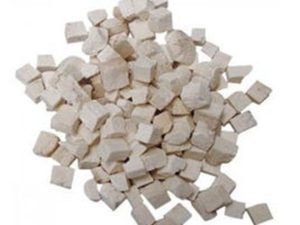
Poria is the name of a traditional Chinese medicine. It is the dried sclerotium of Poria cocos (Schw.) Wolf, a fungus belonging to the genus Poria in the family Polyporaceae. Poria produced in Yunnan is known as “Yunling” and is of superior quality. It has the effects of promoting diuresis, draining dampness, strengthening the spleen, and calming the heart. It is primarily used to treat edema, phlegm-fluid retention, spleen deficiency-induced diarrhea, palpitations, and insomnia.

Toad

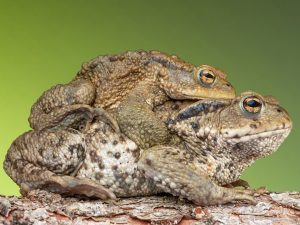
Toad, a name for a Chinese medicinal material. It consists of the entire body of the Chinese common toad (Bufo bufo gargarizans Cantor) or the black-eyed toad (Bufo melanostictus Schneider) from the family Bufonidae. It has the therapeutic effects of detoxifying and dispersing nodules, eliminating food stagnation and promoting diuresis, as well as killing parasites and eliminating malnutrition-related sores.It is primarily used to treat boils, carbuncles, back abscesses, scrofula, malignant sores, masses and accumulations, abdominal distension, edema, malnutrition in children, tetanus, and chronic cough and wheezing.

Lilium brownii

Baihe: The fleshy scale leaves of *Lilium longiflorum* Thunb. (family Liliaceae). 【Property, Flavor, and Meridian Tropism】Cold in nature, sweet in flavor. Enters the Heart Meridian (HT) and Lung Meridian (LU). **Actions and Indications**: Nourishes Yin and moistens the Lung, clears the Heart and calms the Shen (spirit). It is classified as a Yin-tonifying medicinal under … Read more
Cassia obtusifolia (Juemingzi)

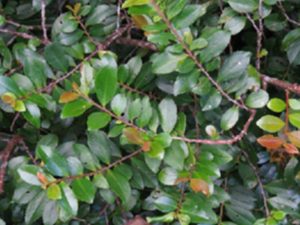
Cassia obtusifolia (Juemingzi): The mature seeds of *Cassia obtusifolia* L., a plant in the Fabaceae family. **Nature and Flavor:** Slightly cold, bitter and sweet. **Meridian Tropism:** Enters the Liver Meridian of Foot‑Jueyin (LR), Kidney Meridian of Foot‑Shaoyin (KI), and Large Intestine Meridian of Hand‑Yangming (LI). [Actions and Indications] Clears heat and improves vision, moistens the … Read more

Dimocarpus longan (Longan, Guiyuan) — specifically referring to the aril (flesh) of the fruit.

Longan Aril (Guiyuan): Aril of *Dimocarpus longan* Lour. (Sapindaceae) 【Nature, Flavor, and Meridian Tropism】Warm in nature, sweet in flavor. Enters the Heart Meridian of Hand-Shaoyin (HT) and the Spleen Meridian of Foot-Taiyin (SP). 【Actions and Indications】Tonifies the Heart and Spleen, nourishes Blood and calms the Spirit. It is classified as a Qi-tonifying medicinal, a subcategory … Read more

Lablab purpureus (Bai Biandou Hua)

White Hyacinth Bean Flower (Baibiandouhua): the flower of *Dolichos lablab* L., a leguminous plant. **Nature, Flavor, and Meridian Tropism:** Sweet and bland, neutral in nature. Enters the Spleen (SP), Stomach (ST), and Large Intestine (LI) meridians. 【Effects and Functions】Fortify the Spleen and harmonize the Stomach, clear summerheat and transform dampness. Treats dysentery, diarrhea, and red … Read more

Dolichos lablab (Baibiandou)

Baibiandou (Dolichos lablab): the seed of the leguminous plant *Dolichos lablab* L. **Nature, Flavor, and Meridian Tropism:** Sweet and bland; slightly warm; neutral. Enters the Spleen (SP) and Stomach (ST) meridians. 【Actions and Indications】 **Actions:** Invigorates the Spleen, transforms Dampness, harmonizes the Middle, and dispels Summer-Heat. **Indications:** Spleen-Stomach Deficiency (pi wei xu ruo) with poor … Read more

Ginkgo biloba (Baiguo)

Ginkgo biloba (Baiguo): the seed of Ginkgo biloba L. (family Ginkgoaceae), with the fleshy outer seed coat removed. **Nature, Flavor, and Meridian Entry:** Neutral nature; flavors: sweet, bitter, astringent. 【Actions and Indications】 Astringes the lung to relieve dyspnea (dyspnea), arrests leukorrhea and turbid vaginal discharge, and reduces urinary frequency. It is classified under the astringent … Read more

Angelica dahurica (Baizhi)

**Baizhi (Angelica dahurica):** The root of *Angelica dahurica* (Fisch. ex Hoffm.) Benth. et Hook.f., or its variety *Angelica dahurica* var. *formosana* (Boiss.) Shan et Yuan, both plants of the Apiaceae family. Nature and flavor: Warm, pungent. Meridian tropism: Stomach (ST), Large Intestine (LI), Lung (LU). 【Actions and Indications】Disperses wind and eliminates dampness, unblocks the orifices … Read more

Glycyrrhiza uralensis

Gancao (Licorice root): the dried root of *Glycyrrhiza uralensis* Fisch., *Glycyrrhiza inflata* Bat., or *Glycyrrhiza glabra* L. (Fabaceae). 【Nature, Flavor, and Meridian Tropism】Sweet, neutral. Attributable to the Heart (HT), Lung (LU), Spleen (SP), and Stomach (ST) meridians. 【Functions and Indications】 Supplement the Spleen and boost Qi, clear Heat and resolve Toxin, transform Phlegm and stop … Read more

Polygonatum odoratum (Yuzhu)

Yuzhu (Polygonatum odoratum (Mill.) Druce): the rhizome of the Liliaceae plant Polygonatum odoratum. **Nature, Flavor, and Meridian Tropism:** Slightly cold nature, sweet flavor. Enters the Lung Meridian of Hand-Taiyin (LU) and the Stomach Meridian of Foot-Yangming (ST). 【Actions & Indications】Nourishes yin, moistens dryness, generates fluids, and quenches thirst. Categorized as a Yin-nourishing medicinal within the … Read more

Dai Dai Hua (Bitter Orange Flower): Uses for Digestion and Heart Health

**Dai Dai Hua (Bitter Orange Flower)**: Flower buds of *Citrus aurantium* L. (Rutaceae), a woody plant. 【Nature, Flavor, and Meridian Tropism】Slightly cold in nature, with bitter and sour flavors. 【Actions and Indications】Moves qi and broadens the center, promotes digestion, transforms phlegm, soothes the liver and regulates qi, harmonizes the stomach and stops vomiting. [Indicated for] … Read more