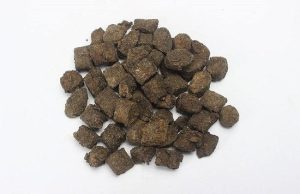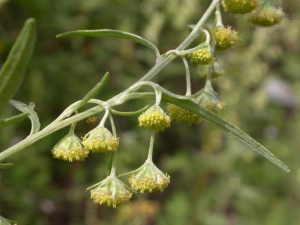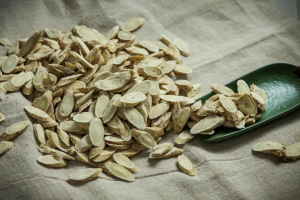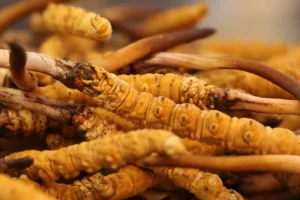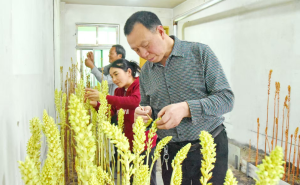
Dong Quai
Gastrodia Elata
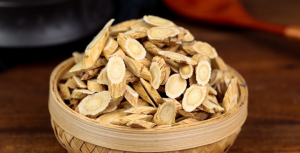
Astragalus
Goji berries
Licorice
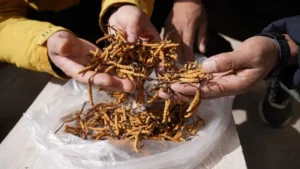
Cordyceps
Chuanxiong

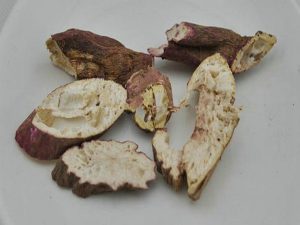
Di Gu Liu

Di Gu Liu, a name in traditional Chinese medicine. It refers to the aged roots of the plant Raphanus sativus L. (family Brassicaceae) harvested after flowering and seed set.Native to China, it is cultivated throughout the country and has a large number of cultivated varieties. It has the therapeutic effects of promoting qi circulation, eliminating food stagnation, resolving phlegm, quenching thirst, and promoting diuresis to reduce swelling. It is commonly used for food stagnation and qi stagnation, abdominal distension and fullness, dysentery, cough with excessive phlegm, diabetes, beriberi, and edema.

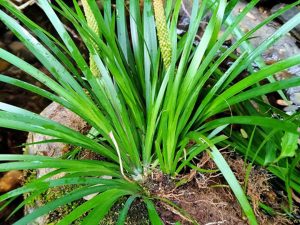
Stone Acorus

Acorus tatarinowii, a name in traditional Chinese medicine, refers to the dried rhizome of Acorus tatarinowii Schott, a plant in the genus Acorus of the Araceae family. This product has the effects of opening the orifices and resolving phlegm, reviving the mind and enhancing intelligence, and transforming dampness and stimulating the appetite.It is primarily used to treat mental confusion and epilepsy, forgetfulness and insomnia, tinnitus and deafness, epigastric fullness with loss of appetite, and lockjaw with dysentery.

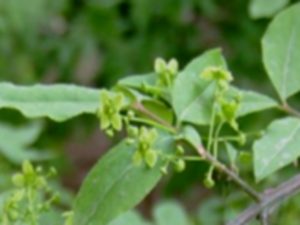
Ghost Arrow Feather

Ghost Arrow Feather is a name for a traditional Chinese medicine. It consists of winged branches or wing-like appendages from the plant Euonymus latus (Thunb.) Sieb., of the Celastraceae family. It is distributed in Northeast China, as well as in Hebei, Shaanxi, Gansu, Shandong, Jiangsu, Anhui, Zhejiang, Hubei, Hunan, Sichuan, Guizhou, and Yunnan.It has the therapeutic effects of promoting blood circulation, regulating menstruation, detoxifying, reducing swelling, and killing parasites. It is used to treat masses and lumps, pain in the chest and abdomen, amenorrhea, dysmenorrhea, metrorrhagia and menometrorrhagia, postpartum abdominal pain due to blood stasis, retained lochia, hernias, arthralgia, boils and swellings, pain from falls and blows, abdominal pain caused by parasitic infestations, burns and scalds, and venomous snake bites.

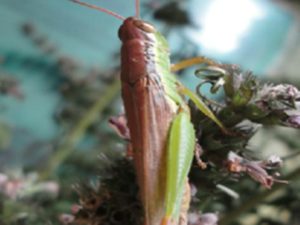
Grasshopper

Locust, a name in traditional Chinese medicine. It refers to the adult forms of various insects, including the migratory locust (Locusta migratoria Linnaeus) of the genus Locusta in the family Acrididae; the Chinese rice locust (Oxyachinensis Thunberg) of the genus Oxyachis; and the rice-leaf sword-horned locust (Acridalata Motsch) of the genus Acrida.The migratory locust and the rice-leaf sword-horned locust are distributed throughout the country; the Chinese rice locust is found in most regions of China. It has the therapeutic effects of dispelling wind, relieving spasms, suppressing cough, and alleviating wheezing. It is primarily used to treat infantile convulsions, tetanus, whooping cough, and asthma.

Phaseolus calcaratus (Chixiaodou), also known as Adzuki Bean

Chixiaodou (Phaseolus calcaratus): the mature seed of Phaseolus calcaratus Roxb., a plant in the Fabaceae family. **Flavor and Nature:** Sweet and sour, neutral. **Meridian Tropism:** Heart Meridian (HT), Small Intestine Meridian (SI). **Actions and Indications:** Promotes urination to reduce edema, detoxifies and expels pus. It belongs to the subcategory of herbs that promote urination and … Read more

Zanthoxylum bungeanum (Huajiao)

Huajiao: The mature pericarp of Zanthoxylum bungeanum Maxim. (family Rutaceae). **Properties and Meridian Tropism:** Warm in nature, pungent in flavor. Enters the Spleen Meridian (SP), Stomach Meridian (ST), and Kidney Meridian (KI). 【Actions and Indications】Warms the Middle to relieve pain, kills parasites and relieves itching. It is an interior-warming medicinal. [Pharmacological Research] Anti-gastric ulcer, anti-diarrhea, … Read more

Euryale ferox (Qianshi)

Semen Euryales (Qianshi): the mature seed kernel of *Euryale ferox* Salisb., a plant in the Nymphaeaceae (water lily) family. 【Nature, Flavor, and Meridian Tropism】Neutral in nature, sweet and astringent in flavor. It enters the Spleen Meridian of Foot-Taiyin (SP) and the Kidney Meridian of Foot-Shaoyin (KI). 【Actions and Indications】Tonifies the kidney and consolidates essence, supplements … Read more

Oyster Shell (Ostreae Concha)

Oyster Shell (Muli): the shell of *Ostrea gigas* Thunberg, *Ostrea talianwhanensis* Crosse, or *Ostrea rivularis* Gould (family Ostreidae). Nature and Flavor: Slightly cold, salty. Meridian Tropism: Liver Meridian (LR), Gallbladder Meridian (GB), and Kidney Meridian (KI). 【Efficacy and Actions】Sedates and calms the spirit (zhenjing anshen), subdues yang and nourishes yin (qianyang buyin), softens hardness and … Read more

Hippophae rhamnoides (Shaji)

Hippophae rhamnoides (Shaji): the ripe fruit of the Elaeagnaceae plant *Hippophae rhamnoides* L. **Nature, Flavor, and Meridian Tropism:** Warm in nature, sour and astringent in flavor. Enters the Spleen (SP), Stomach (ST), Lung (LU), and Heart (HT) meridians. 【Actions and Indications】Resolves phlegm and stops cough, promotes digestion and resolves food stagnation, activates blood and dissipates … Read more

Prunus armeniaca (Xingren) — Bitter Apricot Seed

Xingren (Apricot Kernel): the mature seeds of *Prunus armeniaca* L. var. *ansu* Maxim., *Prunus sibirica* L., *Prunus mandshurica* (Maxim.) Koehne, or *Prunus armeniaca* L., plants of the Rosaceae family. **Nature and Flavor:** Slightly warm, bitter. **Meridian Tropism:** Lung Meridian of Hand-Taiyin (LU) and Large Intestine Meridian of Hand-Yangming (LI). 【Actions and Indications】Descends Qi, relieves cough … Read more

Citrus medica var. sarcodactylis (Foshou)

Foshou (Buddha’s Hand): the fruit of *Citrus medica* L. var. *sarcodactylis* Swingle, a plant in the Rutaceae family. 【Nature, Flavor, and Meridian Tropism】Warm in nature, with pungent, bitter, and sour flavors. Enters the Lung Meridian (LU), Spleen Meridian (SP), and Liver Meridian (LR). 【Actions and Indications】 Soothes the Liver and regulates Qi, harmonizes the Stomach … Read more

Phyllanthus emblica (Yuganzi)

Phyllanthus emblica (Yuganzi): The mature fruit of *Phyllanthus emblica* L. (family Euphorbiaceae), a Tibetan customary medicinal material. 【Nature, Flavor, and Meridian Tropism】Cool in nature, with sweet, sour, and astringent flavors. It enters the Lung Meridian of Hand-Taiyin (LU) and the Stomach Meridian of Foot-Yangming (ST). 【Functions and Indications】Clears Heat and cools Blood, promotes digestion and … Read more

Cinnamomum cassia (Rougui)

Cinnamomum cassia (Rougui): the dried bark of *Cinnamomum cassia* Presl, a plant of the Lauraceae family. **[Properties and Meridian Tropism]** Nature: extremely hot; Flavor: pungent, sweet. Meridian entry: Kidney Meridian (KI), Spleen Meridian (SP), Heart Meridian (HT), Liver Meridian (LR). 【Actions and Indications】Supplements fire and assists yang, leads fire back to its origin, disperses cold … Read more

Myristica fragrans (Roudoukou)

Nutmeg (Myristica fragrans Houtt., Roudoukou): the mature seed kernel of *Myristica fragrans* Houtt., a plant of the Myristicaceae family. 【Nature and Flavor】Nature: warm, flavor: pungent. Meridian tropism: Large Intestine Meridian of Hand-Yangming (LI), Stomach Meridian of Foot-Yangming (ST), and Spleen Meridian of Foot-Taiyin (SP). 【Actions and Indications】Warms the Middle and Moves Qi, Astringes the Intestines … Read more