Search for Herbal Teas Recipes by Symptom:

Alpine Celery Root

Alpine Celery Root, a name in traditional Chinese medicine. It is the root of the plant Coelopleurum saxatile (Turcz.) Drde, belonging to the Apiaceae family. It is distributed in the Changbai Mountains region of Jilin Province. It has the therapeutic effects of regulating qi and strengthening the stomach, and is used to treat abdominal distension, poor appetite, and indigestion.

White Strawberry

White Strawberry, a name in traditional Chinese medicine. It refers to the whole plant of Fragaria nilgerrensis Schlecht. ex Gay, a species of the genus Fragaria in the Rosaceae family.This herb has a sweet and bitter taste and a cool nature; it has the effects of clearing the lungs, relieving coughs, detoxifying, and reducing swelling. It is primarily used to treat lung-heat-induced cough and wheezing, whooping cough, mouth and tongue sores, dysentery, painful urination, swollen and painful sores, venomous snake bites, and fractures.

Tengcha

Vine Tea, a name in traditional Chinese medicine. It consists of the branches and leaves of Ampelopsis grossedentata (Hand.-Mazz.) W. T. Wang, a plant belonging to the genus Ampelopsis in the Vitaceae family. It has the effects of clearing heat, detoxifying, promoting diuresis, and reducing swelling. It is primarily used to treat wind-heat colds, sore throat, jaundice-type hepatitis, red and swollen eyes, boils and abscesses, diabetes, hyperlipidemia, and hypertension.

Cold-Region Euonymus

Cold-Region Euonymus, a name in traditional Chinese medicine. It refers to the branches of the plant Cold-Region Euonymus (Euonymus frigidus Wall. ex Roxb.) of the Celastraceae family. It is distributed in northwestern Yunnan and Tibet (Dingjie, Medog). It has the therapeutic effects of promoting blood circulation to remove blood stasis, resolving masses, regulating menstruation, and relieving pain. It is commonly used for abdominal pain caused by masses, irregular menstruation, postpartum fainting due to blood loss, and arthralgia.

How to clear a blockage in the Lung Meridian

Blockages in the Lung Meridian can be alleviated through methods such as acupressure, moxibustion, herbal medicine, physical exercise and breathing exercises. Blockages in the Lung Meridian may be related to factors such as exposure to wind and cold, emotional distress, excessive fatigue, phlegm-dampness obstruction, and deficiency of qi and blood. 1. Acupressure Massaging acupoints along … Read more

Methods for unblocking the Liver Meridian

The liver meridian can be unblocked through methods such as acupressure, stretching exercises, traditional Chinese medicine treatments, emotional management and dietary adjustments. Blockages in the liver meridian may be linked to emotional imbalances, stagnation of qi and blood, or invasion by cold and dampness, and typically manifest as distension and pain in the flanks, depression … Read more

How to unblock the Gallbladder Meridian

The Gallbladder Meridian can be unblocked through methods such as acupressure, tapping the meridians, moxibustion, moderate exercise and adjusting one’s daily routine. Blockages in the Gallbladder Meridian may be linked to factors such as emotional stress, poor diet and a sedentary lifestyle, and typically manifest as symptoms such as migraines, distending pain in the flanks … Read more

Wellness Practices Rooted in the Chinese Body Clock

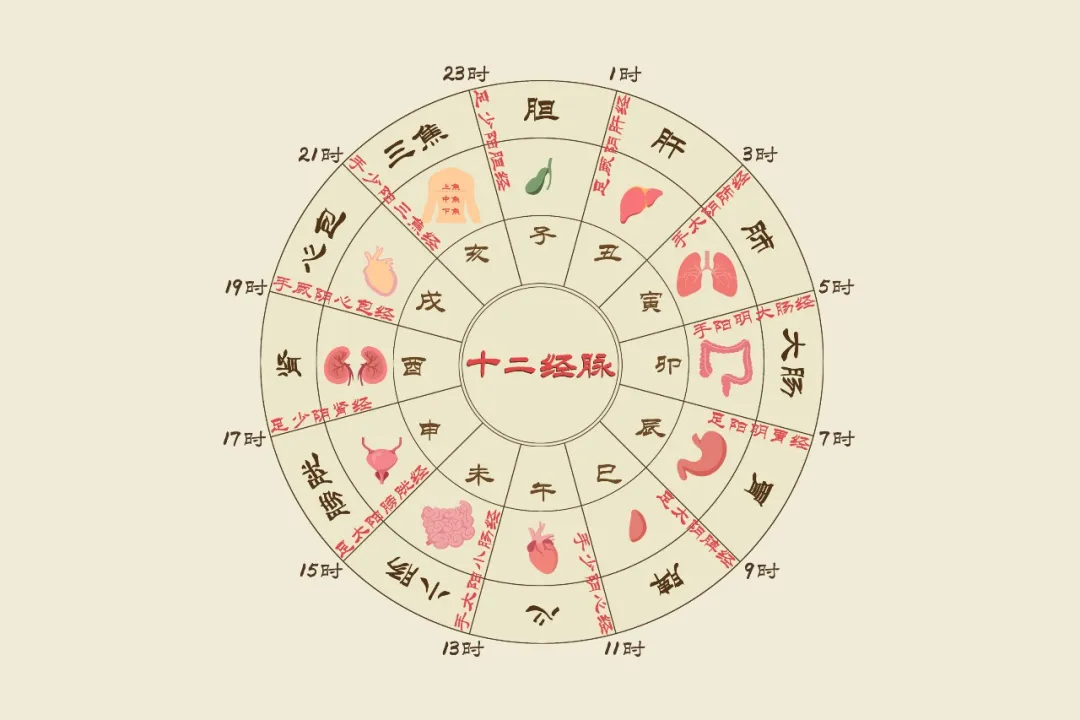
Health Practices for the Twelve Earthly Branches

Chinese Body Clock is a traditional health practice originating from the Huangdi Neijing (The Yellow Emperor’s Inner Canon), a classic text of traditional Chinese medicine written more than 2,000 years ago. It is based on theories such as “the harmony between heaven and humanity” and “the flow of energy through the Zi and Wu hours.” … Read more

TCM Differs From Western Medicine in that it Requires Insight

The Story of Stir-Frying

Conceptually, Traditional Chinese Medicine (TCM) does indeed place greater emphasis on a physician’s “insight” based on a holistic perspective and personal experience, rather than relying on standardized tests as Western medicine does. TCM assesses a patient’s condition through the integrated application of the four diagnostic methods—observation, auscultation, inquiry, and palpation—and emphasizes syndrome differentiation and treatment; … Read more

Health Preservation Hinges on The Principle of “Harmony”

A Story About Raising Dogs

The essence of health and wellness lies not merely in the elimination of disease or the enhancement of physical strength, but in a holistic balance centered on the core concept of “harmony.” This harmony is manifested in the unity of body and mind within the human body, the symbiotic relationship between humanity and nature, and … Read more

Trust Your Doctor

A Story About Playing Pool

Trust Your Doctor — In traditional Chinese medicine, human life stages correspond with the four seasons, five elements and zang-fu organs. Childhood is like spring, associated with Wood and the Liver; youth resembles summer, linked to Fire and the Heart; middle age is autumn, matched with Metal and the Lung; old age is winter, governed … Read more