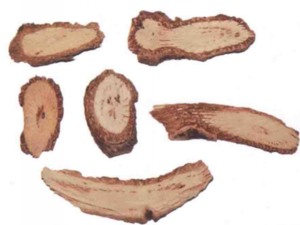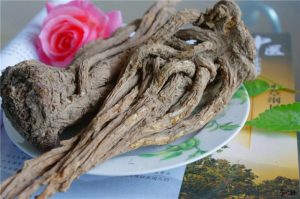
Dong Quai
Gastrodia Elata
Astragalus
Cordyceps sinensis
cordyceps tea
Grains
Legumes

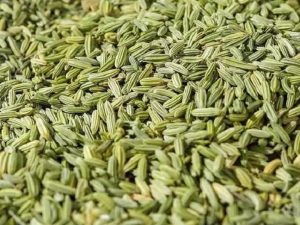
Spinach Seeds

Spinach Seeds, a name in traditional Chinese medicine. These are the seeds of Spinacia oleracea L., a plant in the genus Spinacia of the Chenopodiaceae family. Native to Iran, they are widely cultivated throughout China. They have the effects of clearing the liver and improving vision, as well as relieving coughs and alleviating wheezing. They are commonly used to treat redness, swelling, and pain in the eyes caused by wind-heat, as well as coughs and wheezing.

Gourd

Gourd, a name in traditional Chinese medicine. It is the dried fruit peel of Lagenaria siceraria (Molina) Standl. var. depressa (Ser.) Hara, a plant of the genus Lagenaria in the Cucurbitaceae family. It is produced in most regions of China.This herb has a sweet taste and neutral nature; it enters the Lung, Spleen, and Kidney meridians. It promotes diuresis, reduces swelling, relieves dysuria, and alleviates jaundice. It is primarily used to treat edema, abdominal distension, dysuria, and jaundice.

Deer Fetus

Deer Fetus is the name of a traditional Chinese medicinal material. It refers to the fetus or placenta of the sika deer (Cervus nippon Temminck) or the elk (Cervus elaphus Linnaeus) of the Cervidae family. It has the effects of warming the kidneys and strengthening yang, tonifying blood and generating essence, and regulating menstruation and stopping bleeding. It is primarily used to treat kidney yang deficiency, deficiency of essence and blood, soreness and weakness in the lower back and knees, consumptive disease, irregular menstruation, infertility due to uterine cold, and metrorrhagia and leukorrhea.

Henna Leaves

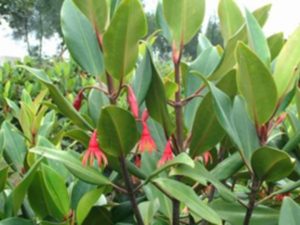
Henna leaves, a name in traditional Chinese medicine. These are the leaves of Lawsonia inermis L., a plant belonging to the genus Lawsonia in the family Lythraceae. Lawsonia inermis is cultivated in gardens throughout Jiangsu, Zhejiang, Fujian, Taiwan, Guangdong, Hainan, and Guangxi in China. It has astringent and hemostatic properties. It is primarily used to treat bleeding from wounds.

Ginkgo biloba (Baiguo)

Ginkgo biloba (Baiguo): the seed of Ginkgo biloba L. (family Ginkgoaceae), with the fleshy outer seed coat removed. **Nature, Flavor, and Meridian Entry:** Neutral nature; flavors: sweet, bitter, astringent. 【Actions and Indications】 Astringes the lung to relieve dyspnea (dyspnea), arrests leukorrhea and turbid vaginal discharge, and reduces urinary frequency. It is classified under the astringent … Read more

Angelica dahurica (Baizhi)

**Baizhi (Angelica dahurica):** The root of *Angelica dahurica* (Fisch. ex Hoffm.) Benth. et Hook.f., or its variety *Angelica dahurica* var. *formosana* (Boiss.) Shan et Yuan, both plants of the Apiaceae family. Nature and flavor: Warm, pungent. Meridian tropism: Stomach (ST), Large Intestine (LI), Lung (LU). 【Actions and Indications】Disperses wind and eliminates dampness, unblocks the orifices … Read more

Glycyrrhiza uralensis

Gancao (Licorice root): the dried root of *Glycyrrhiza uralensis* Fisch., *Glycyrrhiza inflata* Bat., or *Glycyrrhiza glabra* L. (Fabaceae). 【Nature, Flavor, and Meridian Tropism】Sweet, neutral. Attributable to the Heart (HT), Lung (LU), Spleen (SP), and Stomach (ST) meridians. 【Functions and Indications】 Supplement the Spleen and boost Qi, clear Heat and resolve Toxin, transform Phlegm and stop … Read more

Polygonatum odoratum (Yuzhu)

Yuzhu (Polygonatum odoratum (Mill.) Druce): the rhizome of the Liliaceae plant Polygonatum odoratum. **Nature, Flavor, and Meridian Tropism:** Slightly cold nature, sweet flavor. Enters the Lung Meridian of Hand-Taiyin (LU) and the Stomach Meridian of Foot-Yangming (ST). 【Actions & Indications】Nourishes yin, moistens dryness, generates fluids, and quenches thirst. Categorized as a Yin-nourishing medicinal within the … Read more

Dai Dai Hua (Bitter Orange Flower): Uses for Digestion and Heart Health

**Dai Dai Hua (Bitter Orange Flower)**: Flower buds of *Citrus aurantium* L. (Rutaceae), a woody plant. 【Nature, Flavor, and Meridian Tropism】Slightly cold in nature, with bitter and sour flavors. 【Actions and Indications】Moves qi and broadens the center, promotes digestion, transforms phlegm, soothes the liver and regulates qi, harmonizes the stomach and stops vomiting. [Indicated for] … Read more

Hemp Seed (Fructus Cannabis)

Hemp seed: The seed kernel of the cannabis plant (Cannabis sativa L.) from the Moraceae family, a Chinese medicinal herb, referring to the dried mature fruit of Cannabis sativa L. Mainly produced in Shandong, Hebei, Heilongjiang, Jilin, and Liaoning. This substance has the effect of moistening the intestines to relieve constipation, and is primarily used … Read more

Chaenomelis Fruit

The nearly ripe fruit of Chaenomeles sinensis (Thouin) Koehne, a plant of the Rosaceae family. 【Properties, Flavors and Meridian Tropism】 Warm in property, sour in flavor. Attributed to the Liver Meridian and Spleen Meridian. [Efficacy and Actions] Calm the liver, relieve tendon rigidity, harmonize the stomach, and resolve dampness. It belongs to the herbs for … Read more

Fructus Mume

The dried nearly mature fruit of Prunus mume (Sieb.) Sieb. et Zucc., a plant of the Rosaceae family. [Properties, Flavors and Meridian Tropism] Sour, astringent, neutral. Meridian tropism: Liver, Spleen, Lung, and Large Intestine Meridians. 【Actions and Indications】 Astringing the lung, astringing the intestines, promoting fluid production, and calming roundworms. Indicated for chronic cough due … Read more

Purslane (Ma Chi Xian)

Purslane

Botanical Source The whole herb of Portulaca oleracea L., a plant of the Portulacaceae family. Nature, Flavor & Meridian Tropism Sour in flavor, cold in nature. It acts on the Liver and Large Intestine meridians. Functions & Indications Clears heat and detoxifies, dissipates blood stasis and relieves swelling. It is used to treat bacillary dysentery, … Read more

Hawthorn

Hawthorn

Botanical Source Hawthorn The dried ripe fruits of Crataegus pinnatifida Bge. var. major N.E.Br. or Crataegus pinnatifida Bge., plants of the Rosaceae family. Nature, Flavor & Meridian Tropism Sour and sweet in flavor, slightly warm in nature. It acts on the Spleen, Stomach and Liver meridians. Functions & Indications Promotes digestion and invigorates the stomach, … Read more