Dong Quai
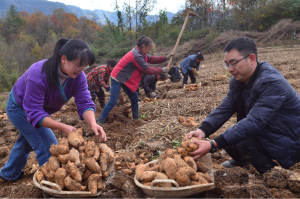
Gastrodia Elata
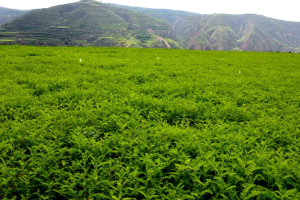
Astragalus
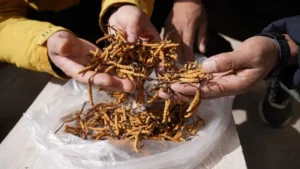
Cordyceps sinensis
cordyceps tea
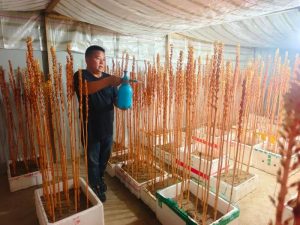
Grains
Legumes

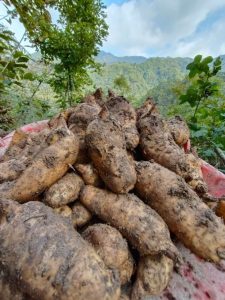
Canna

Canna, a name in traditional Chinese medicine. It refers to the rhizomes and flowers of Canna indica L., a plant belonging to the genus Canna in the family Acanthaceae. Canna is widely cultivated throughout China; it also grows wild in moist grasslands. It has the effects of clearing heat, draining dampness, calming the mind, and lowering blood pressure.It is primarily used to treat jaundice-type acute infectious hepatitis, neurosis, hypertension, menorrhagia, and leukorrhea; externally, it is used to treat contusions, bruises, and abscesses.

Raw Aconite

Raw Aconite is a name for a traditional Chinese medicine. It is the root tuber of Aconitum carmichaeli Debx., a plant in the Ranunculaceae family. It is distributed in Sichuan, Yunnan, Shaanxi, Hunan, and other regions. It has the efficacy of restoring yang and reversing critical conditions, and is primarily used to treat yang depletion with imminent collapse, cold extremities, spontaneous cold sweats, and a faint pulse on the verge of disappearing.

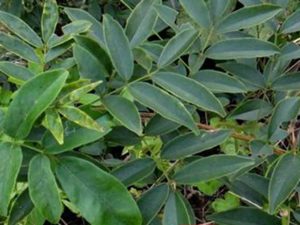
Yunnan Cliff Vine

Yunnan Climbing Vine, a name in traditional Chinese medicine. It refers to the whole plant of Tetrastigma yunnanense Gagn., a member of the Vitaceae family. It is distributed in Yunnan. It is used to disperse blood stasis, reduce swelling, and repair tendons and bones.

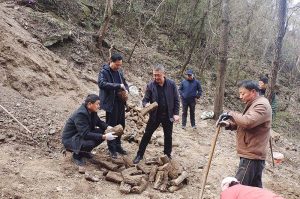
Maifan Stone

Maifan Stone, a name in traditional Chinese medicine. It is a medium-acidic igneous rock known as quartz diorite porphyry. It has the effects of detoxifying and dispersing nodules, removing necrotic tissue and promoting tissue regeneration, dispelling cold and dampness, nourishing the liver and strengthening the stomach, invigorating blood circulation and resolving blood stasis, promoting urination and dissolving stones, and prolonging life.It is primarily used to treat boils and abscesses on the back, acne, eczema, beriberi, heat rash, cracked fingers, melasma, toothache, oral ulcers, rheumatic pain, lower back and lumbar pain, chronic hepatitis, gastritis, dysentery, diabetes, neurasthenia, redness and swelling from trauma, hypertension, senile arteriosclerosis, tumors, and urinary tract stones.

Prunus armeniaca (Xingren) — Bitter Apricot Seed

Xingren (Apricot Kernel): the mature seeds of *Prunus armeniaca* L. var. *ansu* Maxim., *Prunus sibirica* L., *Prunus mandshurica* (Maxim.) Koehne, or *Prunus armeniaca* L., plants of the Rosaceae family. **Nature and Flavor:** Slightly warm, bitter. **Meridian Tropism:** Lung Meridian of Hand-Taiyin (LU) and Large Intestine Meridian of Hand-Yangming (LI). 【Actions and Indications】Descends Qi, relieves cough … Read more

Citrus medica var. sarcodactylis (Foshou)

Foshou (Buddha’s Hand): the fruit of *Citrus medica* L. var. *sarcodactylis* Swingle, a plant in the Rutaceae family. 【Nature, Flavor, and Meridian Tropism】Warm in nature, with pungent, bitter, and sour flavors. Enters the Lung Meridian (LU), Spleen Meridian (SP), and Liver Meridian (LR). 【Actions and Indications】 Soothes the Liver and regulates Qi, harmonizes the Stomach … Read more

Phyllanthus emblica (Yuganzi)

Phyllanthus emblica (Yuganzi): The mature fruit of *Phyllanthus emblica* L. (family Euphorbiaceae), a Tibetan customary medicinal material. 【Nature, Flavor, and Meridian Tropism】Cool in nature, with sweet, sour, and astringent flavors. It enters the Lung Meridian of Hand-Taiyin (LU) and the Stomach Meridian of Foot-Yangming (ST). 【Functions and Indications】Clears Heat and cools Blood, promotes digestion and … Read more

Cinnamomum cassia (Rougui)

Cinnamomum cassia (Rougui): the dried bark of *Cinnamomum cassia* Presl, a plant of the Lauraceae family. **[Properties and Meridian Tropism]** Nature: extremely hot; Flavor: pungent, sweet. Meridian entry: Kidney Meridian (KI), Spleen Meridian (SP), Heart Meridian (HT), Liver Meridian (LR). 【Actions and Indications】Supplements fire and assists yang, leads fire back to its origin, disperses cold … Read more

Myristica fragrans (Roudoukou)

Nutmeg (Myristica fragrans Houtt., Roudoukou): the mature seed kernel of *Myristica fragrans* Houtt., a plant of the Myristicaceae family. 【Nature and Flavor】Nature: warm, flavor: pungent. Meridian tropism: Large Intestine Meridian of Hand-Yangming (LI), Stomach Meridian of Foot-Yangming (ST), and Spleen Meridian of Foot-Taiyin (SP). 【Actions and Indications】Warms the Middle and Moves Qi, Astringes the Intestines … Read more

Lilium brownii

Baihe: The fleshy scale leaves of *Lilium longiflorum* Thunb. (family Liliaceae). 【Property, Flavor, and Meridian Tropism】Cold in nature, sweet in flavor. Enters the Heart Meridian (HT) and Lung Meridian (LU). **Actions and Indications**: Nourishes Yin and moistens the Lung, clears the Heart and calms the Shen (spirit). It is classified as a Yin-tonifying medicinal under … Read more

Cassia obtusifolia (Juemingzi)

Cassia obtusifolia (Juemingzi): The mature seeds of *Cassia obtusifolia* L., a plant in the Fabaceae family. **Nature and Flavor:** Slightly cold, bitter and sweet. **Meridian Tropism:** Enters the Liver Meridian of Foot‑Jueyin (LR), Kidney Meridian of Foot‑Shaoyin (KI), and Large Intestine Meridian of Hand‑Yangming (LI). [Actions and Indications] Clears heat and improves vision, moistens the … Read more

Dimocarpus longan (Longan, Guiyuan) — specifically referring to the aril (flesh) of the fruit.

Longan Aril (Guiyuan): Aril of *Dimocarpus longan* Lour. (Sapindaceae) 【Nature, Flavor, and Meridian Tropism】Warm in nature, sweet in flavor. Enters the Heart Meridian of Hand-Shaoyin (HT) and the Spleen Meridian of Foot-Taiyin (SP). 【Actions and Indications】Tonifies the Heart and Spleen, nourishes Blood and calms the Spirit. It is classified as a Qi-tonifying medicinal, a subcategory … Read more

Lablab purpureus (Bai Biandou Hua)

White Hyacinth Bean Flower (Baibiandouhua): the flower of *Dolichos lablab* L., a leguminous plant. **Nature, Flavor, and Meridian Tropism:** Sweet and bland, neutral in nature. Enters the Spleen (SP), Stomach (ST), and Large Intestine (LI) meridians. 【Effects and Functions】Fortify the Spleen and harmonize the Stomach, clear summerheat and transform dampness. Treats dysentery, diarrhea, and red … Read more

Dolichos lablab (Baibiandou)

Baibiandou (Dolichos lablab): the seed of the leguminous plant *Dolichos lablab* L. **Nature, Flavor, and Meridian Tropism:** Sweet and bland; slightly warm; neutral. Enters the Spleen (SP) and Stomach (ST) meridians. 【Actions and Indications】 **Actions:** Invigorates the Spleen, transforms Dampness, harmonizes the Middle, and dispels Summer-Heat. **Indications:** Spleen-Stomach Deficiency (pi wei xu ruo) with poor … Read more