TCM Chrono-Health

Sep 28, 2026 11:29 (America/New_York)
Wu Shen Day DingSi Hour

Ziwuliuzhu [Read More]

Active Meridian: Spleen
Open Point: Tai Bai
Time Period: 09:00-11:00
Flow: Foot to chest, inner leg

Linggui Bafa [Read More]

Main Point: Nei Guan(PC6)

Pair: Gong Sun(SP4)

Vessel: Yin Linking Vessel

戊(6) + 申(7) + 丁(7) + 巳(4) = 24, remainder 8

Feiteng Bafa [Read More]

Open Point: Zhao Hai

Wellness tips [Read More]

Spleen transforms and transports. Avoid overthinking. Tap inner lower leg.

Time Diagnosis [Read More]

Active Organ: Spleen
If symptoms like Poor appetite, fatigue, abdominal distension recur at this time, consider Spleen meridian pathology.

Zangfu Pathology Analysis [Read More]

Spleen deficiency produces dampness, affecting transformation and transportation.

Yin-Yang Imbalance [Read More]

Yang reaches extreme and Yin is born. Take a short nap to nourish Yin.

Search For Herbal Tea Recipes By Medical Condition

Goji Berries

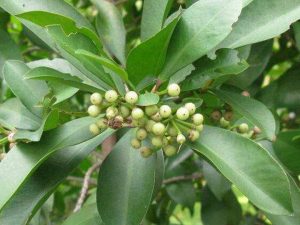
Goji berries, a traditional Chinese medicine, are the dried, ripe fruits of Ningxia goji (Lycium barbarum L.), a plant belonging to the genus Lycium in the Solanaceae family. They have the effects of tonifying the liver and kidneys, nourishing essence, and improving eyesight. They are primarily used to treat deficiency-syndrome with essence depletion, soreness and pain in the lower back and knees, dizziness and tinnitus, impotence and nocturnal emission, internal heat with excessive thirst, blood deficiency with pallor and weakness, and blurred vision.

Red Rhodiola

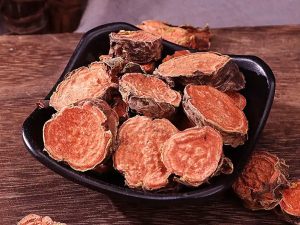
Rhodiola is the name of a traditional Chinese medicine. It consists of the dried roots and rhizomes of Rhodiola crenulata (Hook.f. et Thoms.) H. Ohba, a plant in the Crassulaceae family. It has the effects of tonifying qi, promoting blood circulation, unblocking meridians, and relieving wheezing. It is primarily used to treat qi deficiency with blood stasis, chest pain due to bi syndrome, hemiplegia caused by stroke, and fatigue with shortness of breath.

Gastrodia elata

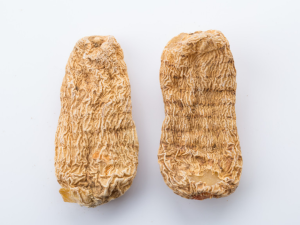
Tianma is a traditional Chinese medicinal herb used to calm the liver and subdue wind. It is the dried tuber of Gastrodia elata Bl., a plant in the genus Gastrodia of the Orchidaceae family. It has the effects of subduing wind and relieving spasms, calming liver yang, and dispelling wind to unblock the meridians.It is primarily used to treat infantile convulsions, epileptic seizures, tetanus, headaches and dizziness, paralysis of the hands and feet, numbness of the limbs, and rheumatic arthralgia.

Licorice Root

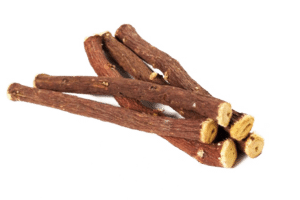
Licorice is a commonly used Chinese medicinal herb derived from the dried roots and rhizomes of the leguminous plants Glycyrrhiza, Glycyrrhiza glabra, or Glycyrrhiza glabra var. glabra. It is named for its sweet taste. It is primarily produced in Inner Mongolia, Shaanxi, Gansu, and the Northeast, where unique geographical and climatic conditions endow it with excellent medicinal properties.Licorice has the effects of tonifying the spleen and boosting qi, clearing heat and detoxifying, eliminating phlegm and relieving cough, and alleviating spasms and pain. It is commonly used to treat spleen and stomach deficiency, deficiency of heart qi, heat-toxin syndromes, cough, and spasmodic pain in the epigastrium, abdomen, or limbs. It also harmonizes other herbs, mitigates drug toxicity, and balances the properties of medicinal materials, making it widely used in herbal formulas. In addition, licorice can be incorporated into daily diets to provide certain health-promoting benefits.

Cordyceps

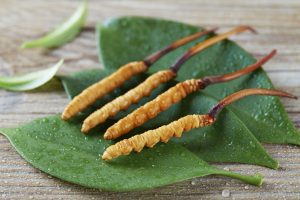
Cordyceps, a name in traditional Chinese medicine. It is the dried composite of the fruiting body and the corpse of a caterpillar from the family Sphingidae, parasitized by the fungus Cordyceps sinensis (Berk.) Sacc. of the Clavicipitaceae family. It is primarily produced in Sichuan, Tibet, and Qinghai.This herb has a sweet taste and neutral nature; it enters the Lung and Kidney meridians. It has the effects of tonifying the kidneys and nourishing the lungs, as well as stopping bleeding and resolving phlegm. It can be used to treat kidney deficiency with essence depletion, impotence and nocturnal emission, soreness and pain in the lower back and knees, chronic cough with wheezing due to deficiency, and coughing up blood due to overwork.

Chuanxiong

Chuanxiong is the name of a traditional Chinese medicine. It is the dried rhizome of the plant Ligusticum chuanxiong Hort. of the Apiaceae family. Authentic medicinal materials specifically refer to Chuanxiong produced in the central hilly and plain areas of the Sichuan Basin, including Dujiangyan, Pixian, Pengzhou, Shifang, Chongzhou, Qionglai, and Meishan.This herb has the effects of promoting blood circulation, regulating qi, dispelling wind, and relieving pain. It is primarily used to treat chest pain due to chest obstruction, stabbing pain in the chest and flanks, swelling and pain from falls or blows, irregular menstruation, amenorrhea, dysmenorrhea, abdominal pain caused by masses, headaches, and rheumatic arthralgia.

Dong Quai

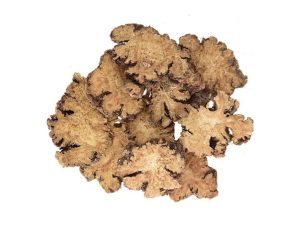
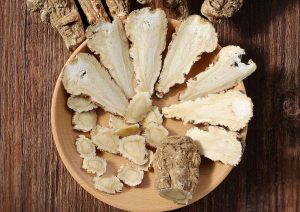
Dong Quai is a blood-nourishing medicinal herb derived from the root of Angelica sinensis (Oliv) Diels, a plant belonging to the genus Angelica in the Apiaceae family. It has the effects of nourishing and invigorating the blood, regulating menstruation and relieving pain, and moistening the intestines to promote bowel movements.It is primarily used to treat blood deficiency with pallor, dizziness and palpitations, irregular menstruation, amenorrhea and dysmenorrhea, abdominal pain due to deficiency-cold, rheumatic arthralgia, trauma from falls or blows, boils, abscesses, and sores, as well as constipation caused by intestinal dryness.

Astragalus

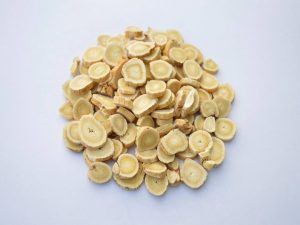
Astragalus is the name of a traditional Chinese medicine. It is the dried root of Astragalus membranaceus (Fisch.) Bge. var. mongholicus (Bge.) Hsiao or Astragalus membranaceus (Fisch.) Bge., plants belonging to the genus Astragalus in the Fabaceae family.It has the effects of tonifying qi and raising yang, consolidating the exterior and stopping sweating, promoting diuresis and reducing edema, generating body fluids and nourishing blood, resolving stagnation and relieving arthralgia, expelling toxins and draining pus, and promoting wound healing and tissue regeneration.It is primarily used to treat qi deficiency with fatigue, poor appetite and loose stools, sinking of central qi, chronic diarrhea with rectal prolapse, bloody stools and metrorrhagia, spontaneous sweating due to exterior deficiency, edema caused by qi deficiency, internal heat with excessive thirst, pallor and weakness due to blood deficiency, hemiplegia, arthralgia and numbness, abscesses and boils that are slow to ulcerate, and chronic ulcers that fail to heal.

Congee Therapy
Medicinal Rice Porridge
Astragalus
Dong Quai
Gastrodia Elata
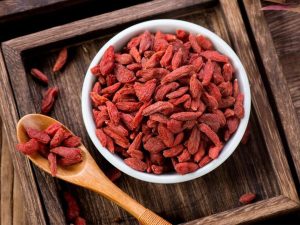
Goji berries
Anti Aging Natural Skin Care

The Ten Largest Goji Berry Plantation Bases in China

China is the native homeland of goji berries (Lycium barbarum). Multiple regions across the country have formed large-scale commercial goji planting bases with unique soil and climate conditions. Each producing area yields goji berries with distinct flavour, appearance and nutritional traits. Below is a detailed overview of China’s major goji berry planting bases. 1. Zhongning ... Read more

Red‑Fruited Treasure Sails Overseas: Ningxia Goji Berry Story

Goji berry is a signature treasure from Ningxia Hui Autonomous Region. It can be eaten raw, brewed into herbal tea, added to soups, fermented into wine or cooked in dishes, delivering great flavour together with rich nutrition. Two‑thirds of China’s exported goji berry products originate from Ningxia. As the well‑known saying goes: “The world looks ... Read more

Zhongning County, Hometown of Chinese Goji Berries

Zhongning County, located in Ningxia Hui Autonomous Region, is universally hailed as the Hometown of Chinese Goji Berries. This title is not merely a marketing slogan, but a well-earned recognition built on over six hundred years of goji cultivation history, unique natural terroir, and mature industrial development. Since ancient times, Zhongning goji berries were presented ... Read more

Zhongning Goji Berry Industrial Park

Zhongning Goji Berry Industrial Park is located in Zhongning County, Ningxia Hui Autonomous Region, the globally recognised hometown of goji berries. It is a national-level modern agricultural industrial park built to develop the geographical indication protected Zhongning goji berry industry. The park integrates seedling breeding, standardized planting demonstration, scientific research & innovation, intelligent deep processing, ... Read more

Xizan Ecological Goji Berry Manor in Zhongning County

Xizan Ecological Goji Berry Manor sits in Hongliugou core zone of Zhongning, Ningxia, hometown of goji berries. Explore its GAP organic planting, full-chain production, certifications & premium authentic Zhongning goji berries. Core keyword: Xizan Ecological Goji Berry Manor Introduction Xizan Ecological Goji Berry Manor is located in Hongliugou core sub-producing area of Zhongning County, Ningxia ... Read more

Zhongning Goji Berry:China’s Famous Geographical Indication Product

Zhongning goji berry (wolfberry) from Ningxia is a protected geographical indication product. Learn about its unique growing environment, quality features, historical heritage and health benefits. Core keyword: Zhongning goji berry Introduction Zhongning, located in Zhongwei, Ningxia Hui Autonomous Region, is widely known as the Hometown of Chinese Goji Berries. Zhongning goji berry is a nationally ... Read more

Standardized Licorice Base on the Taklamakan Desert Edge

Shaya County of Aksu Prefecture lies on the northern margin of the Taklamakan Desert, traversed by the Tarim River, forming a unique desert‑oasis ecological zone for licorice cultivation. Large‑scale standardized licorice planting bases are concentrated in Tarim Township and surrounding desertified sandy land, mainly cultivating Glycyrrhiza inflata (inflated licorice) and local red‑bark Glycyrrhiza uralensis. Relying ... Read more

Gulang Licorice: Standardized Desert‑Oasis Medicinal Herb Base

Gulang County, Wuwei, located at the southern edge of Tengger Desert, belongs to the core Daodi licorice producing zone listed in the First Batch of Gansu Provincial Daodi Chinese Herbal Catalogue, mainly cultivating Glycyrrhiza uralensis (Ural licorice, local improved variety Wulahong licorice). Concentrated demonstration bases are distributed in Zhitan Town, Haizitan Town, Peijiaying Town and ... Read more

Coconut Chicken Soup: TCM Recipe for Nourishing Balance

Introduction to Medicinal Diet Coconut chicken soup is a classic medicinal diet soup widely popular in the Lingnan region, especially highly regarded in Guangdong and Hainan. It skillfully blends the refreshing sweetness and moistening nature of fresh coconut with the savory richness and warming depth of chicken. This soup serves both as a home-style broth … Read more

Stewed Dog Meat with Prepared Aconite and Ginger: Classic Winter Tonic

Introduction to Medicinal Diet Stewed Dog Meat with Prepared Aconite and Ginger (Shu Fu Sheng Jiang Bao Gou Rou) is a time-honored classic TCM medicinal cuisine, especially revered in the Lingnan region and during the winter tonic season. This medicinal dish centers on warming the Middle (Zhong) to dispel cold, reviving Yang and unblocking the … Read more

Mulberry and Red Date Lean Pork Soup: Benefits & Easy Recipe

Mulberry and Red Date Lean Meat Soup Introduction to Medicinal Diet Mulberry and Red Date Lean Meat Soup is a time-honored traditional medicated diet, made primarily with fresh or dried mulberry fruit (Fructus Mori), high-quality red dates (Fructus Jujubae), and selected lean meat, simmered over low heat. The soup presents a translucent purplish-red color with … Read more

Motherwort Simmered Eggs (Leonurus japonicus with eggs)

Introduction to Medicinal Diet Motherwort (Leonurus japonicus) Simmered with Eggs is a classic Traditional Chinese Medicinal diet, originating from Lingnan folk dietary remedies. After centuries of transmission and refinement, it remains widely used for menstrual regulation and postpartum recovery in women. This medicinal dish uses fresh or dried Motherwort as the main ingredient, simmered slowly … Read more

Boost Your Child’s Digestion with Striga asiatica and Crucian Carp Soup

Introduction to a Traditional Dietary Support In the treasure trove of folk dietary traditions in the Lingnan region, *Striga asiatica* (Asian witchweed) and crucian carp soup is a highly revered classic. *Striga asiatica*, also known as “gan ji cao,” is the dried whole plant of *Striga asiatica* (L.) Kuntze from the Orobanchaceae family. It earned … Read more

Red Dates and Codonopsis Pork Spine Soup: A Nourishing Medicinal Diet

Medicinal Food Education: Red Dates (Ziziphus jujuba) and Codonopsis (Codonopsis pilosula) Simmered Pork Spine Bones Introduction to Medicinal Cuisine Jujube and Codonopsis Pork Spine Bone Soup is a widely cherished classic nourishing medicinal diet, known for its clear broth and sweet, mellow flavor, blending the dual appeal of dietary therapy and taste. This soup features … Read more

Gecko and Ginseng Stewed Pheasant: Benefits, Recipe & TCM Guide

Introduction to Medicinal Diet Gecko and Ginseng Stewed Pheasant is a classic nourishing medicinal diet originating from Lingnan folk tradition, refined by generations of physicians. It features precious medicinal substances—Gecko (Gecko gecko) and Ginseng (Panax ginseng) as the main ingredients, paired with warming pheasant, and slow-cooked over low heat. This medicinal dish skillfully blends the … Read more

Pig Heart Soup with Arborvitae Seed: TCM Remedy for Insomnia & Anxiety

Introduction to Medicinal Diet Semen Platycladi (Platycladi Semen) and Pig Heart Soup is a classic TCM sedative medicinal food with a long history, originating from the *Shiliao Bencao* (Materia Medica for Dietotherapy) and the cumulative experience of generations of herbalists. This soup features pig heart as the main ingredient, Semen Platycladi as the sovereign herb, … Read more

Ginseng and Deer Antler Chicken Soup: Recipe, Benefits, and TCM Tips

Introduction to Medicinal Diet Ginseng and Deer Antler Chicken Soup is a classic slow-cooked tonic originating from a renowned Lingnan medicinal diet formula, combining warming and nourishing properties. It features five-year-old forest-grown ginseng (Panax ginseng) or sun-dried ginseng, sika deer antler slices (Cervus elaphus), and fresh chicken as main ingredients, supplemented with goji berries (Lycium … Read more

Black Soybean and Catfish Soup: Benefits, Recipe & TCM Guide

Introduction to Medicinal Food “Black Bean Stewed Catfish” is a traditional Cantonese medicinal dish with a long history, and a classic soup that perfectly integrates diet with health preservation. Black beans, known in Traditional Chinese Medicine as the “Kidney’s Grain,” are neutral in nature and sweet in taste, adept at entering the Kidney Meridian. The … Read more