TCM Chrono-Health

Aug 13, 2026 11:19 (America/New_York)
Jia Xu Day JiSi Hour

Ziwuliuzhu [Read More]

Active Meridian: Spleen
Open Point: Tai Bai
Time Period: 09:00-11:00
Flow: Foot to chest, inner leg

Linggui Bafa [Read More]

Main Point: Nei Guan(PC6)

Pair: Gong Sun(SP4)

Vessel: Yin Linking Vessel

甲(10) + 戌(5) + 己(5) + 巳(4) = 24, remainder 8

Feiteng Bafa [Read More]

Open Point: Lie Que

Wellness tips [Read More]

Spleen transforms and transports. Avoid overthinking. Tap inner lower leg.

Time Diagnosis [Read More]

Active Organ: Spleen
If symptoms like Poor appetite, fatigue, abdominal distension recur at this time, consider Spleen meridian pathology.

Zangfu Pathology Analysis [Read More]

Spleen deficiency produces dampness, affecting transformation and transportation.

Yin-Yang Imbalance [Read More]

Yang reaches extreme and Yin is born. Take a short nap to nourish Yin.

Reishi

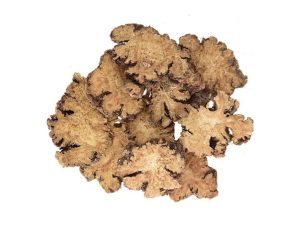
Reishi is a name used in traditional Chinese medicine. It refers to the dried fruiting bodies of the fungi Ganoderma lucidum (Leyss. ex Fr.) Karst. (red reishi) or Ganoderma sinense Zhao, Xu et Zhang (purple reishi), belonging to the genus Ganoderma in the family Polyporaceae. It has the effects of tonifying qi, calming the mind, relieving cough, and alleviating wheezing. It is primarily used to treat restlessness, insomnia, palpitations, cough and wheezing due to lung deficiency, shortness of breath caused by debility, and loss of appetite.

Goji Berries

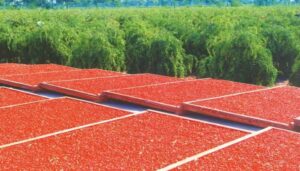
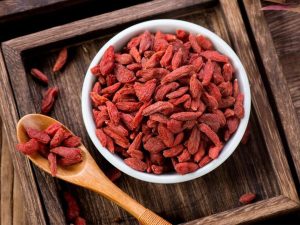
Goji berries, a traditional Chinese medicine, are the dried, ripe fruits of Ningxia goji (Lycium barbarum L.), a plant belonging to the genus Lycium in the Solanaceae family. They have the effects of tonifying the liver and kidneys, nourishing essence, and improving eyesight. They are primarily used to treat deficiency-syndrome with essence depletion, soreness and pain in the lower back and knees, dizziness and tinnitus, impotence and nocturnal emission, internal heat with excessive thirst, blood deficiency with pallor and weakness, and blurred vision.

Red Rhodiola

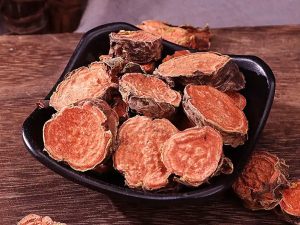
Rhodiola is the name of a traditional Chinese medicine. It consists of the dried roots and rhizomes of Rhodiola crenulata (Hook.f. et Thoms.) H. Ohba, a plant in the Crassulaceae family. It has the effects of tonifying qi, promoting blood circulation, unblocking meridians, and relieving wheezing. It is primarily used to treat qi deficiency with blood stasis, chest pain due to bi syndrome, hemiplegia caused by stroke, and fatigue with shortness of breath.

Gastrodia elata

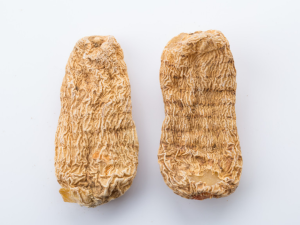
Tianma is a traditional Chinese medicinal herb used to calm the liver and subdue wind. It is the dried tuber of Gastrodia elata Bl., a plant in the genus Gastrodia of the Orchidaceae family. It has the effects of subduing wind and relieving spasms, calming liver yang, and dispelling wind to unblock the meridians.It is primarily used to treat infantile convulsions, epileptic seizures, tetanus, headaches and dizziness, paralysis of the hands and feet, numbness of the limbs, and rheumatic arthralgia.

Licorice

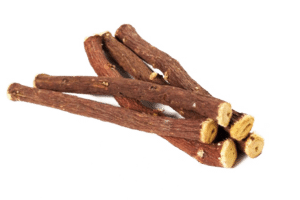
Licorice is a commonly used Chinese medicinal herb derived from the dried roots and rhizomes of the leguminous plants Glycyrrhiza, Glycyrrhiza glabra, or Glycyrrhiza glabra var. glabra. It is named for its sweet taste. It is primarily produced in Inner Mongolia, Shaanxi, Gansu, and the Northeast, where unique geographical and climatic conditions endow it with excellent medicinal properties.Licorice has the effects of tonifying the spleen and boosting qi, clearing heat and detoxifying, eliminating phlegm and relieving cough, and alleviating spasms and pain. It is commonly used to treat spleen and stomach deficiency, deficiency of heart qi, heat-toxin syndromes, cough, and spasmodic pain in the epigastrium, abdomen, or limbs. It also harmonizes other herbs, mitigates drug toxicity, and balances the properties of medicinal materials, making it widely used in herbal formulas. In addition, licorice can be incorporated into daily diets to provide certain health-promoting benefits.

Cordyceps

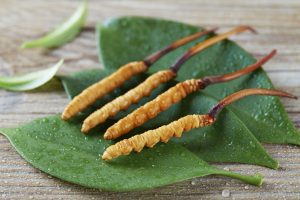
Cordyceps, a name in traditional Chinese medicine. It is the dried composite of the fruiting body and the corpse of a caterpillar from the family Sphingidae, parasitized by the fungus Cordyceps sinensis (Berk.) Sacc. of the Clavicipitaceae family. It is primarily produced in Sichuan, Tibet, and Qinghai.This herb has a sweet taste and neutral nature; it enters the Lung and Kidney meridians. It has the effects of tonifying the kidneys and nourishing the lungs, as well as stopping bleeding and resolving phlegm. It can be used to treat kidney deficiency with essence depletion, impotence and nocturnal emission, soreness and pain in the lower back and knees, chronic cough with wheezing due to deficiency, and coughing up blood due to overwork.

Dong Quai

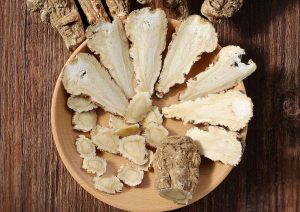
Dong Quai is a blood-nourishing medicinal herb derived from the root of Angelica sinensis (Oliv) Diels, a plant belonging to the genus Angelica in the Apiaceae family. It has the effects of nourishing and invigorating the blood, regulating menstruation and relieving pain, and moistening the intestines to promote bowel movements.It is primarily used to treat blood deficiency with pallor, dizziness and palpitations, irregular menstruation, amenorrhea and dysmenorrhea, abdominal pain due to deficiency-cold, rheumatic arthralgia, trauma from falls or blows, boils, abscesses, and sores, as well as constipation caused by intestinal dryness.

Astragalus

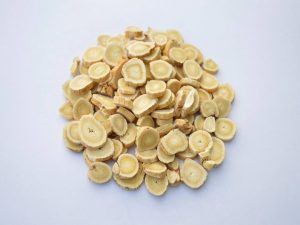
Astragalus is the name of a traditional Chinese medicine. It is the dried root of Astragalus membranaceus (Fisch.) Bge. var. mongholicus (Bge.) Hsiao or Astragalus membranaceus (Fisch.) Bge., plants belonging to the genus Astragalus in the Fabaceae family.It has the effects of tonifying qi and raising yang, consolidating the exterior and stopping sweating, promoting diuresis and reducing edema, generating body fluids and nourishing blood, resolving stagnation and relieving arthralgia, expelling toxins and draining pus, and promoting wound healing and tissue regeneration.It is primarily used to treat qi deficiency with fatigue, poor appetite and loose stools, sinking of central qi, chronic diarrhea with rectal prolapse, bloody stools and metrorrhagia, spontaneous sweating due to exterior deficiency, edema caused by qi deficiency, internal heat with excessive thirst, pallor and weakness due to blood deficiency, hemiplegia, arthralgia and numbness, abscesses and boils that are slow to ulcerate, and chronic ulcers that fail to heal.

Dong Quai
Gastrodia Elata
Anti Aging Natural Skin Care
Astragalus
Herbal Skin Care
Natural Skin Care For Sensitive Skin
Plant Based Skin Care

Longxi Astragalus Authorized Geographical Indication Herb Base

Longxi County in Dingxi, Gansu Province, is honored as the Hometown of Astragalus in China and known nationwide as “China Medicine Capital”. It is the classic Daodi producing region of Astragalus membranaceus var. mongholicus. The Authorized Geographical Indication Herb Base is situated within the officially defined protected origin zone of Longxi Astragalus, adhering strictly to ... Read more

Min County Dong Quai National Demonstration Zone for Export Food

Min County Dong Quai National Demonstration Zone for Export Food and Agricultural Product Quality and Safety,Globally renowned as the Hometown of Dong Quai in China, Min County of Gansu Province is the authentic Daodi origin of high-quality Dong Quai (Angelica sinensis), traditionally known as Min Gui. With more than 1,800 years of herbal planting heritage ... Read more

China-NIAHS:Min County Dong Quai Farming System

The Min County Dong Quai Farming System in Dingxi, Gansu, was officially inscribed on the list of Nationally Important Agricultural Heritage Systems of China in 2014 (the second batch). Rooted in the core Daodi origin of authentic Min Gui, it represents a living, time-honored agro-cultural system integrating herbal cultivation wisdom, ecological rotation, traditional processing craftsmanship ... Read more

Min County Daodi Chinese Herb Planting Base For Dong Quai

Located in Min County, Dingxi, Gansu — renowned as the Hometown of Dong Quai in China — the standardized Daodi Chinese Herb Planting Base focuses on ecological cultivation of authentic Min Gui. Rooted in the core Daodi origin zone of Dong Quai, the base inherits centuries of local planting tradition and complies with national specification ... Read more

Min County Dong Quai GAP Chinese Medicinal Herb Base

Located in Min County, Dingxi, Gansu — renowned as the Hometown of Dong Quai in China — the standardized GAP Chinese Medicinal Herb Base specializes in standardized cultivation of authentic Min Gui (Gansu Dong Quai). Fully compliant with national Good Agricultural Practice (GAP) for Chinese crude drugs, the base integrates standardized rotation planting, whole-process ecological ... Read more

Min County Dong Quai Chinese Medicinal Herb Seedling Base

Located in Min County, Dingxi, Gansu, reputed as the Hometown of Chinese Dong Quai, this standardized Chinese Medicinal Herb Seedling Base focuses on selective breeding and mass propagation of high-quality Min Gui seedlings. As the core germplasm source base for Daodi Dong Quai nationwide, the base undertakes germplasm conservation, seed purification, seedling breeding and technical ... Read more

Best Place to Grow Dong Quai: Min County, Gansu Province

Min County, Dingxi, Gansu, reputed as the Hometown of Chinese Dong Quai, is globally acknowledged as the ideal natural habitat for Dong Quai. Situated at the convergence of the Loess Plateau, Qinghai-Tibet Plateau and West Qinling Mountains, it perfectly satisfies all rigorous ecological demands of Dong Quai cultivation. Min County Dong Quai holds National Geographical ... Read more

Gansu Dong Quai Authorized Geographical Indication Herb Base

Located in Min County, Dingxi City, Gansu Province, known as the Hometown of Chinese Dong Quai, the standardized Authorized Geographical Indication Herb Base specializes in cultivating authentic Min County Dong Quai, widely named Min Gui. Min County Dong Quai obtained National Geographical Indication Product Protection and Geographical Indication Certification Trademark. It is also listed on ... Read more

Gastrodia and Abalone Shell Pig Brain Soup: Benefits, Recipe & TCM Uses

Gastrodiae Rhizoma and Haliotidis Concha Pig Brain Soup · Traditional Recipe Introduction Introduction to the Traditional Recipe Gastrodia-Abalone Shell Pig Brain Soup is a classic recipe rooted in the wisdom of traditional Chinese dietary practice. It is prepared primarily with three core ingredients: Gastrodia elata (Tianma), abalone shell (Haliotidis Concha, Shijueming) and pig brain, supplemented … Read more

Cistanche Tofu Soup: Health Benefits, Recipe & TCM Guide

Introduction to Medicinal Diet Cistanche and Tofu Soup is a classic medicinal food derived from traditional Chinese medicinal dietetics. It skillfully combines Cistanche (Rou Cong Rong), which warms and tonifies Kidney Yang, with tofu, which nourishes Yin and clears Heat, embodying the TCM principle of “mutual support of Yin and Yang, tonifying without causing dryness.” … Read more

Red Date and Codonopsis Beef Soup: TCM Recipe & Benefits

Introduction to Medicinal Diet Red Date and Codonopsis Beef Soup is a classic medicinal dish rooted in traditional Chinese medicine (TCM) dietary therapy. Passed down through centuries of folk practice, it remains widely used today in daily health cultivation. The soup features beef as the main ingredient—warm in nature and sweet in flavor—paired with Codonopsis … Read more

Epimedium and Chinese Yam Soup: A Kidney-Yang Tonic Recipe

Medicinal Food Science: Stewed Epimedium (Herba Epimedii) with Chinese Yam (Rhizoma Dioscoreae) Introduction to Medicated Diet Epimedium and Chinese Yam Stew (Yin Yang Huo Bao Shan Yao) is a traditional medicinal cuisine combining the actions of tonifying the Kidney and strengthening Yang (补肾壮阳) with fortifying the Spleen and supplementing Qi (健脾益气). Its name derives from … Read more

How to Make Albizia Flower and Jujube Seed Soup to Support Restful Sleep

Introduction to a Traditional Dietary Approach Albizia Flower and Sour Jujube Seed Lean Pork Soup is a time-honored traditional food for supporting calmness. In its name, “Albizia Flower” (Albizia julibrissin) and “Sour Jujube Seed” (Ziziphus spinosa) are both core herbs commonly used in Traditional Chinese Medicine formulas for promoting tranquility. Albizia Flower is traditionally known … Read more

Bu Gu Zhi and Pork Kidney Soup: A Classic Kidney Tonic

Introduction to Medicinal Diet Bu Gu Zhi (Psoralea corylifolia) and Pork Kidney Soup is a traditional Chinese medicinal diet with a long history, traceable to dietary therapy texts from the Tang and Song dynasties. This medicinal soup features Bu Gu Zhi (Psoralea corylifolia) and pork kidney as core ingredients, combined with various warming and tonifying … Read more

Chinese Yam and Soybean Pork Rib Soup: Benefits, Recipe & Tips

Introduction to Medicinal Diet Yam, Soybean, and Pork Rib Soup is a widely popular classic medicinal dish, made by slow-simmering medicinal and edible Chinese yam (Dioscorea opposita), nutritious soybean (Glycine max), and flavorful pork ribs. The soup is milky white in color, with a rich texture that combines the soft, sticky yam, the aromatic soybean, … Read more

Longan Aril Stewed Chicken: Traditional Chinese Medicinal Soup

Introduction to Medicinal Diet Longan and Chicken Stew (Longan Rou Dun Ji) is a time-honored traditional Chinese medicinal dish originating from the Lingnan region, later widely spread in the Jiangnan area. This medicinal dish features sweet, rich longan aril (Longan Rou, also known as Gui Yuan Rou, from *Dimocarpus longan*) and tender, warming chicken as … Read more

Schisandra and Chinese Yam Spirit-Calming Soup for Better Sleep

Introduction to Medicinal Diet Schisandra and Chinese Yam Calming Spirit Soup is a classic medicinal food remedy rooted in traditional Chinese medicinal dietary therapy. It features Schisandrae Chinensis Fructus (schisandra berry) and Dioscoreae Rhizoma (Chinese yam, Huai shan yao) as core ingredients, complemented by small amounts of Jujubae Fructus (red date/jujube) and Nelumbinis Semen (lotus … Read more

Shi Chang Pu Bai He Hai Ma Soup: Calm Spirit, Boost Kidney Yang

Introduction to Medicinal Diet A classic medicinal soup highly regarded in Lingnan region and TCM wellness circles is *Shi Chang Pu Bai He Bao Hai Ma* (Acorus Tatarinowii Rhizome, Lily Bulb, and Seahorse Stew). This dish skillfully combines the fresh fragrance of herbal ingredients with the warm, moistening qualities of seahorse. Not only is it … Read more