
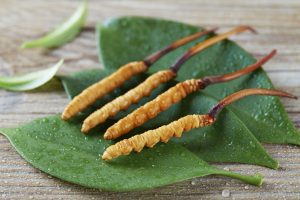
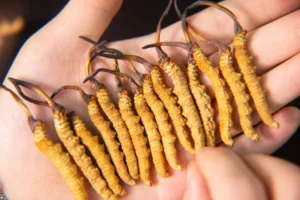
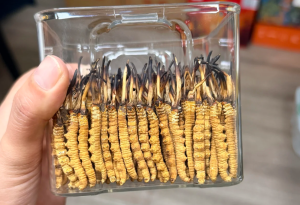
There is a huge price gap between wild Ophiocordyceps sinensis and cultivated Cordyceps militaris. Wild caterpillar fungus is among the world’s most expensive natural commodities, while properly‑grown cultivated cordyceps is affordable for everyday use. Many consumers get confused because marketing lumps both species under the single name “cordyceps”.
Disclaimer: Educational content only, not medical advice. Consult a healthcare provider before taking herbal supplements.
Why wild Ophiocordyceps sinensis is extremely costly
- Ultra‑specific, limited natural habitat True wild cordyceps only grows at 3000‑5000 m high‑altitude alpine meadows across the Himalayan‑Tibetan plateau. It requires the perfect overlap of ghost‑moth caterpillar larvae, fungal spores, and precise cold‑humid mountain conditions. It cannot be mass‑produced via industrial artificial cultivation. Climate change and over‑harvesting keep lowering annual wild yields, creating persistent supply shortage.
- Hard, manual high‑altitude harvesting Harvesting only happens during a short 6‑8‑week window each year. Local herders hike steep high‑altitude grasslands to spot tiny fungal fruiting bodies poking out of soil. It is physically demanding, low‑yield manual labour. Many rural households depend on this harvest for most of their yearly income, which drives up baseline pricing.
- Scarce total global supply Total annual global wild harvest is only roughly 80‑180 tons. Demand from traditional‑medicine markets far outpaces available supply, pushing prices upward. Top‑grade wild sinensis can sell for more per gram than gold.
- Multi‑layer supply chain & luxury‑market markup Wild cordyceps passes through multiple collectors, graders, wholesalers and retailers. Each step adds markup. It is also treated as a prestige luxury gift item in Asian markets, further inflating retail prices.
- Quality‑sorting cost Raw wild material must be manually sorted, graded, cleaned and inspected for counterfeits. Many wild samples carry heavy‑metal and arsenic contamination, requiring expensive third‑party lab testing for safety.
Why cultivated Cordyceps militaris still costs money (but far cheaper than wild sinensis)
C. militaris can be farmed indoors on grain substrates, so it avoids the extreme scarcity of wild sinensis. Still, quality fruiting‑body cordyceps is not cheap to produce:
- It demands strictly sterile, climate‑controlled grow rooms with precise light, temperature and humidity control to grow proper fruiting bodies and build high cordycepin levels. Contamination easily ruins entire batches.
- Slow growth cycle, labour‑intensive harvesting and drying.
- Third‑party lab testing for cordycepin, polysaccharides, heavy metals and microbes adds production expenses.
Note: Very cheap cordyceps capsules usually contain myceliated‑grain mycelium, not fruiting‑body. These products are low‑cost but have minimal cordycepin content.
Common market‑confusion points
- Many supplement brands use the historic marketing name “Cordyceps sinensis” on labels, yet sell cultivated C. militaris. This mislabelling confuses shoppers into thinking they are buying expensive wild caterpillar fungus. Always read fine‑print ingredient specifications.
- Cheap “wild cordyceps” is almost always fake or adulterated. Real wild O. sinensis cannot be sold at budget‑friendly retail prices.
FAQ
Q: Is expensive wild cordyceps more effective than cultivated militaris?
A: Not for daily supplementation. Wild sinensis naturally contains very low cordycepin. Properly cultivated fruiting‑body Cordyceps militaris delivers higher cordycepin concentrations at a fraction of the price, without heavy‑metal risks.
Q: Why are some cordyceps capsules cheap and others very pricey?
A: Price differences mostly come down to: species (sinensis vs militaris), material type (fruiting‑body vs mycelium‑on‑grain), extract concentration, and third‑party testing expenses.
Q: Do I need to buy the super‑expensive wild cordyceps for benefits?
A: No. For daily energy, stamina, immune and respiratory support, third‑party‑tested cultivated Cordyceps militaris fruiting‑body extract is the practical choice for most consumers. Reserve wild O. sinensis for occasional short‑term use under guidance of a qualified herbal practitioner.
Q: Why is wild cordyceps sometimes called “Himalayan gold”?
A: Due to its per‑gram price, which can exceed gold for premium‑grade specimens, plus its cultural reputation as a prized traditional tonic.
Q: Are extract powders more expensive than whole‑dried cordyceps?
A: Yes. Extracts require further processing to concentrate bioactive compounds, which adds manufacturing costs.






¡Qué interesante! Siempre me pregunté por qué había tanta diferencia de precio. Ahora entiendo que no es lo mismo el silvestre rarísimo que el cultivado. Engaña mucho que vendan todo como “cordyceps” a secas. Al final, para el uso diario, el cultivado es buena opción sin arruinarse. Gracias por aclararlo.
Wow, I had no idea there was such a huge difference between the wild and cultivated types! I’ve seen “cordyceps” in ads everywhere and just assumed it was all the same thing. Kind of frustrating that marketing blurs the line so much—you think you’re getting the fancy stuff when it’s actually the affordable version. Good to know what to look for now, though
Interesting breakdown! I’d always assumed “cordyceps” was one thing, so it’s eye-opening to learn how different the wild caterpillar fungus and cultivated versions really are. The price gap makes sense now, but the naming confusion is frustrating—marketing really does a disservice. I’ll definitely be checking labels more carefully next time I buy supplements. Thanks for clearing that up!
Interessanter Artikel! Ich kannte den Unterschied zwischen den beiden Arten gar nicht so genau. Dass da so ein krasser Preisunterschied besteht und dann beides einfach „Cordyceps“ genannt wird, ist wirklich verwirrend für den normalen Käufer. Gut zu wissen, dass die kultivierte Version eine bezahlbare Alternative ist. Da schaue ich beim nächsten Kauf doch genauer hin. Danke für die Aufklärung!