Jing Sanqi is the name of a traditional Chinese medicine. It consists of the root or whole plant of Sedum izoon L., a species of the genus Sedum in the Crassulaceae family. It is distributed in Northeast China, Northwest China, East China, Hebei, Hubei, and Sichuan, among other regions. It has the therapeutic effects of dispersing blood stasis and stopping bleeding, calming the heart and soothing the mind, and detoxifying.It is commonly used for hematemesis, hemoptysis, gingival bleeding, hematochezia, hematuria, metrorrhagia, thrombocytopenic purpura, traumatic bleeding, palpitations, and restlessness with insomnia; externally, it is used for contusions, traumatic bleeding, burns and scalds, and conditions such as boils, abscesses, and swellings.
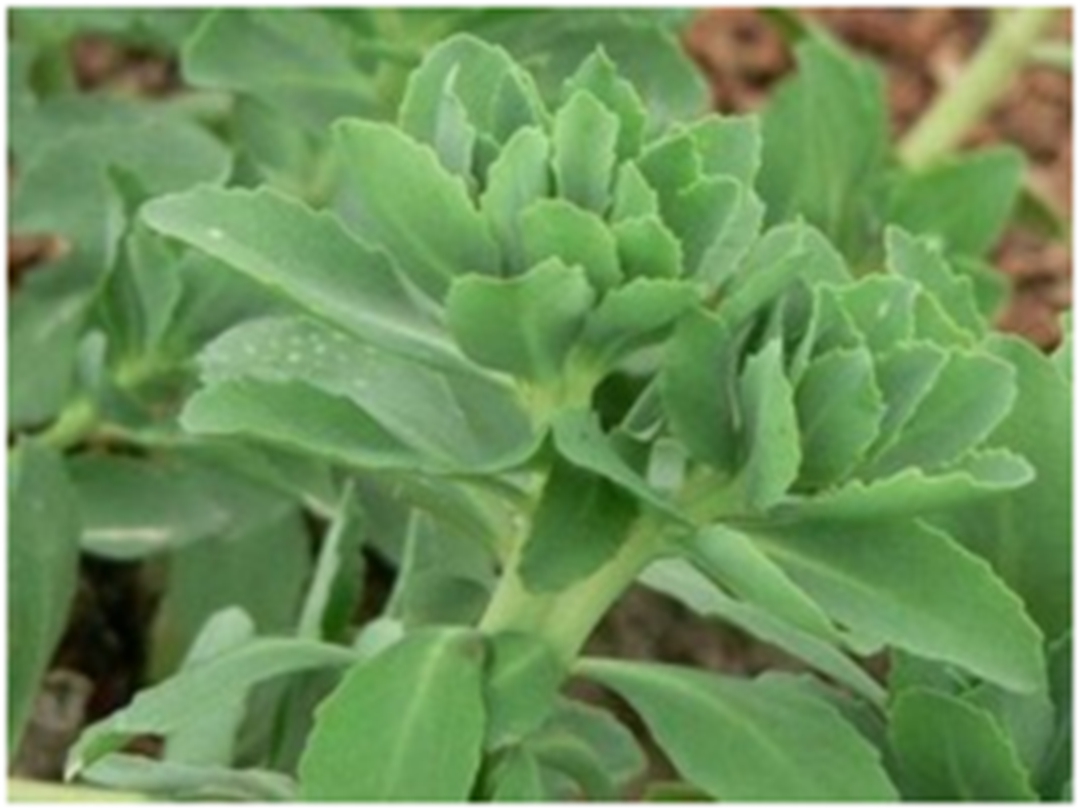
Jing Sanqi
Jing Sanqi is the name of a traditional Chinese medicine. It consists of the root or whole plant of Sedum izoon L., a species of the genus Sedum in the Crassulaceae family. It is distributed in Northeast China, Northwest China, East China, Hebei, Hubei, and Sichuan, among other regions. It has the therapeutic effects of dispersing blood stasis and stopping bleeding, calming the heart and soothing the mind, and detoxifying.It is commonly used for hematemesis, hemoptysis, gingival bleeding, hematochezia, hematuria, metrorrhagia, thrombocytopenic purpura, traumatic bleeding, palpitations, and restlessness with insomnia; externally, it is used for contusions, traumatic bleeding, burns and scalds, and conditions such as boils, abscesses, and swellings.
Chinese Name : 景三七
Latin Name : Sedum aizoonoides L.
Aliases : Jing Tian Sanqi, Fei Cai, Tu Sanqi
Authentic Producing Area : Northeast, Northwest, East China, Hebei, Hubei, Sichuan
Nature, Flavor & Meridian Tropism : Sweet and slightly sour in taste; neutral in nature; enters the Heart and Liver meridians
Benefits & Efficacy
Benefits
Dispels blood stasis and stops bleeding; calms the heart and soothes the mind; detoxifies.
Indications
Used for hematemesis, hemoptysis, gingival bleeding, hematochezia, hematuria, metrorrhagia and menorrhagia, thrombocytopenic purpura, traumatic bleeding, palpitations, restlessness, and insomnia; used externally to treat contusions, traumatic bleeding, burns and scalds, and painful sores, boils, and abscesses.
Usage and Dosage
Decoct and take 9–30 g, or extract the juice from 30–60 g of fresh herb and drink it. External use: Apply an appropriate amount of fresh herb—either pounded into a paste and applied to the affected area or ground into a powder and sprinkled on the affected area.
Precautions
Contraindicated for those with spleen and stomach deficiency-cold.
Relevant Discussions
1. *Commonly Used Folk Herbs of Zhejiang*: Calms the mind, nourishes the blood, stops bleeding, and dispels blood stasis.
2. *Medicinal Herbs of Shanxi*: Stops bleeding, dispels blood stasis, reduces swelling, and relieves pain.
Applications
Related Compatibility
1. For treating hemoptysis, hemoptysis, epistaxis, gingival bleeding, and internal bleeding: 2–3 liang of fresh Tu Sanqi. Decoct in water or crush to extract juice, and take continuously for several days. (*Commonly Used Folk Herbs of Zhejiang*)
2. For treating hematuria: 5 qian of Jing Tian Sanqi. Add brown sugar as a guide, decoct in water, and take orally. (*Medicinal Herbs of Shanxi*)
Processing & Preparation
Harvesting & Processing
Harvest the roots in spring or autumn, wash them thoroughly, and sun-dry them. The whole plant is harvested as needed, or collected in the fall and sun-dried.
Processing Methods
Take the raw herb, remove impurities, rinse thoroughly with cold water, moisten until soft, cut into small sections, and dry.
Crude Drug Identification
Properties of Crude Drugs
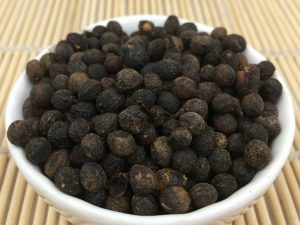
The dried whole plant has bluish-green stems that break easily and are hollow in the center; the leaves are shriveled, grayish-green on both sides, but most have fallen off. It is odorless and has a slightly astringent taste. Some specimens may still have roots attached. Those that are green in color, dry, and free of impurities are considered the best.
Properties of Processed Slices
Irregular small segments. A mixture of rhizomes, stems, leaves, and flowers. The surface of the rhizome is dark brown. The stems are cylindrical, with a dark brown or purplish-brown surface; they are hollow and brittle. The leaves are shriveled, gray-green or brownish, with serrated edges toward the upper part. The flowers are small and yellow. It has a faint odor and a slightly sour taste.
Botanical Information
Botanical Classification
Sedum sanqi, a plant of the genus Sedum in the Crassulaceae family.
Morphological Characteristics
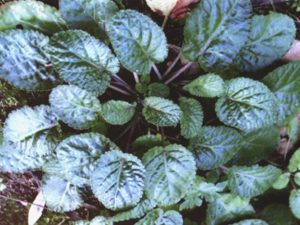
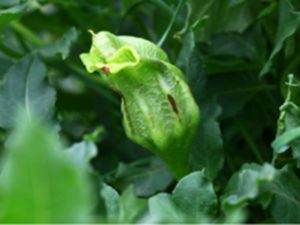
A perennial succulent herb, growing up to 80 cm tall, glabrous throughout, and deciduous in winter.The rhizome is thick and nearly woody. Stems arise from the rhizome, are not clustered, are erect and robust, and sometimes branch in the upper part. Simple leaves are alternate or nearly opposite, sessile; leaf blades are broadly ovate to narrowly oblanceolate, 5–7.5 cm long, with a blunt or slightly pointed apex, a narrow base, and margins that are finely toothed or nearly entire, smooth or roughly papillate.Yellow flowers bloom in summer and fall, arranged in terminal corymbose cymes; the flowers are sessile. Sepals vary in length, reaching half the length of the petals, and are linear to lanceolate; petals are oblong-lanceolate; the bases of the carpels are slightly fused. The capsules are arranged in a star-like pattern and range in color from yellow to red.The seeds are smooth, with narrow wings along the margins and a relatively broad apex.
Distribution Area
It is distributed in Northeast China, Northwest China, East China, Hebei, Hubei, and Sichuan, among other regions.