
Decoction for Raising Yang and Nourishing the Stomach,From *Discrimination of Internal and External Injuries*, Middle Volume.,Deficiency of the spleen and stomach leads to lethargy and a desire to lie down, with the limbs feeling weak and unsteady. As autumn dryness prevails and damp-heat has not yet fully subsided, patients may experience heaviness of the body and joint pain, dryness of the mouth and tongue, a loss of appetite, irregular stools, frequent urination, a lack of desire to eat, and undigested food. If accompanied by lung disorders, symptoms may include shivering and aversion to cold, a gloomy and unhappy disposition, and a sallow, unbalanced complexion—all resulting from the failure of yang qi to rise and descend properly.Insufficiency of the central qi prevents proper ascension and descent, leading to distension and oppression in the chest and abdomen, or dysfunction in the elimination of waste, such as diarrhea and urinary incontinence, accompanied by dizziness and tinnitus.
Decoction for Raising Yang and Nourishing the Stomach
Formulas Name : Decoction for Raising Yang and Nourishing the Stomach
Chinese Name : 升阳益胃汤
Drug Formulation
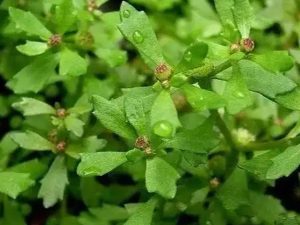
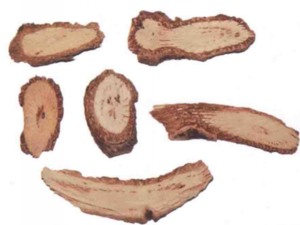
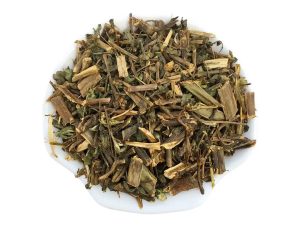
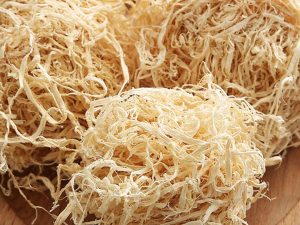
Astragalus (Huangqi) 2 liang, Pinellia (Hanhua) (washed; this ingredient should not be used by those with a涩 pulse) 1 liang, Ginseng (Ren Shen) (root removed) 1 liang, Licorice (Gancao) (roasted) 1 liang, Dehuo 5 qian, Fangfeng 5 qian, White Peony (Bai Shaoyao) 5 qian, Qianghuo 5 qian,Citrus Peel 4 qian, Poria 3 qian, Bupleurum 3 qian, Alisma 3 qian, Atractylodes 3 qian, Coptis 1 qian.
Source
From *Discrimination of Internal and External Injuries*, Middle Volume.
Benefits
Deficiency of the spleen and stomach leads to lethargy and a desire to lie down, with the limbs feeling weak and unsteady. As autumn dryness prevails and damp-heat has not yet fully subsided, patients may experience heaviness of the body and joint pain, dryness of the mouth and tongue, a loss of appetite, irregular stools, frequent urination, a lack of desire to eat, and undigested food. If accompanied by lung disorders, symptoms may include shivering and aversion to cold, a gloomy and unhappy disposition, and a sallow, unbalanced complexion—all resulting from the failure of yang qi to rise and descend properly.Insufficiency of the central qi prevents proper ascension and descent, leading to distension and oppression in the chest and abdomen, or dysfunction in the elimination of waste, such as diarrhea and urinary incontinence, accompanied by dizziness and tinnitus.
Instructions for Use
Crush the ingredients. For each dose, use 3 qian of the mixture, 3 zhan of water, 5 slices of fresh ginger, and 2 jujubes. Decoct until reduced to 1 zhan, strain out the residue, and take warm after breakfast. The dose may be increased to 5 qian.
Note
If you have a good appetite, do not eat to fullness for 1–2 days, lest the stomach be further injured; since the potency of the medicine is still weak, the stomach qi cannot properly transport and ascend. You must consume light-flavored or nourishing foods to enhance the medicine’s efficacy, strengthen the ascending and floating qi, and nourish the stomach qi. Be careful not to eat bland foods, which would impair the medicine’s efficacy and aid the descending and sinking of pathogenic factors.Engage in light physical activity to facilitate the stomach’s ability to transport and ascend the medicine; be careful not to overexert yourself, which could injure the qi again. It is best if the spleen and stomach are kept at rest. If the stomach qi is slightly stronger, eat a small amount of fruit to assist the efficacy of the grain-based medicine.
Decoction for Raising Yang and Nourishing the Stomach,Deficiency of the spleen and stomach leads to lethargy and a desire to lie down, with the limbs feeling weak and unsteady. As autumn dryness prevails and damp-heat has not yet fully subsided, patients may experience heaviness of the body and joint pain, dryness of the mouth and tongue, a loss of appetite, irregular stools, frequent urination, a lack of desire to eat, and undigested food. If accompanied by lung disorders, symptoms may include shivering and aversion to cold, a gloomy and unhappy disposition, and a sallow, unbalanced complexion—all resulting from the failure of yang qi to rise and descend properly.Insufficiency of the central qi prevents proper ascension and descent, leading to distension and oppression in the chest and abdomen, or dysfunction in the elimination of waste, such as diarrhea and urinary incontinence, accompanied by dizziness and tinnitus.