
Yuanhu is a commonly used medicinal herb for promoting blood circulation and relieving pain. It is the dried tuber of Corydalis yanhusuo W.T.Wang, a plant belonging to the genus Corydalis in the Papaveraceae family. It has the effects of promoting blood circulation, regulating qi, and relieving pain. It is primarily used for pain in the chest and flanks, epigastric and abdominal pain, chest pain due to bi syndrome, amenorrhea and dysmenorrhea, postpartum blood stasis, and swelling and pain from falls or blows.
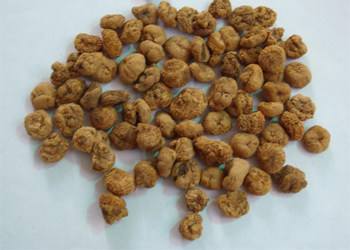
Yuanhu
Yuanhu is a commonly used medicinal herb for promoting blood circulation and relieving pain. It is the dried tuber of Corydalis yanhusuo W.T.Wang, a plant belonging to the genus Corydalis in the Papaveraceae family. It has the effects of promoting blood circulation, regulating qi, and relieving pain. It is primarily used for pain in the chest and flanks, epigastric and abdominal pain, chest pain due to bi syndrome, amenorrhea and dysmenorrhea, postpartum blood stasis, and swelling and pain from falls or blows.
Chinese Name : 元胡
Aliases : Yanhu, Xuanhusuo, Yuanhusuo, Yanhusuo
Authentic Producing Area : Mainly produced in Zhejiang
Nature, Flavor & Meridian Tropism : Pungent and bitter in taste; warm in nature; enters the Liver and Spleen meridians
Benefits & Efficacy
Benefits
Promotes blood circulation, regulates qi, and relieves pain.
Indications
It is primarily used to treat pain in the chest and flanks, epigastric and abdominal pain, chest pain due to chest obstruction, amenorrhea and dysmenorrhea, postpartum blood stasis, and swelling and pain from falls or blows.
Usage and Dosage
Internal use: Decocted, 3–10 g. Taken as a powder, 1.5–3 g per dose.
Precautions
1. Yuanhu is pungent and warm in nature and has a dispersing action; it carries the risk of depleting qi and damaging blood. Use with caution for various types of pain caused by qi deficiency or blood deficiency. 2. Contraindicated for pregnant women. 3. Yuanhu may increase the toxic effects of Strychnos nux-vomica; they should not be used together. 4. The blood pressure-lowering effect of Yuanhu can be eliminated or reversed by monoamine oxidase inhibitors (MAOIs). Yuanhu should not be used during treatment with MAOIs or within 2 weeks of discontinuing such medication.
Chemical Constituents
It primarily contains alkaloids such as Corydalis B (racemic tetrahydroparmatin), Corydalis A (dextrorotatory corydalin), Corydalis D (levorotatory tetrahydroberberine), parmatine, dehydrocorydalin, proto-opium alkaloid, and berberine.
Pharmacological Actions
This product possesses pharmacological effects including analgesia, improvement of hemodynamics, improvement of blood rheology, protection against myocardial ischemia, antiarrhythmic effects, and protection against cerebral ischemia.
Relevant Discussions
1. *Lei Gong’s Treatise on the Preparation of Medicinal Herbs*: “Treats heart pain so severe it feels like death.”
2. *Kaibao Bencao*: “Primarily used to break up blood stasis and treat various postpartum disorders caused by blood-related factors; also for women with irregular menstruation, abdominal masses, metrorrhagia, postpartum syncope, sudden surges of blood, and lower-body bleeding resulting from damage.”
3. *Compendium of Materia Medica*: “Promotes blood circulation, regulates qi, relieves pain, and promotes urination.”
Applications
Clinical Applications
1. To treat chest pain (xianbi) caused by blood stasis in the heart, it is commonly used in combination with Salvia miltiorrhiza, Cinnamomum cassia, Allium tuberosum, and Trichosanthes kirilowii.
2. To treat stomach pain caused by heat syndromes, it is combined with Melia azedarach, as in the Jinlingzi Powder (*Su Wen: Collection of Disease Mechanisms, Qi Principles, and Life-Preserving Methods*).
3. For stomach pain due to cold patterns, it is combined with Guizhi (or Rou Gui) and Gaoliangjiang, as in the Anzhong Powder (from *Formulas of the Bureau of Harmonious Preparations*).
4. For stomach pain due to qi stagnation, it is combined with Xiangfu, Muxiang, and Sha Ren; for stomach pain due to blood stasis, it may be combined with Danshen, Wulingzhi, and other herbs.
5. For stomach pain due to central deficiency, it is combined with Dangshen, Baizhu, and Baishao.
6. To treat chest and flank pain caused by liver qi stagnation, combine with Chaihu and Yujin.
7. To treat chest and flank pain caused by liver qi stagnation transforming into fire, combine with Chuanlianzi and Shanzhi.
8. To treat abdominal pain caused by cold hernia, combine with Xiaohuixiang, Wuzhuyu, and other herbs.
9. To treat dysmenorrhea, irregular menstruation, and postpartum abdominal pain caused by qi stagnation and blood stasis, it is often combined with Danggui, Honghua, and Xiangfu.
10. To treat trauma-induced injuries, bruising, and pain, it is often used in combination with Ru Xiang and Mo Yao.
11. To treat rheumatic arthralgia, it can be combined with Qin Jiao and Gui Zhi.
Related Compatibility
1. Yuanhu Combined with Fennel: Yuanhu primarily enters the Blood level and excels at promoting blood circulation, regulating Qi, and relieving pain; it can treat “various pains throughout the body.” Fennel specifically enters the Qi level and excels at dispelling cold, regulating Qi, and relieving pain; it is particularly essential for treating abdominal pain caused by cold stagnation in the Liver Meridian or cold hernia.When combined, these two herbs both dispel cold to warm and unblock the meridians, and regulate qi to relieve pain. This combination is suitable for conditions such as cold hernia-induced abdominal pain, testicular torsion, or cold pain in the lower abdomen resulting from cold invading the Jueyin Liver Meridian, which leads to stagnation of qi and blood.
2. Yuanhu combined with Chuanlianzi: Yuanhu has a bitter and pungent taste and a warm nature; it excels at invigorating blood, resolving stasis, regulating qi, and relieving pain. Chuanlianzi has a bitter taste and a cold nature; it excels at soothing the liver, clearing heat, regulating qi, and relieving pain. When combined, these two herbs both soothe the liver and clear heat while invigorating blood and relieving pain. This combination is suitable for various types of pain in the chest and flanks caused by liver qi stagnation transforming into fire.
Medicinal Identification
1. Raw Yuanhu and Vinegar-Processed Yuanhu: These are two different processed forms of Yuanhu, both capable of promoting blood circulation, regulating qi, and relieving pain. Although raw Yuanhu possesses the ability to promote blood circulation, regulate qi, and relieve pain, its analgesic effect is relatively weak, so it is rarely used clinically. Vinegar-processed Yuanhu has enhanced analgesic potency; therefore, it is frequently selected in clinical practice to treat various pain syndromes caused by qi stagnation and blood stasis.
2. Yuanhu and Chuanxiong: Both have the effects of promoting blood circulation and regulating qi, and are both considered “qi herbs for the blood.” Yuanhu promotes blood circulation and regulates qi, but is particularly effective at relieving pain; it is a key herb for pain syndromes caused by qi stagnation and blood stasis and can be used for pain throughout the entire body.Chuanxiong descends to the Blood Sea (Xuehai) to invigorate blood, regulate qi, and regulate menstruation; it is a key herb for regulating menstruation. When directed upward to the head and eyes, it dispels wind and relieves pain, making it an indispensable remedy for various types of headaches.
Related Medicines
Anwei Tablets, Compound Weining Tablets, Yuanhu Zhitong Tablets (soft capsules, granules, oral solution, droplet pills), Jiqi Niantong Pills, and Women’s Dysmenorrhea Pills.
Related Prescriptions
Jinlingzi Powder (*Shenghui Fang*, excerpted from *Xiu Zhen Fang*), Yanhu Powder (*Qi Fang Lei Bian*), and Yanhu Shenghua Decoction (*Tai Chan Xin Fa*).
Medicinal Diet Therapy
A medicinal dish associated with Yuanhu is Menstrual Regulation Wine.
1. Effects: Tonifies qi and regulates blood; promotes blood circulation and regulates menstruation. Suitable for women with irregular menstruation and unpredictable cycles.
2. Ingredients: 9g each of Angelica sinensis, Ligusticum chuanxiong, Evodia rutaecarpa, Paeonia lactiflora, Poria cocos, Citrus reticulata peel, Corydalis yanhusuo, and Moutan bark; 18g of Rehmannia glutinosa; 18g of processed Cyperus rotundus; 6g of Fennel; 6g of Amomum villosum; 1,000ml of white liquor; and 500g of rice wine.
3. Preparation: First, coarsely crush the herbs and place them in a clay pot. Pour in the white wine and rice wine. Simmer over heat for 1 hour. Allow to cool, strain out the residue, and bottle for later use.
4. Dosage: Take 10–20 ml once in the morning and once in the evening.
Notes
Patients requiring treatment with Chinese herbal medicine should first consult a licensed Traditional Chinese Medicine (TCM) hospital, where a TCM practitioner will conduct a professional pattern differentiation and prescribe an herbal formula.
Processing & Preparation
Harvesting & Processing
Harvest in early summer when the stems and leaves have withered. Remove the fibrous roots, wash thoroughly, and boil or steam in boiling water until the white core is just gone. Remove and sun-dry.
Processing Methods
1. Yuanhu: Take the raw herb, remove impurities, wash thoroughly, soak briefly until thoroughly moistened, slice thinly, and dry; or crush as needed.
2. Roasted Yuanhu: Take sliced or chunked Corydalis, place in a dry wok, heat over low heat, and stir-fry until the surface turns yellow; remove and let cool.
3. Vinegar-treated Corydalis: Take purified Corydalis, crush it, mix thoroughly with vinegar, let it steep until thoroughly infused, place in a pan, and stir-fry over low heat until dry; remove and let cool. Alternatively, place purified Corydalis in a solution of rice vinegar diluted with an appropriate amount of water, boil until the vinegar solution is completely absorbed, remove, slice, or dry and then crush. Use 25 kg of rice vinegar per 100 kg of Corydalis.
4. Wine-Processed Corydalis: Take cleaned Corydalis slices or碎块, mix thoroughly with rice wine, let stand until thoroughly infused, place in a pot, and heat over low heat until dry. Remove and let cool. Use 20 kg of rice wine for every 100 kg of Corydalis slices.
5. Charred Corydalis: Place Corydalis slices or pieces in a pot and stir-fry over high heat until the surface turns charred black and the interior is charred brown. Sprinkle with a small amount of water; once the embers have died out, remove, air-dry, and allow to cool completely.
Storage Methods
Store in a dry, airtight container in a cool, dry place to prevent mold and insect infestation.
Crude Drug Identification
Properties of Crude Drugs
This product is an irregular, flattened sphere, 0.5–1.5 cm in diameter, with a yellow or yellowish-brown surface featuring irregular, net-like wrinkles. The top has a slightly sunken stem scar, and the bottom often has a lump-like protrusion. It is hard and brittle; the cross-section is yellow, horn-like, and has a waxy luster. It has a faint odor and a bitter taste.
Properties of Processed Slices
1. Yuanhu: See “Characteristics of the Medicinal Material.”
2. Roasted Yuanhu Slices: Resemble Corydalis slices, with a deep yellow surface.
3. Vinegar-processed Yuanhu: Resembles Corydalis slices, is dark green, and has a slight vinegar odor.
4. Wine-processed Yuanhu Slices: Resembles Corydalis slices, is dark yellow or yellowish-brown, and has a slight wine odor.
5. Charred Yuanhu: The surface is charred black, and the interior is charred brown.
Botanical Information
Botanical Classification
Corydalis, a plant of the genus Corydalis in the Papaveraceae family.
Morphological Characteristics
A perennial herb, 9–20 cm tall, glabrous throughout.The tuber is flattened-spherical, 7–15 mm in diameter, slightly concave at the top, with fibrous roots emerging from the base; it is sometimes longitudinally split into several lobes, with a deep yellow cross-section. The stem is erect or inclined, usually solitary, with a single scale near the base; the stem nodes are often swollen into small tubers, from which new stems emerge; these new stems, in turn, form small tubers at their nodes, often in clusters of 3–4.Basal leaves: 2–4; petioles 3–8 cm long; leaf blades broadly triangular in outline, 3–6 cm long and 4–8 cm wide, twice ternately deeply lobed; first-order lobes petiolate, terminal lobes nearly sessile; lobes aciculate to oblong-elliptic, 20–30 mm long and 5–8 mm wide, entire, with a few in the upper half deeply or shallowly bifid;Cauline leaves usually 2, alternate, smaller than but similar in shape to the basal leaves. Raceme terminal, 2–5 cm long, bearing 3–8 sparsely arranged flowers; bracts ovate to narrowly ovate, those in the lower part of the inflorescence about 10 mm long, apically 3–5-lobed, those in the upper part entire; sepals 2, minute, early deciduous;Corolla pale purplish-red; petals 4, arranged in 2 whorls; the upper petal of the outer whorl is the largest, 15–25 mm long, spreading at the upper part into a broad obovate to broadly elliptic pouch-like lobe with small teeth along the margin and a shallow indentation at the apex, extending into a long spur in the middle to lower part; the lower petal is shorter, similar in shape to the upper petal, with a shallow sac-like projection at the base;the two petals of the inner whorl are 10–15 mm long, enveloping the stamens; their upper parts are broadly obovate, while the middle and lower parts are slender and claw-like; there are 6 stamens, slightly shorter than the inner petals, with every 3 fused into a bundle; the ovary is linear, 8–10 mm long; the pedicel is slender and short; the stigma is nearly circular, with 8 papillae.The capsule is linear, 1.7–2.2 cm long; the style and stigma are persistent, and the capsule splits into two valves when ripe. The seeds are arranged in a single row, consisting of several small, slender, oblong seeds that are black, glossy, and densely covered with small pits on the surface. Cultivated specimens often produce only flowers, and the fruits fall off before ripening. Flowering occurs from March to April, and fruiting from April to May.
Distribution Area
It is distributed in Jiangsu, Zhejiang, Anhui, Henan, Hubei, Shaanxi, and other regions.
Growth Habits
It prefers a warm and humid climate, is highly cold-tolerant, but is sensitive to high summer temperatures and stifling heat, as well as drought; it cannot tolerate waterlogging or intense sunlight. It is best cultivated in well-drained, fertile, loose, humus-rich sandy loam.
Propagation Methods
Propagated by tubers.
Cultivation Techniques
The optimal planting period is from late September to early October.Select tubers from the current growing season that are flattened-spherical, pale yellow in color, have numerous bud eyes, are robust and free of disease or insect damage, have a diameter of 1.4–1.6 cm, and have relatively tender tissue for use as seed. Before planting, soak the tubers in a 1,000-fold dilution of 50% Tebuconazole wettable powder for 5 minutes, allow them to air-dry slightly, and plant immediately. Plant in rows or holes, with row planting being preferable.Dig shallow furrows 20 cm apart with a depth of 6–7 cm, and plant the tubers in two alternating rows. Position the buds upward; avoid planting too shallowly or too deeply to prevent affecting germination. Cover the tubers with soil as you plant, and top with a layer of wood ash or mixed ash.
Pest and Disease Control
1. Downy mildew: Symptoms begin in March, primarily affecting the leaves. Brown spots first appear on the leaves, and a downy, mildew-like coating gradually forms on the underside, causing the leaves to wither and die. Treat with a 200-fold dilution of 40% ethyl phosphonate wettable powder, a 500-fold dilution of 50% carbendazim, or an 800-fold dilution of thiophanate-methyl.
2. Sclerotium rot: Symptoms appear in mid-March, affecting the base of the stem. Initially, yellowish-brown or dark brown, water-soaked, spindle-shaped lesions appear; in severe cases, the stem base rots, causing the above-ground parts to lodge and wither.with mycelium and sclerotia visible on the soil surface. Treat by applying 3% Sclerotium-L or a 1:3 mixture of lime and wood ash to the bed surface, or by broadcasting 5% ammonium chloronitrate powder.
3. Rust: Symptoms appear in early to mid-March. Initially, yellow-green lesions appear on the leaves, later turning yellowish-brown. Lesions on the underside of leaves or on stems become raised and exude a rust-colored powder. Treat by spraying with a 500-fold dilution of 60% zinc mancozeb wettable powder or a 1,000-fold dilution of 25% triazole wettable powder. Additionally, white mold may cause damage.
4. Insect pests include cutworms, which damage seedlings and tubers, as well as mole crickets, scarab beetle larvae, and seed flies.