White Grass Root, a name in traditional Chinese medicine. It is the rhizome of Pennisetum flaccidum Griseb., a plant in the Poaceae family. It is distributed in Heilongjiang, Jilin, Liaoning, Inner Mongolia, Hebei, Shanxi, Shaanxi, Gansu, Qinghai, Sichuan, Yunnan, Tibet, and other regions. It has the effects of clearing heat, promoting urination, cooling the blood, and stopping bleeding. It is primarily used to treat heat-induced dysuria, hematuria, cough due to lung heat, epistaxis, and thirst caused by stomach heat.
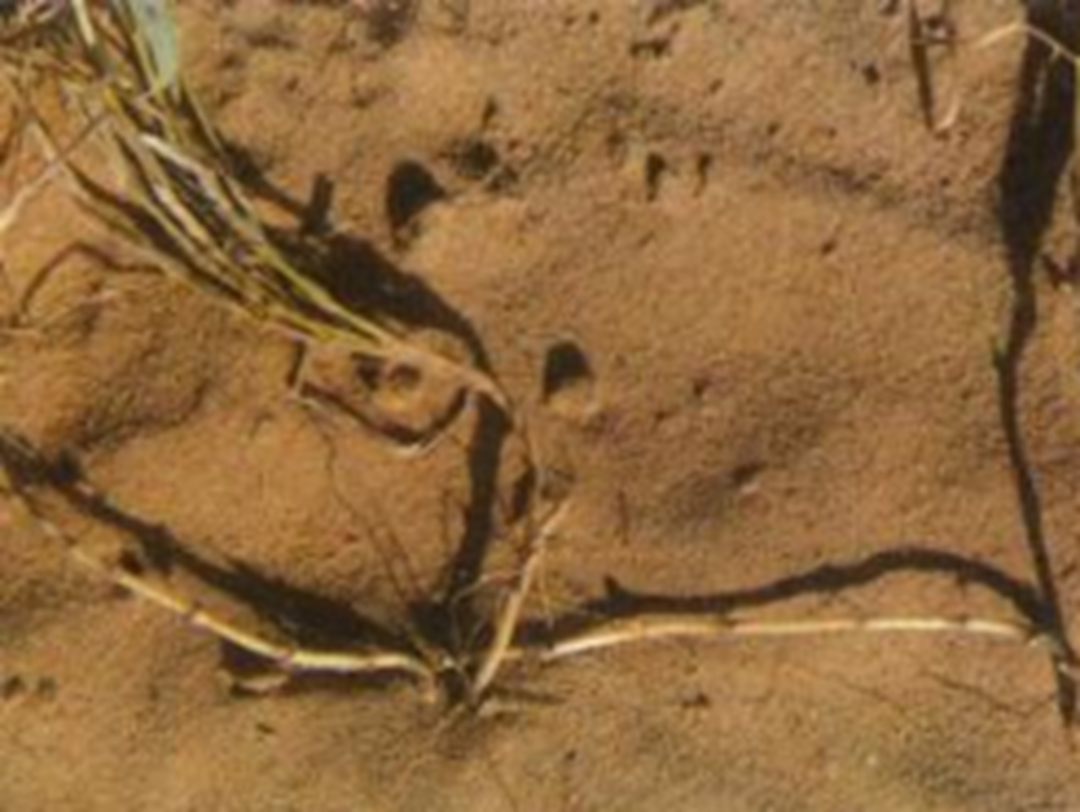
White Grass Root
White Grass Root, a name in traditional Chinese medicine. It is the rhizome of Pennisetum flaccidum Griseb., a plant in the Poaceae family. It is distributed in Heilongjiang, Jilin, Liaoning, Inner Mongolia, Hebei, Shanxi, Shaanxi, Gansu, Qinghai, Sichuan, Yunnan, Tibet, and other regions. It has the effects of clearing heat, promoting urination, cooling the blood, and stopping bleeding. It is primarily used to treat heat-induced dysuria, hematuria, cough due to lung heat, epistaxis, and thirst caused by stomach heat.
Chinese Name : 白草根
Aliases : Upside-Down Grass, White Flower Grass
Nature, Flavor & Meridian Tropism : Sweet in taste, cold in nature; enters the Heart and Kidney meridians
Benefits & Efficacy
Benefits
Clears heat and promotes urination; cools the blood and stops bleeding.
Indications
Heat-induced dysuria, hematuria, cough due to lung heat, nosebleeds, and thirst due to stomach heat.
Usage and Dosage
Internal use: Decoction, 15–24 g.
Precautions
Patients requiring treatment with Chinese herbal medicine should first consult a licensed Traditional Chinese Medicine (TCM) hospital, where a TCM practitioner will conduct a professional pattern differentiation and prescribe an herbal formula.
Relevant Discussions
*Compendium of Chinese Herbal Medicines*: “Clears heat, cools the blood, and promotes urination. Primarily used to treat hematuria and epistaxis associated with acute nephritis, cough due to lung heat, and thirst and restlessness due to stomach heat.”
Applications
Notes
References for this entry: [1] Guo Guanying. Yulin Traditional Chinese Medicine: Local Medicinal Herbs Volume [M]. Xi’an: Shaanxi Science and Technology Press, 1989: 109–110. [2] Jian Kang. *Compendium of Authentication and Identification of Chinese Herbal Medicines* [M]. Vol. 1. Harbin: Heilongjiang Science and Technology Press, 2007: 105. [3] Liu Jinjie, Li Yeshuang, Zhao Chunyan. *Illustrated Guide to Medicinal Information on Wild Seed Plants* [M]. Beijing: China Traditional Chinese Medicine Press, 2022: 52–53.
Processing & Preparation
Harvesting & Processing
Collected in summer and autumn; wash off soil and sand, remove fibrous roots, and sun-dry.
Crude Drug Identification
Properties of Crude Drugs
Cylindrical in shape, sometimes branched, 30–60 cm long, 0.2–0.4 cm in diameter. The surface is yellowish-white or pale yellow, slightly glossy, with longitudinal wrinkles; nodes are distinct and slightly protruding; occasional rootlets may remain; internodes vary in length, ranging from 1.5 to 3 cm.The texture is hard; the cross-section reveals a white pith in the center, and the periderm is difficult to separate from the central cylinder. It is odorless and has a bland taste.
Botanical Information
Botanical Classification
A grass of the Poaceae family.
Morphological Characteristics
A perennial herb. Possesses creeping rhizomes. Culms are erect, solitary or tufted, 20–90 cm tall. Leaf sheaths loosely enclose the culm, nearly glabrous; basal sheaths are densely arranged and nearly straddling, while upper sheaths are shorter than the internodes; the ligule is short, bearing 1–2 mm long cilia;leaf blades are narrowly linear, 10–25 cm long, 5–8 (–12) mm wide, glabrous on both surfaces. Panicles are erect or slightly curved, 5–15 cm long, about 10 mm wide; the main axis is angular, glabrous or rarely sparsely covered with short hairs; bristles are soft, slender, slightly rough, 8–15 mm long, gray-green or purple;Spikelets are usually solitary, ovate-lanceolate, 3–8 mm long; the first glume is minute, with a bluntly rounded, acuminate, or dentate apex; veins are inconspicuous; the second glume is 1/3–3/4 the length of the spikelet, with a sharply pointed awn at the apex and 1–3 veins;The first floret is male or, rarely, neutral; the first glume is as long as the spikelet, thickly membranous, with a sharp awn at the apex and 3–5 (–7) veins; the first lemma is transparent, membranous, or reduced;The second floret is bisexual; the second lemma has 5 veins; the awn is sharp at the tip, and both the lemma and the inner glume are papery; there are 2 scales, wedge-shaped, with a slightly concave apex; there are 3 stamens, with anthers lacking bristles at the apex; the styles are fused near the base. The caryopsis is oblong, approximately 2.5 mm long. Flowering and fruiting occur from July to October.
Distribution Area
Distributed in Heilongjiang, Jilin, Liaoning, Inner Mongolia, Hebei, Shanxi, Shaanxi, Gansu, Qinghai, Sichuan, Yunnan, Tibet, and other regions.