
Alpine Cypress, a name in traditional Chinese medicine. It refers to the branches, leaves, or cones of the plant Sabina squamata (Buch. Ham.) Ant. of the Cupressaceae family. It is distributed in southwestern China, as well as in Shaanxi, Gansu, Anhui, Fujian, Taiwan, Hubei, and Tibet. It has the effects of dispelling wind and dampness, detoxifying, and reducing swelling, and is used to treat rheumatic pain, edema caused by nephritis, urinary tract infections, and abscesses and swellings caused by toxins.
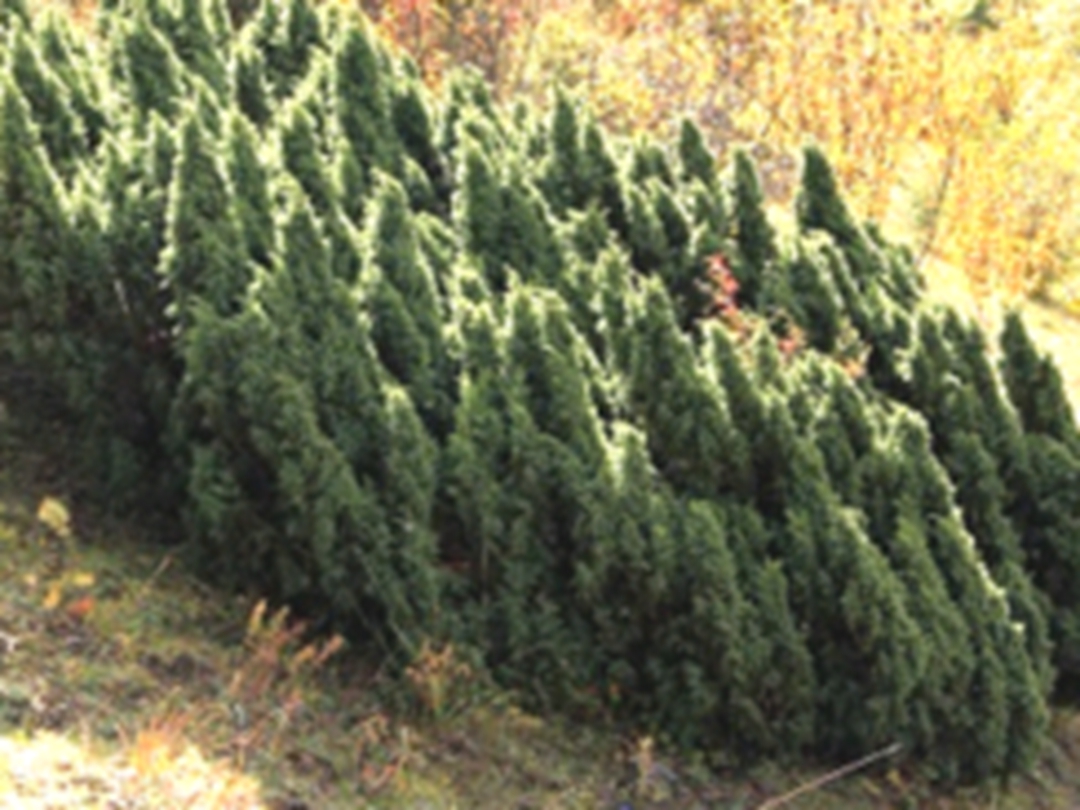
Alpine Cypress
Alpine Cypress, a name in traditional Chinese medicine. It refers to the branches, leaves, or cones of the plant Sabina squamata (Buch. Ham.) Ant. of the Cupressaceae family. It is distributed in southwestern China, as well as in Shaanxi, Gansu, Anhui, Fujian, Taiwan, Hubei, and Tibet. It has the effects of dispelling wind and dampness, detoxifying, and reducing swelling, and is used to treat rheumatic pain, edema caused by nephritis, urinary tract infections, and abscesses and swellings caused by toxins.
Chinese Name : 高山柏
Authentic Producing Area : Southwest China, as well as Shaanxi, Gansu, Anhui, Fujian, Taiwan, Hubei, and Tibet
Nature, Flavor & Meridian Tropism : Bitter in taste, neutral in nature
Benefits & Efficacy
Benefits
Dispels wind and dampness; detoxifies and reduces swelling.
Indications
Used for rheumatic arthralgia, edema caused by nephritis, urinary tract infections, and abscesses and swellings caused by toxins.
Usage and Dosage
Oral use: Decoct 9–15 g; or prepare as a paste.
Precautions
Not yet established.
Relevant Discussions
*Illustrated Compendium of Medicinal Plants of the Qinghai-Tibet Plateau*: “Clears heat and dispels dampness; treats rheumatoid arthritis, nephritis, and irregular menstruation.”
Applications
Processing & Preparation
Harvesting & Processing
Harvest branches and leaves in August–September and air-dry; harvest cones in October, or boil into a paste for future use.
Crude Drug Identification
Properties of Crude Drugs
The branches and leaves are twig-like; the leaves are all spiny, arranged in whorls of three, lanceolate in shape, 5–10 mm long and 1–1.3 mm wide, with an acute or acuminate, spiny tip and a base that extends downward. It has a faintly fragrant aroma and a slightly astringent taste.
Botanical Information
Botanical Classification
A high-altitude juniper of the genus Juniperus in the family Cupressaceae.
Morphological Characteristics
A shrub, 1–3 m tall, or prostrate; or a tree, 5–10 m tall, with a breast height diameter of up to 1 m. The bark is brownish-gray; branches are obliquely extending or spreading; twigs are straight or arched, pendulous or spreading.Leaves are spiny, arranged in whorls of three, alternate; lanceolate or narrowly lanceolate, with a decurrent base, usually obliquely extending or spreading, 5–10 mm long, 1–3 mm wide, straight or curved, with an acute or acuminate, spiny tip at the apex; the upper surface is slightly concave, with a white powdery band; the lower surface is convex, with a blunt longitudinal ridge, and fine grooves along the ridge or at the base.Male cones are ovoid, 3–4 mm long, with 4–7 pairs of stamens; female cones are ovoid or nearly spherical.When immature, they are green or yellowish-green; when ripe, they are black or bluish-black, slightly glossy, without a white powdery coating, and contain a single seed. The seeds are ovoid or conical-spherical, 4–8 mm long and 3–7 mm in diameter, with resin grooves and often 2–3 distinct or relatively distinct blunt longitudinal ridges on the upper part.
Distribution Area
Southwest China, as well as Shaanxi, Gansu, Anhui, Fujian, Taiwan, Hubei, and Tibet.