Mi Zai Lan is the name of a traditional Chinese medicine. It consists of the branches and leaves of Aglaia odorata Lour., a plant belonging to the genus Aglaia in the Meliaceae family. The plant is distributed in Fujian, Taiwan, Guangdong, Guangxi, Sichuan, and Yunnan. It is effective in dispelling wind-dampness and resolving blood stasis and swelling. It is primarily used to treat rheumatic joint pain, trauma, and abscesses and swellings caused by toxic infections.
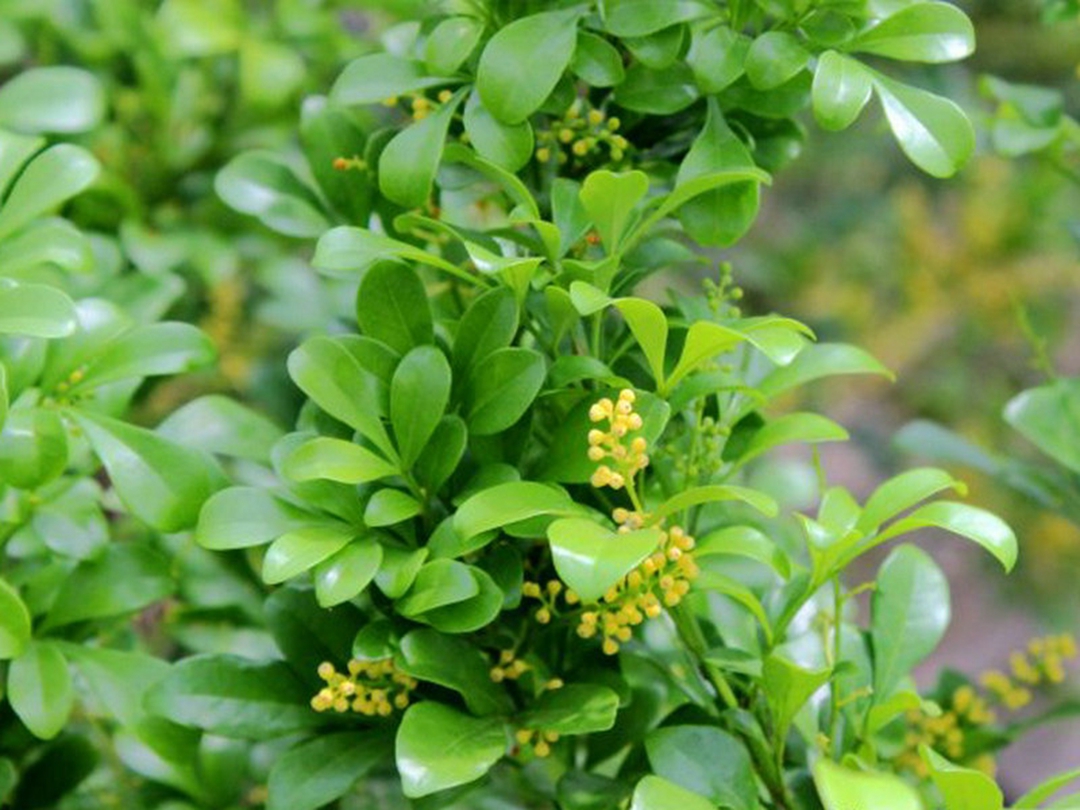
Mi Zai Lan
Mi Zai Lan is the name of a traditional Chinese medicine. It consists of the branches and leaves of Aglaia odorata Lour., a plant belonging to the genus Aglaia in the Meliaceae family. The plant is distributed in Fujian, Taiwan, Guangdong, Guangxi, Sichuan, and Yunnan. It is effective in dispelling wind-dampness and resolving blood stasis and swelling. It is primarily used to treat rheumatic joint pain, trauma, and abscesses and swellings caused by toxic infections.
Chinese Name : 米仔兰
Aliases : Shulan in *Chronicles of Taiwan Prefecture*; Yuzilan in *Flora of Guangzhou*; Qianlixiang in *Lu Chuan Materia Medica*; Lanhuami, Zhulan, and Muzhulan in *Materia Medica of Sichuan*; Suimilan in *Selected Compendium of Guangxi Materia Medica*; Erzilan and Yugumu in *Catalog of Medicinal Plants of Guangxi*; Qiulan in *Chronicles of Medicinal Plants of Taiwan*; and Milan in *Names of Traditional Chinese Medicinal Herbs of Guizhou*
Nature, Flavor & Meridian Tropism : Pungent in taste, slightly warm in nature. Entering the Lung, Stomach, and Liver meridians
Benefits & Efficacy
Benefits
Dispels wind-dampness and dissipates blood stasis and swelling.
Indications
Rheumatic joint pain, trauma, and abscesses and swellings caused by toxins.
Usage and Dosage
Internal use: Decoct 6–12 g. External use: Apply an appropriate amount, pounded into a paste; or apply as a boiled ointment.
Precautions
Use with caution in cases of yin and blood deficiency.
Relevant Discussions
1. *Compendium of Sichuan Chinese Materia Medica*: “Flowers: relieve depression and soothe the middle burner; induce labor; sober up from alcohol; clear the lungs; refresh the mind and eyes; and alleviate thirst and restlessness.”
2. *Catalog of Guangxi Medicinal Plants*: “Branches and leaves: treat contusions and abscesses.”
Applications
Related Compatibility
For treating contusions, fractures, and abscesses, use 9–12 g of (Mi Zai Lan) branches and leaves. Decoct in water and take orally. Additionally, pound fresh leaves into a paste, mix with alcohol, heat in a pan, and apply externally as a poultice. (*Selected Compendium of Guangxi Materia Medica*)
Processing & Preparation
Harvesting & Processing
Can be harvested year-round; wash thoroughly and use fresh or sun-dry.
Processing Methods
Take the raw herbal material, remove impurities, and sift out ash and debris.
Crude Drug Identification
Properties of Crude Drugs
Fine branches are grayish-white to green, 2–5 mm in diameter, with shallow grooves on the surface, as well as raised branch scars, leaf scars, and numerous tiny wart-like protrusions.Dried leaflets are oblong, 2–6 cm long, with a blunt apex, a wedge-shaped base that extends downward, and no petiole; the upper surface has faint reticulate veins, while the lower surface has distinct pinnate veins, and the leaf margin is slightly revolute. The texture is thin and leathery, with some flexibility.
Botanical Information
Botanical Classification
Mizailan, a plant of the genus Mizailan in the family Meliaceae
Morphological Characteristics
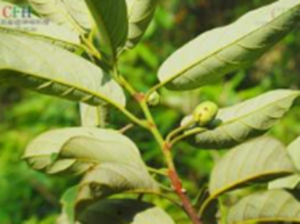
An evergreen shrub or small tree, 4–7 m tall. Highly branched; young parts are often covered with star-shaped, rust-colored scales. Odd-pinnate compound leaves are alternate, 5–12 cm long, with a narrowly winged rachis;3–5 leaflets, opposite, obovate to oblong, 2–7 cm long, 1–3.5 cm wide, with a blunt apex, cuneate base, entire margins, and glabrous. Panicles axillary; flowers bisexual, dioecious; calyx 5-lobed, lobes rounded; petals 5, yellow, oblong to nearly round, extremely fragrant;5 stamens, filaments fused into a tube; the tube is slightly shorter than the petals, with an entire apex; ovary ovate, densely covered with yellow coarse hairs; style extremely short; stigma bearing scattered star-shaped scales. The berry is ovate or nearly spherical, about 1 cm in diameter, covered with scattered star-shaped hairs when young, later becoming glabrous. Seeds have a fleshy aril. Flowering period: June–November.
Distribution Area
Distributed in Fujian, Taiwan, Guangdong, Guangxi, Sichuan, and Yunnan, among other regions.